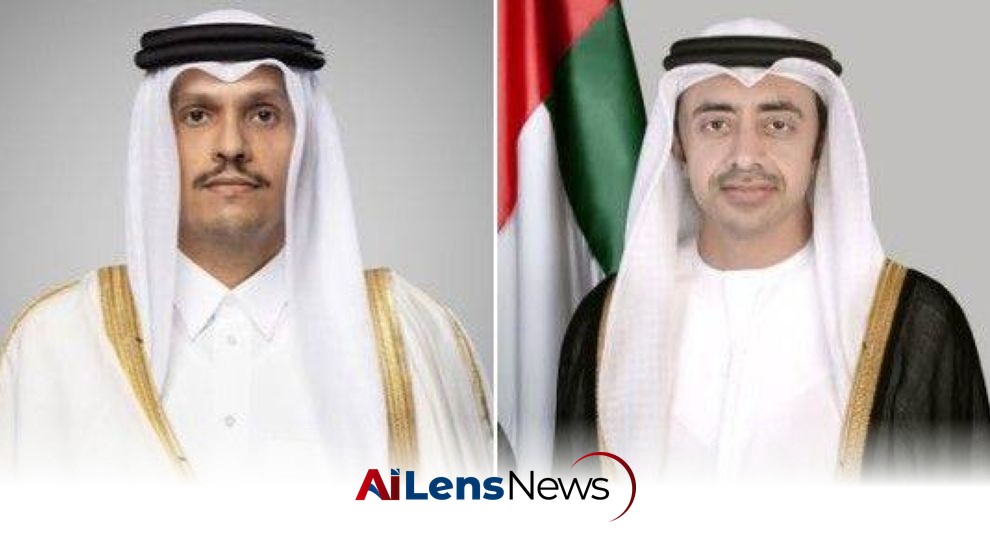


Qatar's Prime Minister Sheikh Mohammed bin Abdulrahman Al Thani and UAE's Sheikh Abdullah bin Zayed discuss enhancing cooperation and regional stability.
Doha, Qatar Jul 27, 2026 ALN: Prime Minister and Minister of Foreign Affairs HE Sheikh Mohammed bin Abdulrahman bin Jassim Al Thani held a telephone conversation with Deputy Prime Minister and Minister of Foreign Affairs of the United Arab Emirates HH Sheikh Abdullah bin Zayed Al Nahyan. This dialogue underscores the ongoing commitment between Qatar and the UAE to foster robust bilateral relations, especially in the context of escalating regional tensions.
The conversation between the two leaders comes at a time when the Middle East is experiencing significant geopolitical shifts. Both nations have historically maintained a complex relationship, marked by periods of both cooperation and rivalry. However, recent events have prompted a renewed focus on collaboration, particularly in terms of security and stability in the region. The history of relations between Qatar and the UAE has been influenced by various factors, including differing foreign policy alignments and the impact of the Arab Spring, which saw both countries taking contrasting stances on regional uprisings.
During their discussion, both sides emphasized the importance of advancing bilateral cooperation. This cooperation is not only vital for the two nations but also for the broader Gulf Cooperation Council (GCC) and the Middle East as a whole. The GCC, which includes Bahrain, Kuwait, Oman, Qatar, Saudi Arabia, and the UAE, has been pivotal in addressing regional issues, and the strengthening of ties between Qatar and the UAE could serve as a catalyst for broader regional unity. In recent years, the GCC has faced challenges, including the blockade imposed on Qatar by several member states in 2017, which strained relations within the council. The recent thawing of tensions and the renewed dialogue between Qatar and the UAE may signal a shift towards greater solidarity within the GCC framework.
Recent regional developments were also a focal point of the conversation. The leaders discussed the enhanced diplomatic efforts that are being undertaken to de-escalate tensions in the region. This is particularly relevant given the ongoing complexities surrounding Iran's influence in the Gulf and the delicate balance of power among Gulf states. The UAE and Qatar's commitment to dialogue reflects a growing recognition that diplomatic engagement is essential for mitigating conflicts and fostering a stable environment. The situation in Yemen, where a protracted civil war has drawn in regional powers, and the ongoing tensions in Iraq and Syria, further complicate the landscape, making dialogue even more crucial.
One critical aspect of their conversation was the emphasis on the need for all parties to commit to dialogue and diplomacy. This call for engagement aligns with the broader international community's perspective, particularly in light of the Memorandum of Understanding that was reached between the United States of America and the Islamic Republic of Iran. The agreement aims to address various contentious issues, including nuclear proliferation and regional security concerns. The U.S. has been a key player in Middle Eastern geopolitics, and its shifting foreign policy under different administrations has had significant implications for the region's stability. The recent U.S. efforts to re-engage with Iran could influence the dynamics of Gulf relations, prompting countries like Qatar and the UAE to bolster their diplomatic initiatives.
The Prime Minister highlighted the importance of ensuring freedom of navigation in the Strait of Hormuz, a vital maritime corridor through which a significant portion of the world's oil supply passes. The Strait has been a flashpoint for tensions, particularly between Iran and the United States, and ensuring security in this area is paramount for the stability of the region and the global economy. The potential for disruptions in this crucial waterway has far-reaching implications, not only for oil prices but also for global trade routes, making it a central concern for Gulf states.
In reiterating Qatar's support for ongoing efforts to de-escalate tensions, the Prime Minister pointed to the necessity of achieving a comprehensive accord that leads to enduring peace. Such peace is not only crucial for Qatar and the UAE but also for the broader Middle East, which has been marred by conflicts and instability for decades. The implications of successful diplomatic efforts could lead to a more secure and prosperous region, with potential benefits for trade, investment, and overall economic development. The economic interdependence of Gulf states, particularly through initiatives such as the GCC Common Market, highlights the importance of stability for fostering growth and development.
The strengthening of ties between Qatar and the UAE is also reflective of a broader trend within the Gulf region, where nations are increasingly recognizing the need for collaboration in the face of external pressures and internal challenges. The ongoing tensions with Iran, coupled with the shifting dynamics of U.S. foreign policy in the region, necessitate a united front among Gulf states. The potential for new alliances and partnerships could reshape the geopolitical landscape, as nations seek to enhance their security and economic interests through cooperation.
Moreover, the dialogue between Qatar and the UAE can be seen as a strategic move in the context of the broader geopolitical landscape. As global powers reassess their roles in the Middle East, smaller nations like Qatar and the UAE are positioning themselves as influential players capable of facilitating dialogue and promoting stability. This shift could lead to a reconfiguration of alliances and partnerships in the region, with Qatar and the UAE potentially playing a more significant role in mediating conflicts and fostering cooperation. Their proactive approach to diplomacy may inspire other regional actors to adopt similar strategies, contributing to a more collaborative environment in the Gulf.
In conclusion, the telephone conversation between the Prime Minister of Qatar and the Foreign Minister of the UAE signifies a crucial step towards enhancing bilateral relations amid a backdrop of regional tensions. As both nations work towards advancing cooperation and stability, their efforts could have far-reaching implications for the Gulf region and beyond. The commitment to dialogue and diplomacy, coupled with a focus on security and regional stability, presents an opportunity for Qatar and the UAE to lead by example in a complex geopolitical environment. The outcomes of their discussions may not only impact their bilateral relationship but also influence the broader dynamics of the Middle East, potentially paving the way for a more peaceful and prosperous future.
To learn more about the latest developments in Elections, stay updated with our exclusive reports and analyses on AiLensNews.

