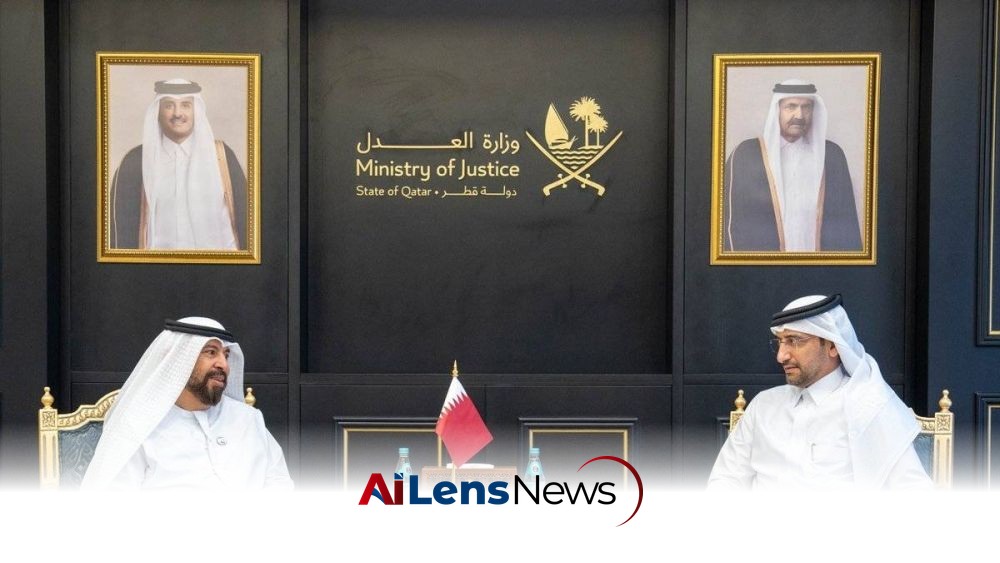


Minister of Justice HE Ibrahim bin Ali bin Issa Al Mohannadi met with the ambassadors of the UAE and Kuwait to discuss enhancing legal and judicial collaboration.
Doha, Qatar Jul 23, 2026 ALN: Minister of Justice and Minister of State for Cabinet Affairs HE Ibrahim bin Ali bin Issa Al Hassan Al Mohannadi held bilateral meetings with Ambassador of the United Arab Emirates to the State of Qatar HE Saeed Abdullah Al Qamzi and Ambassador of the State of Kuwait to Qatar HE Ahmad Abdulrahman Al Shuraim.
Discussions during the meetings focused on legal and judicial cooperation between the State of Qatar and both the United Arab Emirates and the State of Kuwait, and ways to strengthen and develop it. This engagement illustrates the importance of regional partnerships in the legal domain, particularly in a geopolitical landscape characterized by shared interests and challenges.
The meetings underscore the ongoing efforts by Qatar to enhance its legal frameworks and judicial systems through collaboration with neighboring countries. Legal cooperation is a critical component of international relations, particularly in the Gulf region, where countries often share similar legal challenges and objectives. The discussions aimed to explore mechanisms for mutual assistance in legal matters, including the exchange of legal expertise, harmonization of laws, and joint training programs for legal professionals.
Historically, Qatar has maintained strong diplomatic relations with both the UAE and Kuwait. These relationships have been characterized by a commitment to regional stability and cooperation in various sectors, including trade, security, and cultural exchanges. Legal cooperation, however, remains a vital area that can significantly impact the efficacy of governance and the rule of law in these nations. The Gulf Cooperation Council (GCC), which includes Qatar, the UAE, and Kuwait, has been a platform for fostering such collaboration, promoting initiatives that align legal systems across member states.
One of the key aspects of legal cooperation is the establishment of mutual recognition of legal documents and court rulings. This is particularly important in the Gulf Cooperation Council (GCC) context, where citizens and businesses operate across borders. By streamlining legal processes, the countries involved can facilitate trade and investment, making it easier for businesses to navigate the legal landscape in different jurisdictions. The harmonization of laws not only simplifies cross-border transactions but also enhances legal certainty, which is essential for attracting foreign investment.
In addition, the meetings may have addressed the need for collaborative efforts in combating transnational crime, including issues such as human trafficking, cybercrime, and financial crimes. As these challenges often transcend national borders, a coordinated approach is essential for effective law enforcement and judicial outcomes. The sharing of intelligence and best practices among the legal systems of Qatar, the UAE, and Kuwait is crucial in building a robust framework for addressing these issues. The rise of digital technologies and the increasing complexity of global financial systems necessitate a united front in tackling crime that knows no borders.
Furthermore, the discussions could also encompass the importance of enhancing the legal rights of expatriates in the region. With a significant population of expatriates residing in Qatar, the UAE, and Kuwait, ensuring that their legal rights are protected is paramount. This includes addressing labor rights, property rights, and access to justice, which are vital for fostering an inclusive and equitable society. The protection of expatriates' rights is not only a moral obligation but also a legal necessity, as these individuals contribute significantly to the economies of their host countries.
The implications of these meetings extend beyond bilateral relations; they also reflect broader trends in the Gulf region towards increased legal integration and cooperation. As countries in the region seek to diversify their economies and enhance their global competitiveness, a strong legal framework becomes increasingly important. Legal cooperation can facilitate foreign investment, improve business climates, and foster innovation. The Gulf region, with its wealth and strategic location, is increasingly seen as a vital player in the global economy, and legal cooperation is essential for maintaining that status.
Moreover, the meetings align with Qatar's broader vision of becoming a regional hub for legal and judicial excellence. By engaging with its neighbors, Qatar aims to position itself as a leader in legal affairs, attracting legal professionals and institutions to its shores. This strategic positioning could enhance Qatar's influence in regional and international legal discussions. The development of specialized legal institutions and the hosting of international legal conferences could further bolster this ambition, showcasing Qatar's commitment to legal reform and cooperation.
As the world becomes more interconnected, the importance of legal cooperation among nations cannot be overstated. The ability to navigate complex legal challenges effectively requires collaboration and a shared understanding of legal principles and practices. The meetings between Qatar's Minister of Justice and the ambassadors of the UAE and Kuwait signify a commitment to fostering such collaboration, ultimately benefiting the citizens and residents of all three countries. Collaborative legal frameworks can lead to more effective governance and a stronger rule of law, which are essential for sustainable development.
In conclusion, the bilateral meetings held by Qatar's Minister of Justice represent a significant step towards enhancing legal cooperation in the region. By focusing on mutual interests and collaborative efforts, Qatar, the UAE, and Kuwait are paving the way for a more integrated and effective legal landscape. The outcomes of these discussions will likely influence future legal frameworks and cooperative initiatives, reinforcing the importance of solidarity among Gulf nations in addressing common legal challenges. The establishment of a cohesive legal environment will not only benefit the three nations involved but will also set a precedent for other countries in the region, fostering a culture of cooperation and mutual respect in legal matters.
To learn more about the latest developments in Elections, stay updated with our exclusive reports and analyses on AiLensNews.

