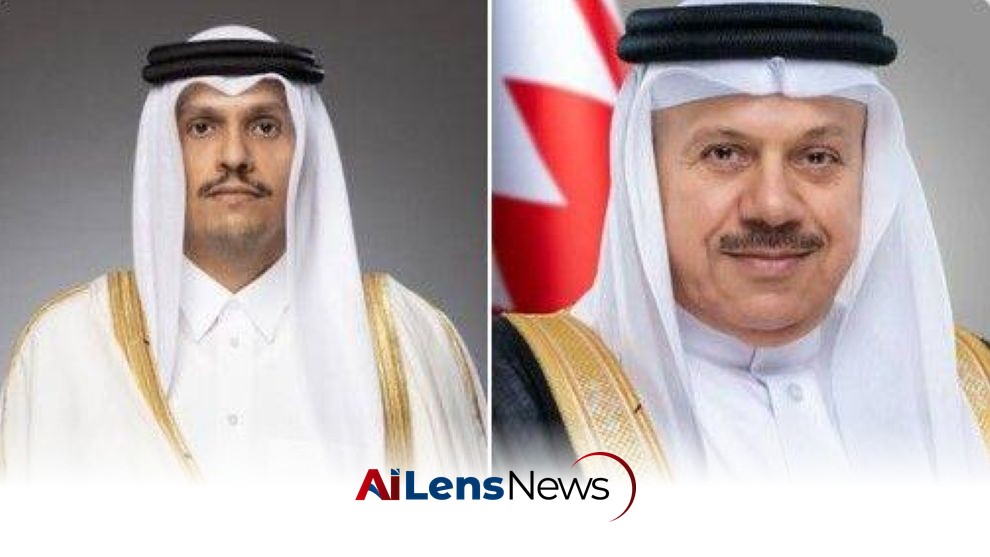


Prime Minister Sheikh Mohammed bin Abdulrahman Al Thani and Bahraini FM Dr. Abdullatif Al Zayani discuss enhancing bilateral relations and regional security.
Doha, Qatar Jul 22, 2026 ALN: Prime Minister and Minister of Foreign Affairs HE Sheikh Mohammed bin Abdulrahman bin Jassim Al Thani received a phone call from Minister of Foreign Affairs of the Kingdom of Bahrain HE Dr Abdullatif bin Rashid Al Zayani. This communication highlights the ongoing diplomatic relations between Qatar and Bahrain, two Gulf Cooperation Council (GCC) member states that have a complex history of cooperation and tension. The GCC was established in 1981 to promote economic, political, and security cooperation among its members, which include Bahrain, Kuwait, Oman, Qatar, Saudi Arabia, and the United Arab Emirates.
During the call, they reviewed the relations of cooperation between the two countries and ways to support and enhance them. This discussion is particularly significant given the recent geopolitical shifts in the Middle East, where diplomatic ties among Gulf nations have been tested by various regional conflicts and external influences. The two leaders also discussed the latest regional developments, particularly the diplomatic efforts undertaken and the joint coordination to de-escalate tensions and promote security and stability in the region. This comes at a time when the Middle East is experiencing heightened instability due to various factors, including civil wars, the rise of non-state actors, and the influence of foreign powers.
The importance of this dialogue cannot be overstated. The Gulf region has been marked by a series of crises, including the ongoing conflict in Yemen, tensions with Iran, and the broader implications of U.S. foreign policy in the Middle East. The Yemen conflict, which began in 2014, has resulted in a humanitarian disaster, drawing in regional powers such as Saudi Arabia and Iran, and complicating the security landscape further. The call reflects a mutual recognition of the need for cooperation in addressing these challenges. The prime minister affirmed, during the call, the necessity for all parties to commit to dialogue and diplomacy, emphasizing the role of communication in resolving disputes and fostering a stable environment.
Central to their discussion was the implementation of what was agreed upon within the framework of the memorandum of understanding between the United States of America and the Islamic Republic of Iran. This agreement is crucial as it aims to address various contentious issues, including nuclear proliferation and regional security. The negotiations surrounding Iran's nuclear program have been a point of contention for many years, with significant implications for regional power dynamics. The Strait of Hormuz, a vital waterway for global oil shipments, often serves as a flashpoint for tensions between Iran and Western powers, particularly the U.S. The prime minister's emphasis on ensuring freedom of navigation in this area underscores the strategic importance of maintaining open sea lanes for economic stability and security, as any disruption could have far-reaching consequences for global oil prices and supply chains.
Furthermore, the conversation between the two foreign ministers reflects a broader commitment to preserving regional security and safeguarding the gains achieved in previous diplomatic engagements. Qatar has positioned itself as a mediator in several regional disputes, advocating for dialogue and peaceful resolutions. This approach aligns with its foreign policy strategy, which aims to enhance its role as a diplomatic hub in the Middle East. Qatar's efforts in mediation have been evident in various conflicts, including its role in the Afghan peace talks and its attempts to mediate between rival factions in Libya.
In light of these discussions, it is essential to recognize the implications for regional stability. The dialogue between Qatar and Bahrain comes at a time when the GCC is seeking to present a united front in the face of external pressures, particularly from Iran and the shifting dynamics of U.S. involvement in the region. The recent normalization of relations between some Arab states and Israel, as well as the evolving relationship between the U.S. and Iran, further complicate the geopolitical landscape. The Abraham Accords, which saw the normalization of relations between Israel and several Arab countries, have shifted alliances and created new dynamics that the GCC must navigate carefully.
The prime minister also renewed the State of Qatar's full support for all endeavors aimed at defusing tensions and reaching a comprehensive agreement that achieves lasting peace in the region. This statement reiterates Qatar's commitment to multilateral diplomacy and its willingness to engage with both regional and international partners to foster a stable environment. The call between the two foreign ministers may serve as a precursor to further collaborative efforts among GCC states to address shared concerns, particularly regarding security and economic cooperation. Economic collaboration is particularly crucial as the GCC countries seek to diversify their economies away from oil dependence and enhance intra-regional trade.
In conclusion, the phone call between the foreign ministers of Qatar and Bahrain is a significant step towards reinforcing bilateral relations and enhancing regional cooperation. As both nations navigate the complexities of the Middle Eastern geopolitical landscape, their commitment to dialogue and collaboration will be critical in addressing the myriad challenges facing the region. The implications of their discussions extend beyond their bilateral relationship, potentially influencing broader GCC dynamics and the pursuit of lasting peace and stability in the Middle East. The ongoing dialogue between these nations may inspire similar initiatives among other GCC members, fostering a collaborative approach to regional issues and enhancing the collective security framework within the Gulf Cooperation Council.
To learn more about the latest developments in Elections, stay updated with our exclusive reports and analyses on AiLensNews.

