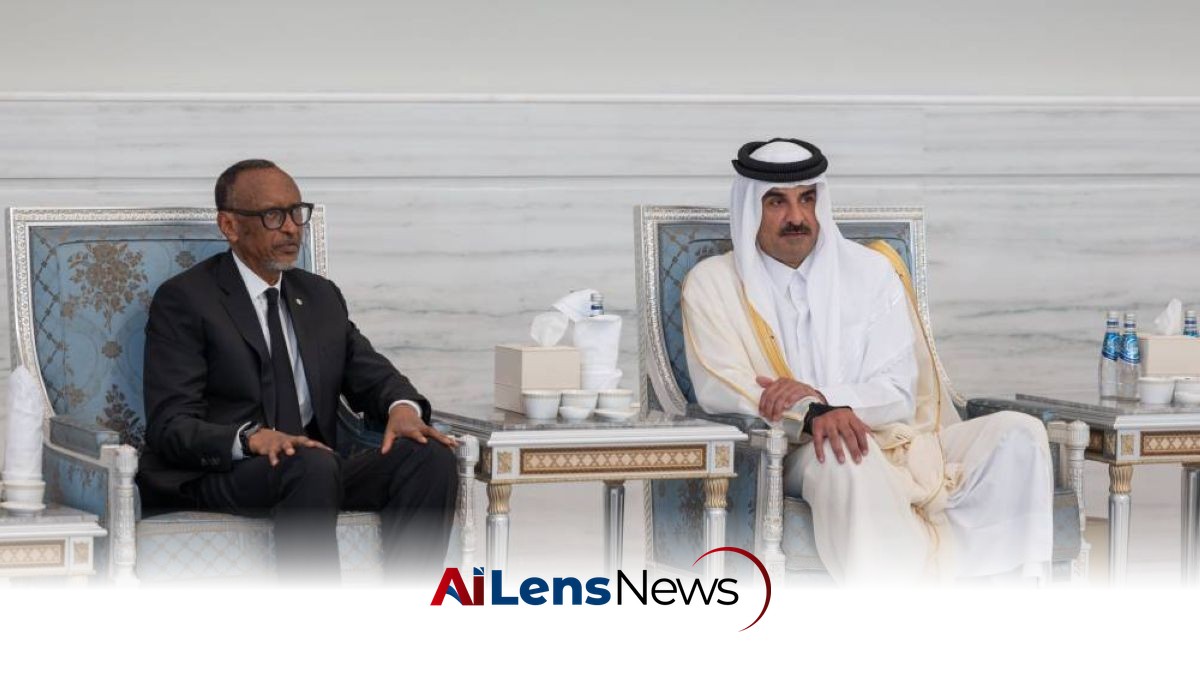


His Highness the Amir Sheikh Tamim bin Hamad Al-Thani met with Rwandan President Paul Kagame, who expressed condolences for the passing of the late Father Amir.
Doha, Qatar Jul 13, 2026 ALN: His Highness the Amir Sheikh Tamim bin Hamad Al-Thani met on Monday at Lusail Palace with President of the Republic of Rwanda, Paul Kagame. This meeting marks a significant moment in the diplomatic relations between Qatar and Rwanda, highlighting the mutual respect and solidarity that exists between the two nations. During this meeting, President Kagame offered condolences to HH the Amir on the passing of HH the late Father Amir Sheikh Hamad bin Khalifa Al-Thani. This gesture reflects the deep respect and diplomatic ties that exist between the two nations, highlighting the importance of solidarity in times of loss.
Also present at the meeting were several dignitaries, including HH the Deputy Amir Sheikh Abdullah bin Hamad Al-Thani, HE Sheikh Khalid bin Hamad Al-Thani, and HH Personal Representative of the Amir Sheikh Jassim bin Hamad Al-Thani. Other notable attendees included HE Sheikh Abdulaziz bin Khalifa Al-Thani, HH Sheikh Abdullah bin Khalifa Al-Thani, HH Sheikh Mohammed bin Khalifa Al-Thani, HE Sheikh Jassim bin Khalifa Al-Thani, HE Prime Minister and Minister of Foreign Affairs Sheikh Mohammed bin Abdulrahman bin Jassim Al-Thani, and HE Speaker of the Shura Council Hassan bin Abdullah Al Ghanim, along with several other Their Excellencies and members of the late HH the Father Amir's family. The presence of such high-ranking officials underscores the importance both nations place on their diplomatic relations.
This meeting underscores the strong diplomatic relations between Qatar and Rwanda, as both leaders discussed matters of mutual interest and cooperation. The relationship between Qatar and Rwanda has seen significant development over the years, characterized by increased political dialogue and economic partnership. Qatar has been keen to expand its influence in Africa, and Rwanda, under the leadership of President Kagame, has emerged as a key partner in this endeavor. The growing relationship can be seen as part of Qatar's broader strategy to engage with African nations, which are increasingly recognized for their potential in various sectors, including trade, investment, and technology.
Rwanda, known for its remarkable recovery from the 1994 genocide, has made significant strides in economic development, governance, and social stability. The country has been recognized for its efforts in promoting technology and innovation as a means to drive economic growth. Over the years, Rwanda has transformed itself into one of the fastest-growing economies in Africa, with a focus on sectors such as information technology, agriculture, and tourism. This transformation has been facilitated by a stable political environment and policies aimed at fostering entrepreneurship and attracting foreign investment.
Qatar, on the other hand, is a small but wealthy nation with vast resources, particularly in natural gas and oil, which it has leveraged to position itself as a regional power in the Middle East. The country's economic strategy has involved diversifying its economy beyond hydrocarbons, investing in sectors such as finance, real estate, and education. Qatar's wealth and resources provide a strong foundation for fostering international partnerships, particularly in regions like Africa, where there is significant potential for growth and collaboration.
During the meeting, discussions likely focused on enhancing bilateral trade and investment opportunities, as both nations have expressed interest in diversifying their economies. Qatar has been actively seeking to invest in various sectors in Africa, including infrastructure, energy, and agriculture. Rwanda's strategic location in East Africa makes it an attractive destination for Qatari investors looking to tap into the growing African market. The potential for collaboration in infrastructure development, particularly in transportation and energy, could lead to significant economic benefits for both nations.
Furthermore, both leaders may have addressed issues related to education and capacity building, an area where Qatar has made significant contributions through various initiatives and partnerships with educational institutions in Africa. The Amir's commitment to promoting education as a tool for development aligns well with Rwanda's vision of fostering a knowledge-based economy. Qatar has invested in educational programs and scholarships for African students, aiming to enhance human capital development on the continent. This focus on education reflects a long-term strategy to build sustainable partnerships that contribute to economic growth and social progress.
In addition to economic cooperation, the meeting likely touched upon regional security issues, particularly in light of the ongoing challenges faced by several African nations. Both Qatar and Rwanda have been involved in peacekeeping and conflict resolution efforts, and their collaboration could lead to more effective strategies in addressing security threats in the region. Rwanda has a well-regarded reputation for its peacekeeping capabilities, having contributed troops to various United Nations missions, while Qatar has played a mediating role in several regional conflicts. Strengthening cooperation in security matters could enhance stability in East Africa and beyond.
The presence of high-ranking officials from both sides at the meeting indicates the seriousness with which both nations approach their diplomatic relations. The Amir's engagement with President Kagame is a testament to Qatar's commitment to fostering strong ties with African nations, which have become increasingly important in the global geopolitical landscape. As Africa continues to grow in significance on the world stage, countries like Qatar are recognizing the need to build strategic partnerships that can lead to mutual benefits.
Moreover, this meeting comes at a time when Qatar is looking to bolster its international presence, particularly following the successful hosting of the FIFA World Cup 2022. The event not only showcased Qatar's capabilities but also positioned the country as a hub for international diplomacy and business. Engaging with African leaders like Kagame is part of a broader strategy to enhance Qatar's influence and foster partnerships that can lead to mutual benefits. The World Cup has opened new avenues for Qatar to engage with the international community, and strengthening ties with African nations aligns with its goals of expanding its global footprint.
As both leaders concluded their meeting, it is expected that follow-up actions will be taken to ensure that the discussions translate into tangible outcomes. This could involve the establishment of joint committees to explore specific areas of cooperation, as well as the signing of memorandums of understanding that formalize their commitments to work together. The implementation of these agreements will be crucial in translating the goodwill expressed during the meeting into concrete actions that benefit both nations.
In conclusion, the meeting between HH the Amir Sheikh Tamim bin Hamad Al-Thani and President Paul Kagame is a significant step in strengthening the diplomatic and economic ties between Qatar and Rwanda. As both nations look to the future, their collaboration could serve as a model for other countries seeking to build partnerships that are rooted in mutual respect and shared interests. The implications of this meeting extend beyond bilateral relations, potentially influencing regional dynamics and contributing to broader efforts aimed at fostering peace, stability, and development in Africa. As both nations continue to explore avenues for collaboration, the outcomes of this meeting could have lasting impacts on their respective economies and on the wider African continent.
To learn more about the latest developments in Regional Politics, stay updated with our exclusive reports and analyses on AiLensNews.

