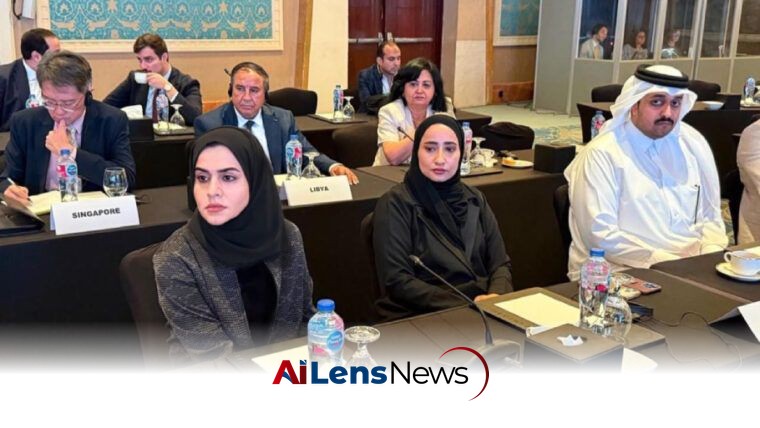


Qatar's delegation emphasizes the need to protect Jerusalem's multi-religious character and Palestinian rights during a UN-OIC conference in Cairo.
Doha, Qatar Jul 19, 2026 ALN: The State of Qatar recently took part in a significant international conference focused on the situation in Jerusalem, aptly titled "Jerusalem: The Frontline of Displacement and Annexation and the Key to Achieving a Just and Lasting Peace." This event was organized by the United Nations Committee on the Exercise of the Inalienable Rights of the Palestinian People (CEIRPP) in collaboration with the Organization of Islamic Cooperation (OIC), and it took place in Cairo, Egypt.
The conference is part of a broader international effort to address the ongoing challenges faced by the Palestinian people, particularly in the context of Jerusalem, which has long been a focal point of religious, political, and cultural tensions. The Qatari delegation was led by Maryam bint Ahmed Al Shibi, who serves as the Minister Plenipotentiary, Deputy Ambassador of the State of Qatar to the Arab Republic of Egypt and Deputy Permanent Representative to the League of Arab States. Her presence underscores Qatar's commitment to advocating for Palestinian rights on international platforms.
During the conference, participants engaged in discussions about the unique multi-religious character of Jerusalem and its significance as a symbol of coexistence among various faiths. This aspect is particularly important given the city's historical and spiritual relevance to Judaism, Christianity, and Islam. The conference aimed to address the pressing challenges that the Palestinian people face in occupied East Jerusalem, which include displacement, dispossession, and violence. These issues are not isolated but are part of a larger narrative concerning the occupied Palestinian territory.
One of the key themes of the conference was the importance of protecting the holy city of Jerusalem. The discussions emphasized the need to preserve the existing historical and legal status quo in the city, which has been a contentious issue in Israeli-Palestinian relations. The participants called for international support to uphold the rights, presence, and sovereignty of Palestinians in Jerusalem. This is particularly pertinent in light of ongoing Israeli policies that have been criticized for undermining these rights.
The conference also highlighted the impact of Israeli policies on the city's identity and the Palestinian presence within it. These policies include the expansion of settlements, which many in the international community view as illegal under international law. The expansion not only alters the demographic makeup of the city but also exacerbates tensions between different communities. The conference participants reiterated the responsibilities of the international community under international law to protect the cultural and religious character of Jerusalem, which is seen as essential for achieving peace and stability in the region.
As part of its agenda, the conference featured two panel discussions that brought together a diverse group of stakeholders, including religious leaders, policymakers, and experts. The first panel focused on the theme of "Saving the holy city and protecting the historical status quo of the holy sites." This discussion aimed to address the urgent need to safeguard the religious sites that hold significance for various faiths and to ensure that these sites remain accessible to worshippers from all backgrounds.
The second panel addressed the critical issue of "Preserving the Palestinian presence, rights, and sovereignty in Jerusalem and the occupied Palestinian territory in the face of displacement policies and illegal settlement expansion." This discussion was particularly important given the ongoing displacement of Palestinian families from their homes, which has been a source of significant humanitarian concern. The panelists explored potential strategies for advocating for Palestinian rights and ensuring that the voices of those affected by these policies are heard.
The conference in Cairo is part of a long-standing tradition of international engagement on the Palestinian issue, which has seen various countries and organizations come together to discuss and advocate for the rights of the Palestinian people. The historical context of the Israeli-Palestinian conflict is complex, with roots that can be traced back over a century. The status of Jerusalem remains one of the most contentious issues, with both Israelis and Palestinians claiming the city as their capital.
The international community has often called for a two-state solution as a means to resolve the conflict, which envisions an independent State of Palestine alongside the State of Israel. However, achieving this solution has proven elusive, with ongoing violence, political disagreements, and shifting geopolitical dynamics complicating the situation. The role of international bodies such as the UN and the OIC is crucial in facilitating dialogue and fostering an environment where peace can be pursued.
Qatar's involvement in this conference reflects its broader foreign policy objectives, which include supporting the Palestinian cause and advocating for Arab unity and solidarity. Qatar has historically provided financial and humanitarian assistance to Palestinians, particularly in Gaza, and has positioned itself as a mediator in regional conflicts. The country's participation in the Cairo conference underscores its commitment to multilateral diplomacy and its recognition of the importance of addressing the Palestinian issue on the global stage.
In conclusion, the conference in Cairo served as a platform for discussing critical issues surrounding Jerusalem and the rights of Palestinians. It highlighted the need for continued international attention and action to address the humanitarian challenges faced by the Palestinian people. The discussions reinforced the idea that the protection of Jerusalem's unique character and the rights of its inhabitants are essential components of any efforts aimed at achieving a just and lasting peace in the region. As the situation continues to evolve, the international community's role in advocating for Palestinian rights and fostering dialogue remains more important than ever.
To learn more about the latest developments in Elections, stay updated with our exclusive reports and analyses on AiLensNews.

