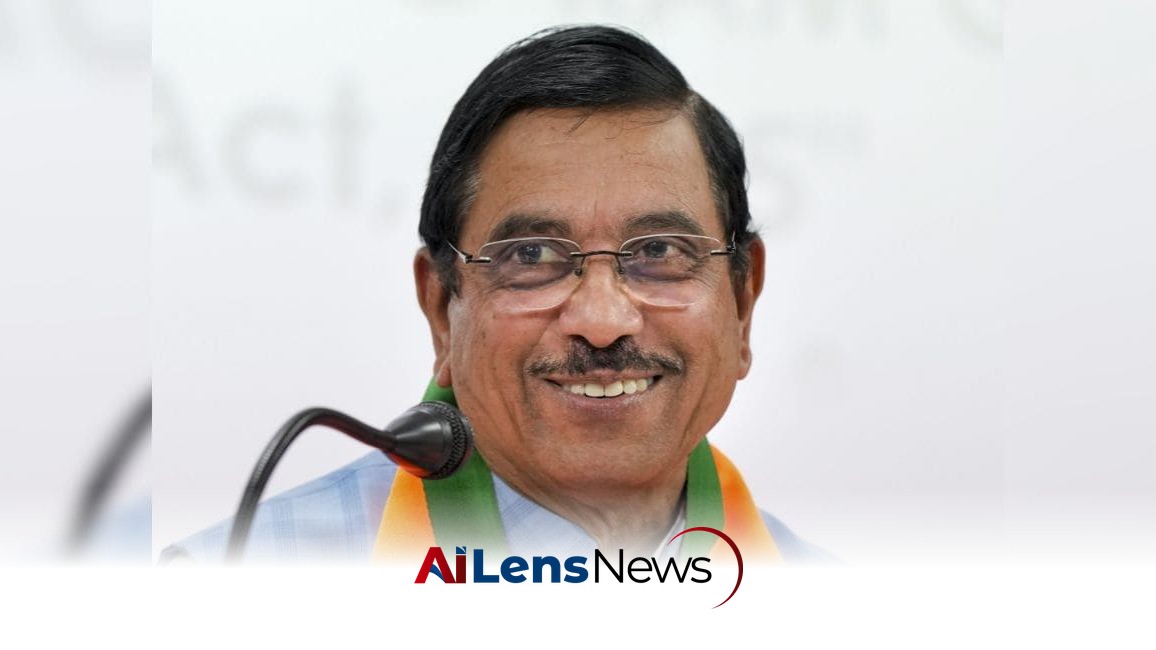


Following protests over an alleged NEET-UG paper leak, Prahlad Joshi has been appointed as the new Education Minister, succeeding Dharmendra Pradhan who resigned amid escalating tensions.
Doha, Qatar Jul 26, 2026 ALN: New Delhi: Hours after nationwide protests led by the Cockroach Janata Party (CJP) resulted in Union Education Minister Dharmendra Pradhan's resignation, Union Minister Prahlad Joshi was appointed as Education Minister on Saturday evening. This development comes amid a backdrop of significant unrest in the education sector, particularly surrounding the National Eligibility cum Entrance Test (NEET-UG), a critical examination for aspiring medical students in India.
Joshi, who currently serves as Union Minister for Consumer Affairs, Food and Public Distribution, will continue to hold his existing portfolio while also overseeing the Education Ministry. His dual responsibilities reflect the government's strategy of consolidating ministerial roles to streamline operations, especially in crucial sectors like education and food distribution.
Following his appointment, Joshi expressed his commitment to continuing the Centre's education reforms under Prime Minister Narendra Modi's leadership. "In the last 12 years of Prime Minister Narendra Modi's government, many historic achievements have been made. Over the last four to five years, Dharmendra Pradhan also implemented the National Education Policy, and several important initiatives were undertaken. The country has made significant progress in the new education system. Under the guidance of the Prime Minister, I will work to the best of my ability and fulfil my responsibilities with dedication," he told the media. This statement underscores his intent to maintain continuity in educational policies that have been a hallmark of the Modi administration.
A Rashtrapati Bhavan communiqué stated that President Droupadi Murmu, on the advice of Prime Minister Narendra Modi, accepted Pradhan's resignation with immediate effect. The swift action taken by the President reflects the urgency of the situation and the government's willingness to address public grievances. The communiqué added that the President had directed Joshi, a Cabinet Minister, to assume charge of the Ministry of Education in addition to his existing responsibilities.
The protests that led to Pradhan's resignation stemmed from allegations of a NEET-UG question paper leak, which sparked widespread outrage among students and educational activists. The CJP, a political party that has positioned itself as a voice for students' rights, launched nationwide protests demanding Pradhan's resignation. The movement gained significant traction after climate activist Sonam Wangchuk began a hunger strike in support of the protesters, drawing media attention and public sympathy. Student organizations and various political factions quickly joined the agitation, amplifying the call for accountability and reform within the education system.
However, the protests turned violent on July 20, when clashes erupted between protesters and the police, resulting in injuries on both sides. The escalation of violence highlighted the deep frustrations felt by students regarding the perceived inadequacies in the education system and the government's response to their concerns. Following the incident, several protesters were booked while others were detained, raising questions about the right to protest and the government's approach to dissent.
The CJP later reported that its spokespersons, Ashutosh Ranka and Saurav Das, met with BJP president J P Nadda and submitted a memorandum outlining the party's demands. The party articulated three key demands: the resignation of Union Education Minister Dharmendra Pradhan; the withdrawal of all legal cases against protesters and organizers, accompanied by an assurance that no fresh cases would be filed; and compensation of ₹1 crore each for the families of those who died by suicide following the alleged NEET-UG paper leak controversy. These demands reflect the gravity of the situation and the emotional toll it has taken on students and their families.
On Saturday afternoon, Pradhan tendered his resignation, stating that the decision was made to ensure that anti-national elements did not exploit the situation. "To ensure that anti-national elements are not benefited by the situation at Jantar Mantar and across the country, that the nation remains united, students in India do not get tangled in legal complexities and focus on their studies and their career, I have tendered my resignation to the Prime Minister," his resignation letter indicated. This rationale suggests a broader concern within the government about maintaining national stability amidst rising tensions.
The resignation paved the way for constructive dialogue between CJP spokespersons Saurav Das and Ashutosh Ranka and Union Ministers J P Nadda and Jitendra Singh. Following their meeting, both sides reached a consensus, with the Centre agreeing to all three demands put forward by the CJP, according to Das and Ranka. This agreement illustrates the government's responsiveness to public pressure and its willingness to engage with dissenting voices, albeit under contentious circumstances.
With its conditions met, the CJP formally withdrew its agitation, stating that the decision was based on the government's acceptance of its demands. "Cockroach Janata Party declares that we withdraw the agitation in good faith, with the understanding that the agreed-upon terms will be executed within the agreed-upon timelines," Das remarked. This statement indicates a cautious optimism among the protesters, who may feel that their voices have been heard, yet it also places the onus on the government to follow through on its commitments.
The party also urged protesters to end the agitation immediately and return home peacefully, emphasizing the importance of resolving such issues through dialogue rather than confrontation. The CJP's decision to withdraw its protests reflects a strategic choice to engage with the government while also preserving the momentum of their movement for future advocacy. The party indicated that it would announce its future course of action on other issues at a later date, suggesting that while this specific agitation has concluded, the broader struggle for educational reform and accountability is far from over.
This series of events raises critical questions about the state of education in India, the integrity of examination processes, and the government’s responsiveness to public outrage. The appointment of Prahlad Joshi as the new Education Minister could signal a shift in strategy as the government seeks to stabilize the situation and restore confidence among students and parents. As Joshi takes on this dual role, his performance in addressing the ongoing concerns surrounding educational reforms and examination integrity will be closely scrutinized. The implications of these developments will likely resonate across the educational landscape, influencing policy decisions and the relationship between the government and the student community in the months to come.
To learn more about the latest developments in Political Controversies, stay updated with our exclusive reports and analyses on AiLensNews.

