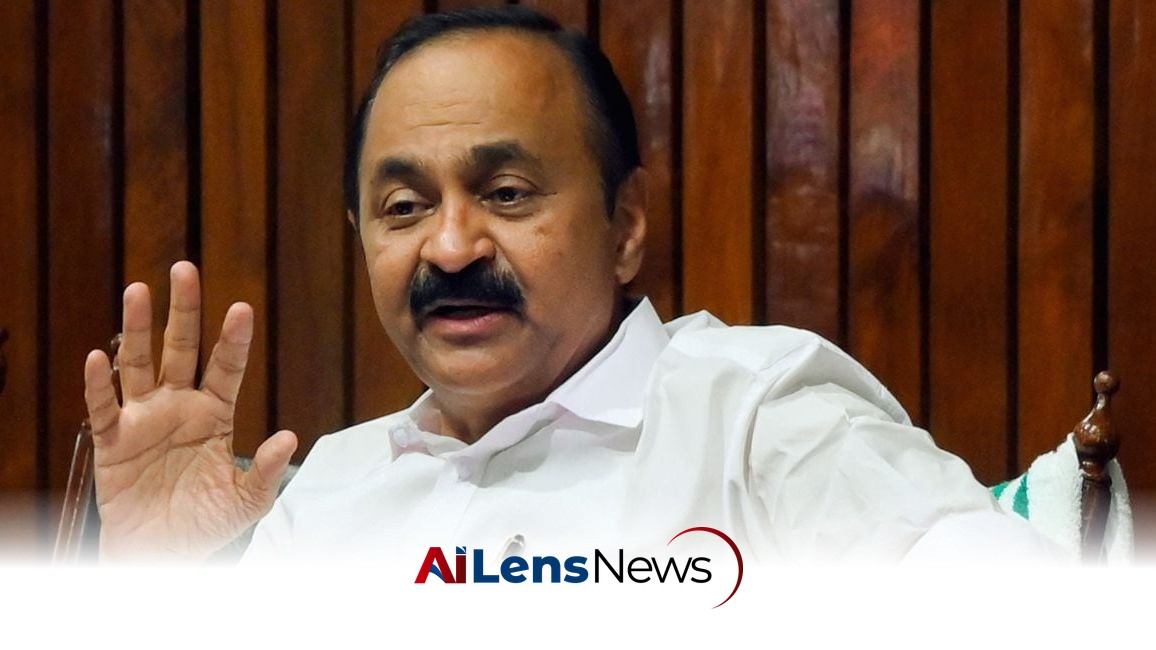


Chief Minister V.D. Satheesan accuses Pinarayi Vijayan of inciting communal tensions by misrepresenting the previous government's stance on Waqf Board appointments.
Doha, Qatar Jul 22, 2026 ALN: The ongoing debate surrounding the composition of the Waqf Board in Kerala has sparked significant political controversy, particularly regarding the appointment of non-Muslim members. Chief Minister V D Satheesan's recent comments have reignited discussions about the legal and constitutional implications of these appointments. The Waqf Board, which oversees the administration of Muslim charitable endowments, has become a focal point for broader discussions about communal representation and the rights of minority groups within the Indian constitutional framework.
Chief Minister Satheesan defended the current stance of the United Democratic Front (UDF) government, asserting that the previous Left Democratic Front (LDF) administration, led by Opposition Leader Pinarayi Vijayan, had initially agreed to the inclusion of non-Muslim members. Satheesan emphasized that the order issued under the amended Unified Waqf Management, Empowerment, Efficiency and Development (UMEED) Act, 2025, explicitly stated the provision for appointing two non-Muslim members to the Waqf Board. This assertion is crucial as it highlights the continuity of policy decisions across different administrations, which is often overlooked in political discourse.
The UMEED Act, which aims to enhance the efficiency and governance of Waqf properties, has been a subject of legal scrutiny and political contention. The Act stipulates various provisions, including the composition of the Waqf Board, which is intended to ensure that the board reflects the diverse interests of the Muslim community and other stakeholders. Satheesan pointed out that the previous government's delay in appointing these members was due to the scheduling of Bar Council elections, suggesting that the appointments were not only planned but also contingent upon procedural timelines.
Vijayan's assertion that appointing non-Muslim members was unconstitutional adds another layer of complexity to the issue. He cited ongoing legal challenges and expressed concerns about the potential implications for communal harmony in Kerala. The argument hinges on Articles 14, 25, and 26 of the Indian Constitution, which guarantee equality before the law, the freedom of religion, and the right to manage religious affairs, respectively. The LDF government's intervention petition in the Supreme Court reflects their legal stance that including non-Muslims on the board undermines the constitutional provisions that protect the rights of religious minorities.
However, Satheesan countered this argument by referencing the commitments made by the LDF government itself during its tenure. He pointed out that the LDF had assured the Supreme Court that non-Muslim members would be appointed, thereby suggesting a contradiction in their current opposition to such appointments. This inconsistency raises questions about the motivations behind the LDF's position and whether political expediency is influencing their legal arguments.
Moreover, the composition of the Waqf Board is not only a legal matter but also a reflection of the socio-political landscape in Kerala, where communal identities play a significant role in governance and public policy. The inclusion of non-Muslim members is seen by some as a step towards greater inclusivity and representation, while others view it as a potential infringement on the autonomy of Muslim institutions. This dichotomy reflects broader national debates about secularism, minority rights, and the role of religion in public life.
In addition to the controversy surrounding non-Muslim appointments, Satheesan highlighted other grievances regarding the newly constituted Waqf Board. These include the lack of representation for minority groups within the Muslim community, such as Shia, Bohra, and Agakhani sects, as well as concerns about the eligibility of the appointed members. These issues underscore the complexities of managing a diverse community and the challenges of ensuring fair representation within institutional frameworks.
The Chief Minister's remarks suggest a willingness to address these grievances and reconstitute the Board to better reflect the interests of various Muslim factions. However, he also stressed the importance of dismissing petitions that challenge the inclusion of non-Muslims, indicating a desire to uphold the provisions of the UMEED Act while navigating the political landscape.
As the debate continues, the implications of these appointments extend beyond the Waqf Board itself. They touch on the broader themes of governance, communal relations, and the interpretation of constitutional rights in a diverse society. The political maneuvering surrounding the Waqf Board appointments serves as a microcosm of the larger struggles faced by minority communities in India, where legal frameworks often intersect with deeply rooted social and cultural dynamics.
The Supreme Court's involvement in this matter further complicates the situation, as judicial interpretations can set precedents that influence future governance and community relations. The court's dismissal of certain petitions, while upholding others, indicates an ongoing legal battle that could have lasting effects on how Waqf properties are managed and how minority rights are protected in the context of state governance.
In conclusion, the controversy surrounding the Waqf Board in Kerala exemplifies the intricate relationship between law, politics, and communal identity in India. As Chief Minister Satheesan and Opposition Leader Vijayan continue to spar over the issue, the outcome of this debate will likely have significant implications for the governance of minority institutions and the broader discourse on secularism and representation in the country. The ongoing discussions will require careful navigation to ensure that the rights of all communities are respected while fostering an environment of mutual understanding and cooperation.
To understand the implications of the Waqf Board's composition, it is essential to delve into the historical context of Waqf properties in India. Waqf, a legal entity in Islamic law, refers to the endowment of property for religious or charitable purposes. The management of these properties has historically been a point of contention, especially in a diverse society like India, where multiple religious and cultural identities coexist. The Waqf Board's responsibilities include the administration of these properties, ensuring that they are used for the intended purposes, and safeguarding the rights of beneficiaries.
In Kerala, the Waqf Board has been instrumental in managing various socio-religious institutions, including mosques, schools, and hospitals. As such, its composition is not merely an administrative matter but a reflection of the community's trust and aspirations. The ongoing discourse about non-Muslim appointments raises critical questions about how inclusive governance can be achieved without compromising the autonomy of religious institutions.
Another layer of complexity is added by the socio-political dynamics in Kerala, a state known for its unique blend of communal harmony and political activism. Kerala's political landscape is characterized by a history of leftist movements, which have often championed secularism and social justice. However, the recent controversies surrounding the Waqf Board highlight the tensions that can arise when governance intersects with religious identities. The debates around the Waqf Board serve as a reminder of the delicate balance that must be maintained to ensure that all communities feel represented and respected within the governance framework.
Furthermore, the implications of this controversy extend to the broader discourse on secularism in India. The Indian Constitution enshrines the principle of secularism, which mandates the state to treat all religions equally. However, practical governance often challenges this ideal, as various communities seek representation and recognition in public life. The Waqf Board issue reflects a microcosm of this larger national conversation, where the rights of minority communities are continually negotiated within the political arena.
As discussions surrounding the Waqf Board continue, it will be crucial for stakeholders to engage in constructive dialogue that prioritizes the rights and interests of all communities involved. The potential for conflict exists, but so does the opportunity for collaboration and mutual understanding. By fostering an environment of inclusivity and respect, Kerala can serve as a model for addressing similar challenges in other parts of India, where communal identities and governance intersect in complex ways.
In summary, the ongoing debate over the Waqf Board's composition in Kerala encapsulates the intricate relationship between law, politics, and communal identity in India. As the Chief Minister and the Opposition Leader navigate this contentious issue, the outcome will likely have lasting implications for minority rights, governance, and the broader discourse on secularism in the country. The challenges presented by this situation call for careful consideration and a commitment to ensuring that all voices are heard and respected in the ongoing quest for equitable governance.
To learn more about the latest developments in Political Controversies, stay updated with our exclusive reports and analyses on AiLensNews.

