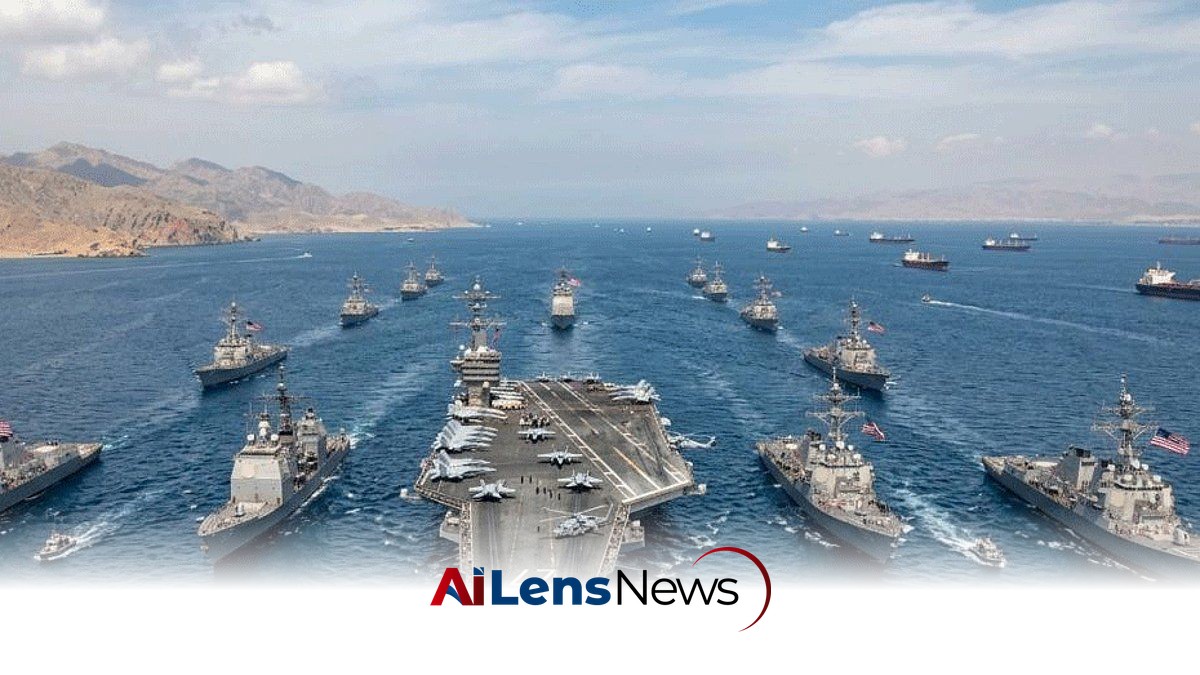


As tensions rise in the Strait of Hormuz, analysts warn that the renewed conflict with Iran could evolve into a prolonged military engagement, challenging Trump's promise to end 'forever wars.'
Doha, Qatar Jul 16, 2026 ALN: Dubai: Donald Trump returned to the White House promising to end America’s “forever wars,” not start new ones. However, a recent analysis from The New York Times raises a critical question that is becoming increasingly difficult to ignore: Could the renewed conflict with Iran evolve into the very kind of prolonged military engagement that Trump vowed to avoid?
The concern is not that the United States is preparing for another Iraq or Afghanistan, with thousands of troops on the ground. Instead, analysts suggest that the greatest risk lies in an open-ended struggle over the Strait of Hormuz, where Washington is determined to keep one of the world’s most important shipping lanes open while Tehran insists it remains an “unbreakable red line.”
With diplomacy stalled, military strikes resuming, and tensions once again centered on Hormuz, the conflict is beginning to resemble a long strategic contest rather than a brief campaign. This situation not only poses risks for U.S. foreign policy but also has significant implications for global energy markets and regional stability.
Unlike previous confrontations between the U.S. and Iran, the latest crisis has moved beyond the nuclear program alone. The Strait of Hormuz, through which approximately one-fifth of the world’s seaborne oil passes, has become the conflict’s strategic center of gravity. This narrow waterway is not only crucial for oil transportation but also serves as a vital link between Gulf energy producers and markets in Asia, Europe, and beyond.
The United States has repeatedly pledged to ensure freedom of navigation through the waterway. Iran, however, views control over Hormuz as one of its strongest strategic assets and has shown little willingness to surrender that leverage. The Iranian military recently described the strait as an “unbreakable red line,” warning that it would destroy “all infrastructure throughout the region” if President Trump followed through on threats to attack Iranian infrastructure.
These opposing objectives create the risk of repeated military confrontations even if neither side seeks a full-scale regional war. The stakes are high; any disruption in the flow of oil through Hormuz could quickly affect global oil prices, shipping costs, and insurance premiums, leading to economic repercussions that extend far beyond the region.
Around 20% of global seaborne oil trade passes through the Strait of Hormuz, making it a critical artery for the global economy.
The waterway links Gulf energy producers with markets in Asia, Europe, and beyond, highlighting its significance in international trade.
Any disruption in this vital route could lead to skyrocketing oil prices, increased shipping costs, and higher insurance premiums, affecting economies worldwide.
The U.S. has stated its commitment to keeping the route open, emphasizing the importance of maintaining stability in global energy markets.
Iran views the strait as a key strategic lever, asserting its control over it as an “unbreakable red line” that it is unwilling to compromise.
According to The New York Times, military historians describe this as the “short-war fallacy” — the belief that overwhelming military strength can quickly achieve political objectives. Lawrence Freedman, emeritus professor of war studies at King’s College London, argues that powerful nations often underestimate how difficult it is to convert battlefield success into lasting political outcomes. Historical examples abound, with the United States quickly achieving its initial military objectives in Vietnam, Iraq, and Afghanistan, only to become drawn into years of conflict after political solutions proved elusive.
Iran presents a different challenge. Washington has shown little appetite for deploying ground troops, relying instead on air strikes, naval power, and economic pressure. However, analysts argue that these tools alone may not be sufficient to compel Tehran to change course. The Iranian government has demonstrated resilience in the face of sanctions and military threats, often leveraging its regional influence to counteract U.S. actions.
Unlike insurgent groups in Iraq or Afghanistan, Iran is a sovereign state with the ability to impose economic costs far beyond the battlefield. By threatening commercial shipping or disrupting traffic through Hormuz, Tehran can impact global energy markets without engaging in a conventional military confrontation with the United States. This asymmetry grants Iran a form of leverage that military superiority alone cannot easily neutralize.
According to The New York Times, this asymmetry could force Washington to maintain an elevated naval and military presence in the Gulf simply to reassure allies and protect international shipping. Such a strategy may lead to a prolonged military engagement, as the U.S. would need to continuously respond to Iranian provocations to maintain its credibility and safeguard global trade routes.
The memorandum of understanding that briefly paused hostilities has effectively collapsed, leaving both sides accusing each other of violating its terms. Without a broader agreement covering Iran’s nuclear program, sanctions, and maritime security, analysts say there is little to prevent the conflict from settling into a cycle of periodic military action followed by failed diplomatic efforts. The lack of a comprehensive framework for dialogue exacerbates the situation, as both nations remain entrenched in their positions.
Ali Vaez of the International Crisis Group, quoted by The New York Times, warned that without a sustainable political settlement, the current confrontation risks creating “the circumstances for a forever war.” While it may not be accurate to conclude that the United States is already locked into another forever war, the risk is growing. Diplomatic channels remain open through regional mediators, and neither Washington nor Tehran appears eager for a direct, prolonged conflict. However, the strategic reality has shifted significantly.
As long as the United States views keeping the Strait of Hormuz open as a vital national interest, and Iran sees control over the waterway as its strongest bargaining chip, every military exchange risks reinforcing a cycle that becomes increasingly difficult to break. For Trump, the challenge may no longer be simply ending the current fighting. It may be about avoiding a conflict that evolves into a years-long contest over one of the world’s most strategically important waterways — precisely the kind of open-ended engagement he once promised Americans he would never begin.
In conclusion, the potential for a renewed conflict with Iran to evolve into a 'forever war' highlights the complexities of modern geopolitical dynamics. The interplay between military strategy, economic interests, and diplomatic negotiations creates a challenging environment for policymakers. As tensions rise and the stakes become higher, the need for effective diplomacy and conflict resolution becomes more critical than ever. The implications of this situation extend beyond the immediate region, affecting global energy markets and international relations as a whole. The world watches closely as the U.S. and Iran navigate this precarious landscape, hoping for a resolution that avoids the pitfalls of prolonged conflict.
To learn more about the latest developments in Political Controversies, stay updated with our exclusive reports and analyses on AiLensNews.

