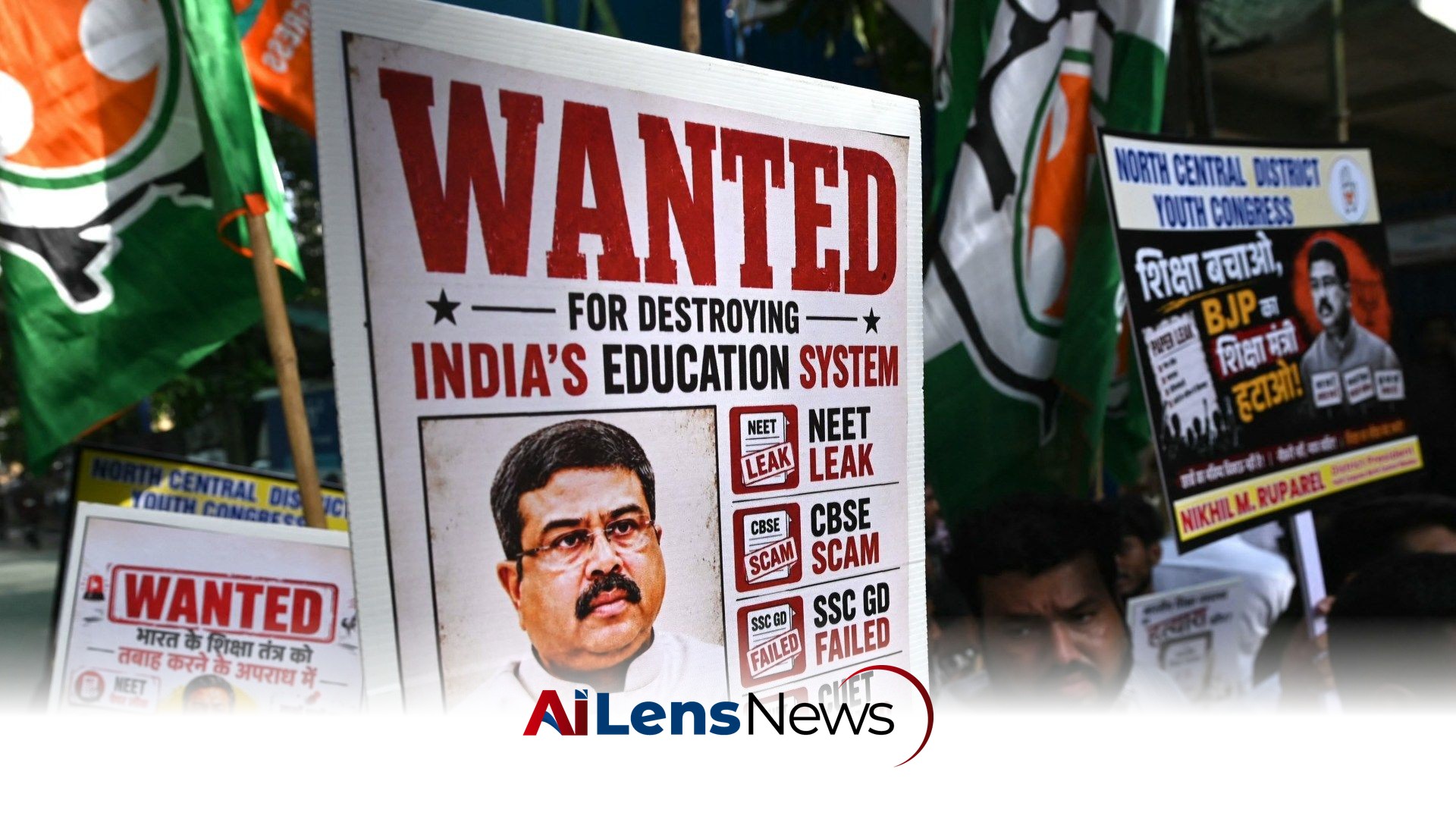


Thousands rally in New Delhi, calling for the sacking of Education Minister Dharmendra Pradhan over a series of exam paper leaks, challenging Modi's governance.
Doha, Qatar Jul 22, 2026 ALN: In recent weeks, India has witnessed a significant wave of protests led by the youth, particularly from the so-called "cockroach" movement, which has emerged as a powerful voice against perceived governmental failures. The movement has primarily centered around the demand for the resignation of Education Minister Dharmendra Pradhan, following a series of examination paper leaks that have raised serious concerns about the integrity of the education system in India.
The protests have taken place in the capital city of New Delhi, where thousands of supporters have set up camp, demonstrating their frustration and anger for over a month. The scale and intensity of these protests are notable, with reports indicating that more than 100 individuals have sustained serious injuries due to police actions, including the use of batons and tear gas during clashes on Monday. This violent response from law enforcement has sparked further outrage among the protesters and has drawn attention to the broader issues of governmental accountability and transparency.
The protests represent one of the most significant challenges to Prime Minister Narendra Modi's government during his third term in office. Modi's administration has been characterized by a strong Hindu nationalist agenda, and the ongoing demonstrations signal a growing discontent among younger generations, particularly those who feel that their future is jeopardized by corruption and mismanagement in the education sector.
As the protests continue, India's main opposition parties have joined the demonstrations, expressing solidarity with the youth and amplifying calls for Pradhan's resignation. This coalition of opposition voices has heightened the political stakes, as it not only challenges the ruling party's authority but also seeks to mobilize public sentiment against perceived governmental failures.
Despite the mounting pressure and calls for accountability, Minister Dharmendra Pradhan has remained steadfast in his position. This is not an isolated incident within the context of Indian politics; rather, it reflects a broader trend observed during Modi's tenure. Over the past 12 years, there have been numerous instances where ministers have faced significant public backlash and calls for resignation, yet many have continued to hold their positions.
The reluctance of Indian ministers to resign in the face of public outcry is not a new phenomenon, but it has become more pronounced under Modi's leadership. Historical precedents illustrate that accountability measures in India have often been inconsistent, particularly when it comes to ministers associated with controversial incidents.
For instance, one of the most notorious cases involved Mahesh Sharma, who served as the Minister of Culture and Tourism. After the lynching of Mohammad Akhlaq in 2015, Sharma infamously referred to the incident as an "accident," despite widespread condemnation. His refusal to resign, despite intense public outcry and protests, set a troubling precedent for ministerial accountability in India.
Similarly, the tragic death of Rohith Vemula, a Dalit student at the University of Hyderabad, sparked national protests and calls for the resignation of then-Ministers Smriti Irani and Bandaru Dattatreya. Vemula's suicide, which was linked to systemic discrimination and administrative actions taken against him and his peers, drew attention to the failures of the government in addressing issues of caste-based discrimination in educational institutions. Despite the uproar, both ministers remained in their positions, further entrenching the perception that accountability is often sidestepped in Indian politics.
Another significant incident occurred in Lakhimpur Kheri in 2021, when Ashish Mishra, the son of junior Home Minister Ajay Mishra Teni, was involved in a tragic incident that resulted in the deaths of several farmers. The public outcry was immense, demanding Teni's resignation, yet he remained in office for three years before losing his seat in the 2024 elections. This pattern of ministers clinging to power despite public demand for accountability raises questions about the effectiveness of democratic processes in India.
The ongoing protests by the "cockroach" movement may have far-reaching implications for India's political landscape. The youth-led demonstrations highlight a generational divide in political engagement and expectations from government officials. Young people, particularly from marginalized communities, are increasingly vocal about their rights and are demanding accountability from those in power.
Moreover, the protests come at a time when India is grappling with a range of socio-economic challenges, including rising unemployment, inflation, and educational disparities. The examination paper leaks have not only undermined the credibility of the education system but have also exacerbated existing frustrations among students who feel that their futures are at stake. The government's inability to address these issues effectively could lead to a loss of trust among the electorate, particularly among young voters.
As the protests continue, they may serve as a catalyst for broader social movements aimed at addressing systemic issues within Indian society. The involvement of opposition parties in the protests adds a political dimension that could reshape the electoral landscape in the lead-up to future elections. If the government fails to respond adequately to the demands of the protesters, it risks alienating a significant segment of the population that is increasingly disillusioned with the status quo.
In conclusion, the protests in New Delhi represent a critical juncture in Indian politics, as young people demand accountability and transparency from their leaders. The ongoing civil unrest reflects deep-seated frustrations with the education system and the government's handling of corruption, and it has the potential to reshape political dynamics in the country. As the situation evolves, it will be essential to monitor the responses of both the government and the opposition, as well as the broader societal implications of these protests for India's future.
To learn more about the latest developments in Political Controversies, stay updated with our exclusive reports and analyses on AiLensNews.

