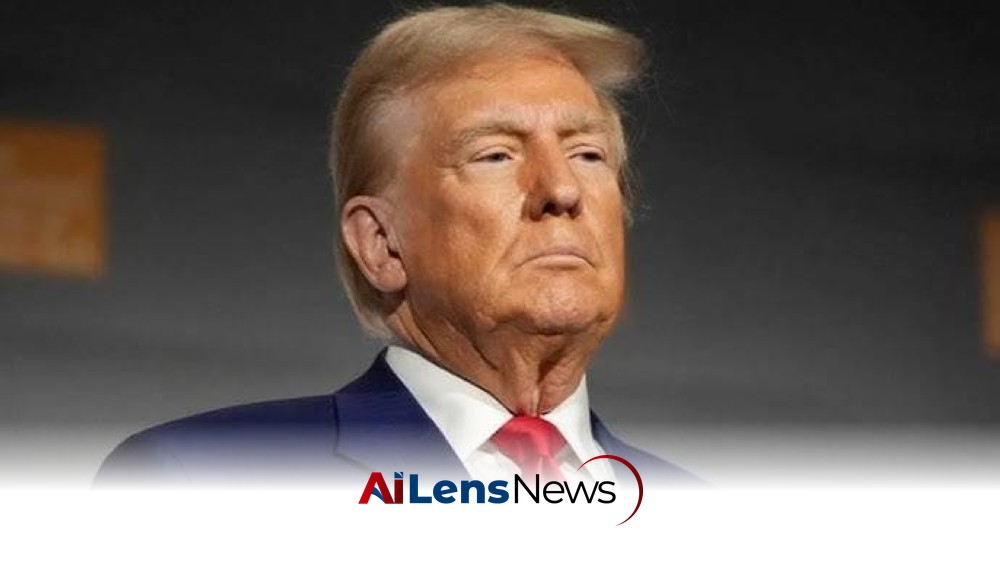


US President Donald Trump reveals a landmark agreement to disarm Hamas and withdraw Israeli forces from Gaza, thanking Qatar and other mediators for their efforts.
Doha, Qatar Jul 31, 2026 ALN: US President Donald Trump announced a historic agreement aimed at disarming Hamas and facilitating the withdrawal of Israeli forces from the Gaza Strip. This announcement marks a significant moment in the long-standing Israeli-Palestinian conflict and has generated a mix of reactions from various stakeholders in the region and beyond. In his statement, Trump expressed gratitude towards Qatar and other mediators for their crucial role in reaching this agreement.
In a post on his official Truth Social account, Trump stated: "Today, the Peace Council reached a historic agreement for the complete disarmament of Hamas and all other armed groups in Gaza. This is a tremendous step toward lasting peace and security." This statement underscores the United States' ongoing commitment to finding a resolution to the decades-long conflict that has seen significant loss of life and widespread suffering on both sides.
The framework of the agreement, as outlined by Trump, indicates that the disarmament process will occur in carefully structured phases. He emphasized that as disarmament progresses, Israeli forces will begin their withdrawal from Gaza. This phased approach is critical, as it aims to build trust between the involved parties and ensure that the process is monitored effectively to prevent any potential resurgence of violence.
Trump's announcement also highlighted the importance of collaboration among regional players, particularly Qatar, Egypt, and Turkey, who have been instrumental in mediating discussions between the conflicting parties. His expression of gratitude towards these nations reflects a broader strategy of engaging key regional stakeholders to facilitate peace and stability in the Middle East. The role of these countries is particularly significant given their historical involvement in the Israeli-Palestinian conflict and their influence over various factions within Palestinian territories.
In the context of the Israeli-Palestinian conflict, Hamas has been a dominant force in Gaza since it took control in 2007. The group has been involved in multiple conflicts with Israel, leading to severe humanitarian crises in the region. The disarmament of Hamas, as proposed in the agreement, would represent a fundamental shift in the power dynamics within Gaza and could pave the way for a more stable governance structure. However, the challenges of disarmament are substantial, as Hamas has deep roots in the socio-political fabric of Gaza and has maintained significant support among certain segments of the Palestinian population.
Hamas, which is designated as a terrorist organization by Israel and several Western nations, has been a significant player in the conflict, often using military means to assert its political agenda. The implications of disarming such a group are profound, as it raises questions about the future governance of Gaza and the potential vacuum of power that could ensue. Critics of the disarmament plan argue that without addressing the underlying causes of support for Hamas, such as economic deprivation and lack of political representation, any disarmament effort could be temporary or even counterproductive.
Furthermore, Trump described the agreement as "a major historic achievement in the implementation of the Trump 20-point plan" to end the war, which was previously outlined as a comprehensive approach to achieving peace in the region. The plan includes various elements aimed at addressing key issues such as territorial disputes, the status of Jerusalem, and the rights of refugees. The announcement of this agreement could be seen as a validation of Trump's approach, which has faced criticism from various quarters for its perceived bias towards Israel.
As part of the agreement, Trump announced that an international stabilization force will be deployed to work alongside a newly established Palestinian police force, which will assume responsibility for maintaining order and security in Gaza. This aspect of the agreement is particularly noteworthy, as it reflects an effort to internationalize the peacekeeping process and provide a safety net for both Palestinian civilians and Israeli citizens. The involvement of an international force could help mitigate fears of violence and ensure that the disarmament process is conducted in a secure environment.
The international community has long been divided on the issue of peace in the Israeli-Palestinian conflict, with various countries and organizations proposing different solutions over the years. The establishment of an international stabilization force could signal a shift in how external actors engage with the situation, potentially leading to a more collaborative approach to peacekeeping that includes a broader array of nations and international organizations.
The implications of this agreement are vast. If successful, it could lead to a significant reduction in hostilities and open the door for renewed dialogue between Israel and the Palestinian Authority. A stable Gaza could also facilitate economic development and improve living conditions for its residents, who have faced years of blockade and conflict. However, skepticism remains high among many observers, as previous attempts at peace have often faltered due to a lack of trust and ongoing violence. The history of failed negotiations looms large, and many are cautious about the prospects of this agreement leading to lasting peace.
Reactions to the announcement have varied widely. Supporters of the agreement view it as a hopeful step towards peace and stability in the region, while critics argue that disarmament without addressing the underlying socio-economic issues faced by Palestinians may not lead to lasting peace. The role of external actors, including the United States, in shaping the future of the region will be closely scrutinized in the coming weeks and months. The effectiveness of the agreement will depend not only on the actions of Hamas and Israel but also on how the international community responds to this new development.
In conclusion, President Trump's announcement of a historic peace agreement for Gaza represents a pivotal moment in the Israeli-Palestinian conflict. The commitment to disarm Hamas and withdraw Israeli forces, coupled with the involvement of international mediators and a stabilization force, presents a potential pathway towards peace. However, the success of this agreement will depend on the willingness of all parties to engage in good faith negotiations and address the complex realities on the ground. As the world watches, the coming days will reveal whether this agreement can translate into tangible progress towards a lasting resolution of one of the most challenging conflicts in modern history.
To learn more about the latest developments in Elections, stay updated with our exclusive reports and analyses on AiLensNews.

