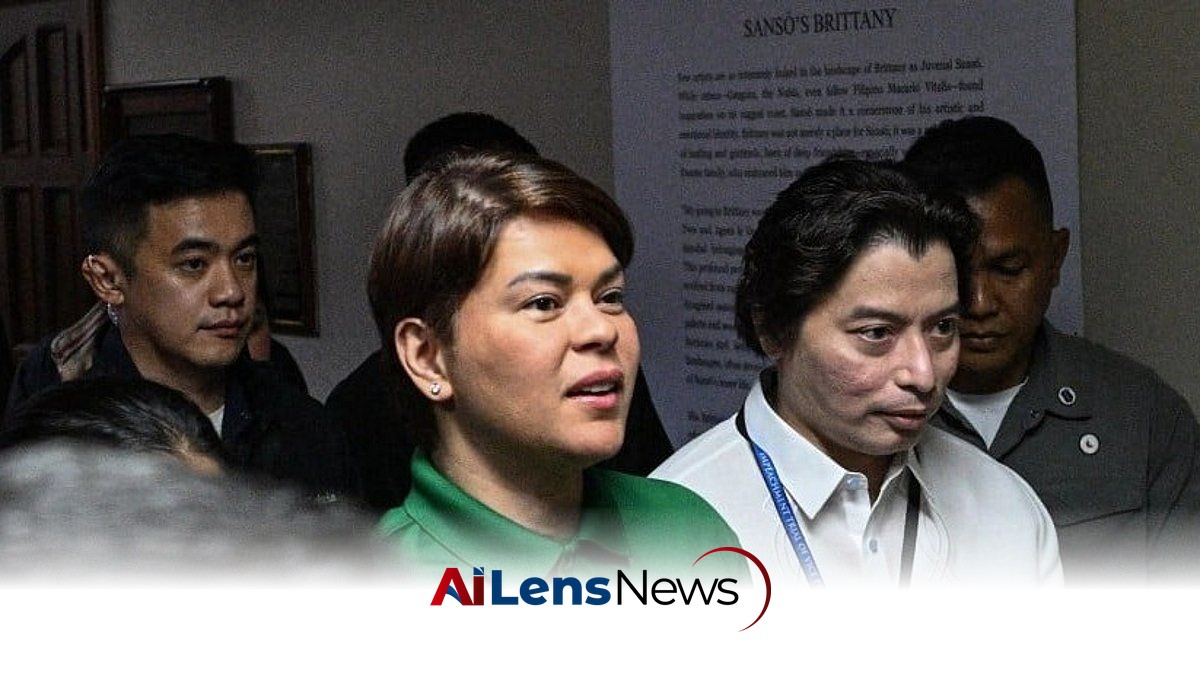


A recent survey reveals that 70% of Filipinos believe Vice President Sara Duterte should address impeachment charges against her, indicating strong public sentiment for accountability.
Doha, Qatar Jul 24, 2026 ALN: Manila: Seven in ten Filipinos believe Vice President Sara Duterte should answer the impeachment charges against her, according to a new Social Weather Stations (SWS) survey released as the Senate impeachment trial enters a critical phase. This survey underscores a significant moment in Philippine politics, where accountability and governance are under intense scrutiny.
The nationwide survey, conducted from June 20 to 29 — about a week before the Senate formally began hearing the case — found that 70% of respondents agreed that Duterte "must address the impeachment charges to be able to answer all allegations pertaining to the corruption charges filed against her." This level of public support for accountability reflects a growing demand for transparency in government, particularly in the context of corruption allegations that have plagued various administrations in the Philippines.
Only 17% disagreed, while 13% were undecided, giving Duterte a net agreement rating of +52, up five points from +47 in the March 2026 survey. This upward trend in public support for the impeachment process indicates a shift in the political landscape, as citizens increasingly expect their leaders to uphold ethical standards and be held accountable for their actions.
The findings suggest sustained public support for holding the vice president accountable through the impeachment process, even as she remains one of the country's most popular political figures and the early frontrunner in several 2028 presidential preference surveys. The duality of public sentiment towards Duterte illustrates the complexities of political loyalty in the Philippines, where personal charisma and political lineage often play significant roles in public perception.
The poll also found that 74% of adult Filipinos were already aware that Duterte's impeachment case had reached the Senate and was expected to proceed to trial. This high level of awareness is indicative of the importance of the issue in the national discourse, as impeachment trials are rare and carry significant implications for governance and political stability.
Awareness has steadily increased over the past year as the politically charged proceedings have dominated national headlines. The media's role in shaping public opinion cannot be overstated, as continuous coverage of the impeachment process has kept the electorate informed and engaged. Public awareness was highest in Metro Manila (79%), followed by Mindanao (77%), Balance Luzon (74%), and the Visayas (69%). This regional disparity in awareness may reflect differing levels of media access and political engagement across the country.
Support for requiring Duterte to answer the charges was strongest in the Visayas, with a net agreement score of +58, followed by Balance Luzon (+56), Metro Manila (+49) and Mindanao (+42). These figures suggest that while Duterte enjoys significant popularity, there is a clear expectation from the public that she must address the allegations raised against her to maintain her credibility and legitimacy as a leader.
The survey comes as the impeachment court weighs key evidentiary issues, including whether prosecutors can obtain Duterte's bank records and income tax returns as part of allegations involving unexplained wealth and the alleged misuse of confidential funds. The implications of these proceedings are profound, as they not only affect Duterte's political future but also set a precedent for how similar cases might be handled in the future.
The impeachment complaint accuses Duterte of culpable violation of the Constitution, betrayal of public trust, graft and corruption, including the alleged misuse of ₱612 million in confidential funds, refusal to recognise congressional oversight, alleged threats against President Ferdinand Marcos Jr. and his family, and failure to fully disclose assets in her Statements of Assets, Liabilities and Net Worth (SALNs). Each of these allegations carries serious legal and ethical implications, contributing to the urgency of the trial.
Duterte has repeatedly denied the allegations and described the impeachment as politically motivated. This narrative of political persecution resonates with some of her supporters, who view the impeachment process as an attack on her political legacy and a challenge to her family's influence in Philippine politics. Such sentiments highlight the polarized political climate in the country, where loyalty to political figures often outweighs concerns about governance and accountability.
Despite the strong public sentiment that she should respond to the charges, Duterte continues to enjoy positive approval ratings. The same SWS survey gave the vice president a net satisfaction rating of +31, classified as "good," with 58% satisfied, 26% dissatisfied, and 15% undecided. This paradox of public opinion illustrates the complexities of political loyalty in the Philippines, where personal charisma and political legacy can sometimes overshadow calls for accountability.
Respondents who believed Duterte should not answer the impeachment charges gave her an even higher "very good" net satisfaction rating of +61, compared with +22 among those who agreed she should address the allegations. This disparity suggests that while there is a strong call for accountability, many Filipinos still hold a favorable view of Duterte's overall performance as vice president.
Political analysts say the results highlight the complexity of public opinion: many Filipinos continue to approve of Duterte's overall performance while simultaneously believing she should publicly answer the accusations against her through the constitutional impeachment process. This duality reflects a broader trend in Philippine politics, where the electorate often grapples with conflicting sentiments about their leaders, balancing personal loyalty with demands for ethical governance.
The non-commissioned survey interviewed 1,200 adults nationwide through face-to-face interviews and carries a margin of error of ±3 percentage points nationally. The methodology of the survey is crucial for understanding the reliability of the findings, as public opinion polls play a significant role in shaping political narratives and influencing decision-making processes.
To learn more about the latest developments in Elections, stay updated with our exclusive reports and analyses on AiLensNews.

