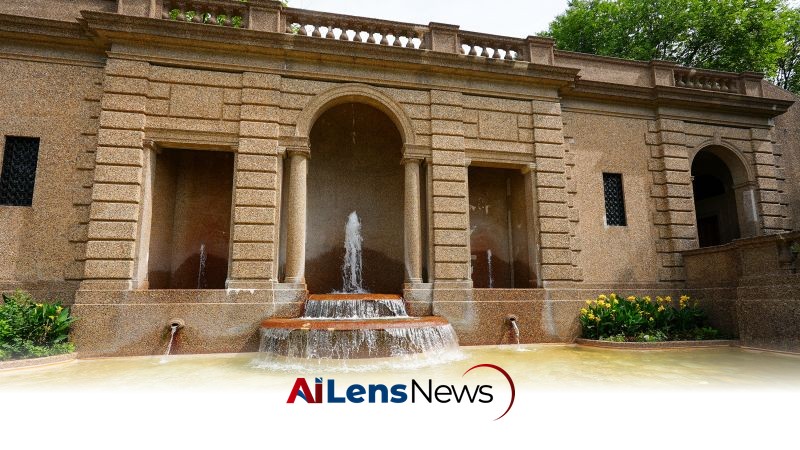


President Trump's efforts to enhance Washington, DC's aesthetics are met with challenges, including murky waters at Meridian Hill Park's fountain.
Washington DC, United States Jul 12, 2026 ALN: At a ceremony in front of the iconic cascading fountain at Meridian Hill Park in Washington, DC, earlier this month, Defense Secretary Pete Hegseth and top US officials touted President Donald Trump’s efforts to make the city “safe and beautiful.” This initiative was part of a broader campaign to revitalize the nation’s capital, coinciding with preparations for the upcoming 250th anniversary of the United States. The beautification push reflects not only an aesthetic ambition but also a political strategy aimed at enhancing the image of the administration and the city.
However, less than two weeks later, the historic park that served as Hegseth’s backdrop has become the latest hurdle President Trump is facing in his mission to give the nation’s capital a facelift. The water in the 13-basin fountain has turned into a murky, rust-orange hue, raising concerns among residents and visitors alike about the effectiveness and sustainability of the beautification efforts.
The fountain had been devoid of water for seven years before the Trump administration undertook a $4 million renovation project that repaired and reopened it in May. This renovation was met with enthusiasm from local residents, who celebrated the return of running water to the park. After the renovation, the park became a popular gathering spot, with residents flocking to the area in the evenings to sit on the steps bordering the fountain, enjoy picnics, and read books. This resurgence of activity was a positive indicator of community engagement and a sign that the beautification efforts were resonating with the public.
Despite the initial excitement, this week, parkgoers observed a brown color overtaking the reservoirs, which prompted immediate reactions. “It looks like mud,” said James Langan, a New York resident visiting DC. His comment reflects a broader sentiment among visitors who had anticipated a more pristine environment following the renovations. The discoloration of the water has raised questions about the maintenance of the fountains and the long-term viability of the beautification projects.
The fixture at Meridian Hill Park is one of nine fountains being returned to service under Trump’s March 2025 executive order, which aims to make DC “safe and beautiful.” This order is part of a larger strategy to enhance the city’s public spaces and is particularly relevant as the nation prepares to celebrate its 250th anniversary. When CNN visited the nine fountains scattered across DC this week, only one appeared to still be inoperable, while two were reported to have brown-colored water. This situation highlights the challenges associated with maintaining public infrastructure in a city where historic preservation and modern functionality must coexist.
Some residents and visitors expressed a degree of understanding and even appreciation for the running water at Meridian Hill Park, despite its coloring. “Whenever I’d like come here before, I was kind of disappointed that the water was never on, and it was kind of like overrun with trash,” said Washington, DC, resident Jedi Sworobuk. “I think it’s nice to have, especially in the heat in the summer.” This perspective underscores a critical aspect of the beautification initiative: the desire for vibrant public spaces that foster community interaction, even when faced with temporary setbacks.
The Interior Department responded to the concerns regarding the brown water at Meridian Hill Park, stating that the discoloration is due to sediment resulting from the reopening of two water lines that had been out of service for some time. Officials expressed optimism that the water would run clean within the next 24 to 36 hours, indicating that the discoloration may be a short-term issue rather than a sign of systemic neglect. A CNN crew observed workers cleaning the cascading basins on Wednesday, following social media buzz about the browning water, which suggests that the administration is taking proactive steps to address public concerns.
On Saturday, while the pools of water remained murky, they appeared less orange, which may indicate that the cleaning efforts were beginning to take effect. However, the Interior Department did not respond to a request for comment on Saturday regarding the state of the Meridian Hill fountain or the fountains at the General Philip Sheridan statue in Sheridan Circle, which remained inactive. This lack of communication may further fuel public skepticism about the administration's ability to manage these beautification projects effectively.
The fountain at Meridian Hill Park has caught the attention of many, including Alexandra McKenna, a London resident who traveled to DC and made the park a stop on her trip. “It looks pretty gross,” McKenna said, laughing. Her reaction highlights the international scrutiny that Washington, DC, faces as a symbol of American democracy and culture. The condition of the city’s public spaces can reflect broader narratives about governance, civic pride, and the effectiveness of political leadership.
McKenna also pointed to the water at the Lincoln Memorial Reflecting Pool, which has also generated headlines in recent weeks. This connection between the two sites illustrates a trend of public discourse surrounding the maintenance and presentation of key landmarks in the nation’s capital. After Trump called for the Reflecting Pool’s renovation in April, the more than $14 million project has taken on a lifecycle of draining, painting, filling, and peeling. This ongoing saga has drawn attention to the complexities involved in managing historic sites and has raised questions about resource allocation and prioritization in the context of beautification efforts.
In recent weeks, at least three individuals have been charged with destruction of property after allegedly removing pieces of blue paint from the Reflecting Pool, and a former Olympian was indicted on that allegation. The canoeist, David Hearn, pleaded not guilty, which adds a layer of controversy to the ongoing renovation efforts. Such incidents underscore the potential for vandalism and public dissent to complicate beautification initiatives, particularly when they involve significant financial investments and public scrutiny.
During a May Cabinet meeting, Trump stated that most of the fountains were in final stages or fixed, suggesting a sense of progress in the administration’s beautification agenda. However, the recent challenges faced by the Meridian Hill Park fountain and the Reflecting Pool suggest that the road ahead may be more complicated than anticipated. In his recent July Fourth address on the National Mall, Trump declared the city “safe, gleaming, and beautiful again,” though some beautification projects, like the Reflecting Pool, appear to be ongoing and fraught with difficulties.
The National Park Service has indicated that work to restore and rehabilitate historic landscapes will occur in phases, noting that the public may experience closures or limited access at certain sites. This phased approach reflects a recognition of the complexities involved in managing public spaces that are not only functional but also carry significant historical and cultural weight. As the nation prepares for its 250th anniversary, the implications of these beautification efforts extend beyond aesthetics; they touch on issues of civic engagement, historical preservation, and the role of government in shaping public spaces.
To learn more about the latest developments in Government & Governance, stay updated with our exclusive reports and analyses on AiLensNews.

