

President Donald Trump claims he has ordered the U.S. military to retaliate against Iran if he is assassinated, with Vice President Vance making the final decision.
Washington DC, United States Jul 12, 2026 ALN: In a controversial statement, former President Donald Trump has suggested that he has issued a standing order for the U.S. military to retaliate against Iran in the event of his assassination. This declaration comes amid heightened tensions between the U.S. and Iran, particularly following the assassination of Iranian Supreme Leader Ayatollah Ali Khamenei. The implications of such a statement are profound, not only for U.S.-Iran relations but also for global geopolitical stability.
During a recent interview, Trump stated that if he were to be killed, the military would be instructed to strike Iran. He emphasized that such a directive is not merely a threat but a serious order that he believes is necessary for national security. "If they take me out, they will pay a heavy price," Trump declared, underscoring the gravity of his statement. This assertion raises questions about the legality and ethical implications of preemptive military action, especially when linked to personal safety.
The very notion of a standing military order tied to the personal safety of a political leader introduces a complex dynamic into international relations. Historically, military actions have been justified under various doctrines, including self-defense and protection of national interests. However, Trump's comments suggest a shift towards a more personalized rationale for military engagement, which could set a troubling precedent in global politics.
Trump clarified that while he has made this order, it would ultimately be Vice President JD Vance who would decide on the execution of such a military response. Vance, who has been known for his hawkish stance on Iran, would be responsible for assessing the situation and determining the appropriate course of action. Vance's previous statements and actions regarding Iran suggest he may support aggressive measures, which could further escalate tensions.
Vice President Vance's role in this scenario highlights the complexities of U.S. governance and military decision-making. The chain of command in military operations typically involves multiple layers of oversight and consideration, often requiring input from various branches of the government, including the Department of Defense and Congress. Vance's willingness to act on Trump's directive raises questions about the balance of power between the executive branch and legislative oversight regarding military action.
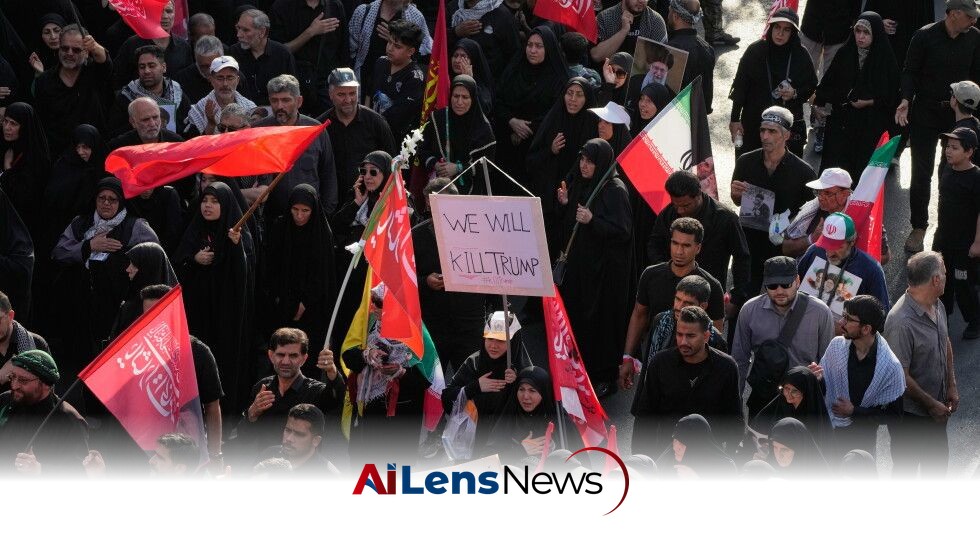
The backdrop of this statement is the recent funeral of Ayatollah Khamenei, where anti-Trump sentiments were palpable. Mourners displayed signs with messages threatening Trump's life, reflecting the deep-seated animosity that exists between the two nations. This environment of hostility raises concerns about the potential for escalation in military engagements. The assassination of Khamenei has already created a vacuum of power in Iran, leading to uncertainty about the future direction of Iranian politics and its foreign policy.
The U.S. and Iran have a long history of conflict, dating back to the 1979 Iranian Revolution and the subsequent hostage crisis. Since then, relations have been marked by mutual distrust, sanctions, and military confrontations. The Trump administration's decision to withdraw from the Iran nuclear deal in 2018 and reimpose sanctions further deteriorated relations, leading to a series of retaliatory actions from both sides. The recent developments, including the assassination of Khamenei, have added a new layer of complexity to this already fraught relationship.
In addition to the historical context, the current geopolitical landscape is further complicated by the involvement of regional powers and non-state actors. Iran's support for various militant groups across the Middle East has historically contributed to U.S. concerns regarding its influence in the region. With Khamenei's death, Iran may experience internal strife as factions vie for power, potentially impacting its foreign policy decisions and military engagements.
The public and political reactions to Trump's comments have been mixed. Supporters argue that such a stance is necessary to deter Iranian aggression, while critics warn that it could provoke further violence and instability in the region. Analysts are divided on whether this approach will bolster U.S. security or lead to unnecessary conflict. Some experts argue that a retaliatory stance could be seen as a declaration of war, which might rally Iranian factions against the U.S. and unify them in their opposition.
Public opinion on military action against Iran is often shaped by a combination of historical context, media narratives, and personal beliefs about national security. The potential for a military response to an assassination attempt could polarize public sentiment further, leading to protests or calls for diplomatic solutions. The implications of Trump's comments may also resonate within the broader context of U.S. foreign policy, where public support is crucial for any military engagement.
Furthermore, there are concerns regarding how this order aligns with international law. The United Nations Charter prohibits the use of force against the territorial integrity or political independence of any state unless in self-defense or with the approval of the UN Security Council. Trump's comments could be interpreted as a violation of these principles, raising questions about the legality of any military action taken under such an order.
Should a military strike against Iran occur following an assassination attempt on Trump, the consequences could be dire. Iran has a well-established network of regional allies and proxy groups, including Hezbollah in Lebanon and various militias in Iraq and Syria. A U.S. strike could provoke retaliatory attacks not only against American forces in the region but also against U.S. allies, further destabilizing the Middle East.
Moreover, any military action could lead to a broader conflict that might involve other nations, particularly if allies are drawn in or if the situation escalates beyond the control of U.S. policymakers. The potential for civilian casualties and the humanitarian crisis that could ensue must also be taken into account, as these factors could lead to international condemnation and further isolate the U.S. on the world stage.
The ramifications of military action could extend well beyond immediate military engagements. Economic repercussions, such as disruptions to oil supplies and increased volatility in global markets, could arise in the wake of military actions in the region. Additionally, the long-term impact on U.S. relations with other countries in the Middle East could be significant, potentially leading to a reevaluation of alliances and partnerships.
The implications of Trump's statements and the possible actions of Vice President Vance extend beyond Iran. They could signal a shift in U.S. foreign policy towards a more aggressive posture, particularly in the Middle East. This could embolden other nations, both allies and adversaries, to reevaluate their own military strategies and alliances in light of perceived U.S. willingness to engage in preemptive strikes.
Additionally, the political ramifications within the U.S. cannot be overlooked. Trump's comments may galvanize his base, reinforcing a narrative of strength and decisiveness. However, for moderate Republicans and Democrats, this could be a point of contention, leading to debates on the appropriateness of such military policies and the risks involved. The potential for bipartisan criticism of a militaristic approach could influence future policy decisions and the broader discourse surrounding national security.
As the situation unfolds, the implications of Trump's statements and the potential actions by Vice President Vance will be closely monitored. The international community is watching to see how the U.S. will navigate this precarious relationship with Iran, especially in light of Trump's provocative assertions. The stakes are high, and the choices made in the coming days and months could have lasting effects on U.S. foreign policy and global security.
In conclusion, the intersection of personal safety, national security, and international law presents a complex challenge for U.S. leadership. The ramifications of these statements and potential actions could reverberate across the geopolitical landscape, influencing not only U.S.-Iran relations but also the broader dynamics of power in the Middle East. As the world watches, the decisions made by U.S. leaders will be pivotal in shaping the future of international relations.
To learn more about the latest developments in Leaders & Politicians, stay updated with our exclusive reports and analyses on AiLensNews.

