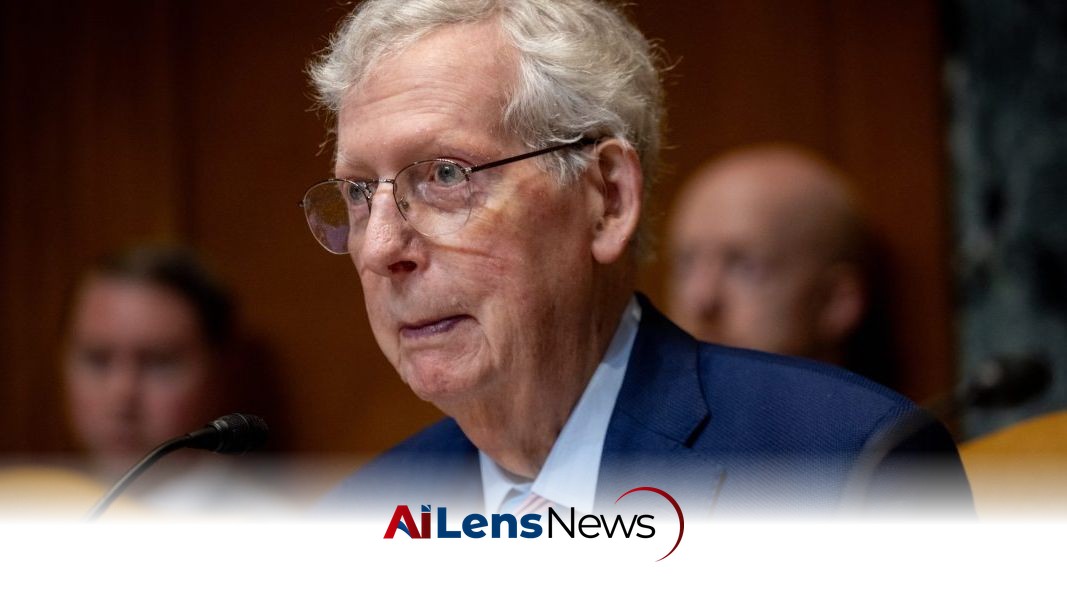


Kentucky Governor Andy Beshear urges Senator Mitch McConnell to clarify his health status as a looming deadline threatens his Senate seat's succession.
Washington DC, United States Jul 9, 2026 ALN: Kentucky Governor Andy Beshear is pressing Senator Mitch McConnell, a key figure in Congress, to provide clarity regarding his health after three weeks of silence following his hospitalization in Washington. This situation has raised significant concerns not only among constituents but also within the broader political landscape of Kentucky and the nation.
In a letter released on Wednesday, Beshear, a Democrat and potential presidential candidate for 2028, expressed that "Kentuckians have grown increasingly concerned about the current state of your health and well-being, and ability to hold office." This statement underscores the rising anxiety among constituents regarding McConnell's ability to fulfill his duties. As a prominent political figure, McConnell's health has implications that extend beyond personal well-being; it affects the legislative agenda and representation of Kentucky in the Senate.
McConnell, who has faced noticeable health challenges in recent years, was hospitalized on June 14. Since then, he has not issued any public statements, nor has he shared photos or videos, which has contributed to the uncertainty surrounding his condition. His aides have only indicated that he is "continuing to improve" and is working closely with his staff on matters concerning Kentucky and the Senate during the current recess. This limited communication has left many questioning the senator's capacity to return to his duties, especially as the Senate prepares to reconvene.
The lack of detailed information has sparked speculation about McConnell's prognosis and whether he will be able to return when the Senate reconvenes next week. In response to the growing concerns, Republican Senate leaders publicly stated on Tuesday that they had spoken with McConnell, confirming that he was alert and engaged in discussions about current events. However, the absence of direct communication from McConnell himself has not alleviated worries among his constituents and colleagues.
As McConnell prepares to retire at the end of his term in January, the campaign to elect his successor is already in motion. Kentucky's Senate succession law, which has been modified twice during Beshear's tenure, does not allow the governor to appoint a temporary successor if McConnell's seat becomes vacant before his term concludes. This law has significant implications for the political landscape in Kentucky, particularly as the state gears up for the upcoming election cycle.
According to the latest changes to the law, if McConnell's seat becomes vacant before August 3, a special election will be held to select a replacement, potentially coinciding with the general election in November. The winner of this special election could assume office almost immediately, while the general election victor would be sworn in as part of the new Congress in January. This timeline creates a pressing need for clarity regarding McConnell's health, as the potential for a vacancy looms large.
However, if the seat is vacated after August 3, the law stipulates that there would be insufficient time for a special election, leaving the seat unfilled until January. This scenario would mean that Kentucky could be without a senator for an extended period, which would impact the state's representation in Congress during critical legislative discussions and decisions.
The implications of McConnell's health extend beyond state politics; they resonate on a national level as well. As the Senate grapples with various pressing issues, including budget negotiations, healthcare, and infrastructure, the absence of a senior senator like McConnell could hinder the Republican Party's ability to navigate these challenges effectively. McConnell has been a pivotal figure in shaping legislative strategies and has played a significant role in advancing the Republican agenda over the years.
In closing his letter, Beshear wished McConnell "a safe and speedy recovery," reflecting the bipartisan concern for the senator's health and the implications for Kentucky's representation in the Senate. This sentiment highlights how, despite political differences, the health of a sitting senator is a matter of collective concern that transcends party lines. The ongoing situation serves as a reminder of the fragility of political careers and the unforeseen circumstances that can impact governance.
The political landscape in Kentucky is particularly sensitive to changes in leadership, especially given McConnell's long-standing influence. He has served as a U.S. Senator since 1985, holding the position of Senate Majority Leader from 2015 until 2021 and continuing to wield significant power within the Republican Party. His absence, even temporarily, could create a vacuum in leadership and strategy, particularly as the GOP prepares for the upcoming elections in 2024.
McConnell's role has been particularly crucial in navigating partisan divides and fostering negotiations on key issues. His ability to rally support for legislation has often determined the success of various initiatives. Thus, the uncertainty surrounding his health raises questions about the future direction of the Republican Party in the Senate and its ability to maintain cohesion during a time of increasing political polarization.
Moreover, McConnell's health could also affect the dynamics of the upcoming elections, particularly if he is unable to campaign for his chosen successor. The potential candidates vying for his seat are already gearing up for a competitive race, and their strategies may be influenced by the current uncertainty surrounding McConnell's health. This could lead to a shift in campaign focus, with candidates needing to address not only their policies but also the implications of McConnell's legacy and the future of Republican representation in Kentucky.
As the situation unfolds, the public's interest in McConnell's health continues to grow. Constituents are eager for updates, and there is a palpable sense of anxiety about the future of their representation in the Senate. This concern is compounded by the fact that Kentucky, like many states, faces a range of pressing issues that require a strong and active voice in Congress.
In the coming weeks, as the Senate reconvenes, all eyes will be on McConnell. His return to the Senate could signal a return to normalcy for the Republican Party, while any extended absence could usher in a new era of uncertainty. The implications of this situation are profound, as they touch upon the fundamental principles of democratic representation and the importance of having active and engaged leaders who can advocate for their constituents' needs.
Ultimately, the ongoing situation serves as a reminder of the importance of transparency in political health matters. Constituents have a vested interest in the well-being of their elected representatives, and the lack of communication can lead to speculation and anxiety. As McConnell's health remains under scrutiny, the need for clear and consistent updates becomes increasingly critical, not only for the sake of his constituents but also for the stability of the political landscape in Kentucky and beyond.
As the political landscape evolves, the focus will remain on McConnell's health and the potential ramifications for Kentucky and the Senate as a whole. The coming weeks will be critical in determining not only McConnell's ability to return to the Senate but also the future of his seat and the strategies that will unfold as candidates position themselves for the upcoming elections. The situation underscores the importance of transparency in political health matters, as constituents have a vested interest in the well-being of their elected representatives.
To learn more about the latest developments in Leaders & Politicians, stay updated with our exclusive reports and analyses on AiLensNews.

