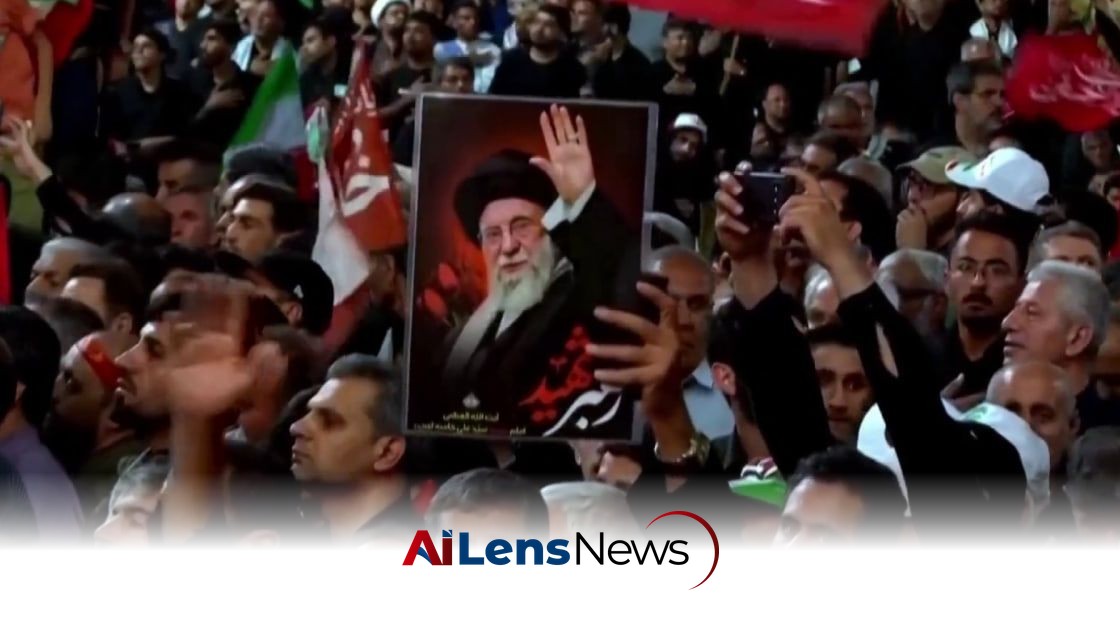


Mojtaba Khamenei, Iran's new supreme leader, promises retaliation for his father's death amid escalating tensions in the region.
Washington DC, United States Jul 12, 2026 ALN: In a significant escalation of rhetoric, Iran's new supreme leader, Mojtaba Khamenei, has vowed to seek revenge for the killing of his father, who died during the ongoing conflict. This declaration comes as Iranian state media reports that the Revolutionary Guard has closed the Strait of Hormuz until further notice, a critical maritime chokepoint for global oil shipments. The Strait of Hormuz, which connects the Persian Gulf to the Gulf of Oman, is one of the most vital waterways in the world, through which approximately 20% of the world's oil passes. The closure of this strait raises concerns about potential disruptions to global oil supplies and the subsequent economic ramifications.
Khamenei's father was killed early in the war due to airstrikes conducted by U.S. and Israeli forces, which have intensified military operations in the region. The context of these airstrikes stems from a broader conflict that has seen Iran increasingly at odds with Western powers, particularly the United States and Israel. This ongoing conflict has its roots in long-standing geopolitical tensions, including Iran's nuclear program, its support for militant groups in the region, and its adversarial relationships with neighboring countries. Since the onset of the conflict, Mojtaba Khamenei has remained largely out of the public eye, reportedly recovering from severe injuries sustained during the hostilities. His re-emergence as a vocal leader following his father's death indicates a shift in the political landscape, as he seeks to consolidate power and rally support among the Iranian populace.
The situation in Iran has become increasingly volatile, with the Revolutionary Guard's announcement of the closure of the Strait of Hormuz signaling a potential escalation in military actions. The Revolutionary Guard, known for its role in both domestic security and foreign military operations, has been a key player in Iran's response to external threats. The closure of the strait not only serves as a tactical maneuver in the ongoing conflict but also reflects Iran's broader strategy of leveraging its control over critical maritime routes to exert pressure on adversaries. This strategic waterway is crucial for oil transportation, and any disruption could have significant implications for global oil markets. Analysts are concerned that a prolonged closure could lead to skyrocketing oil prices, affecting economies worldwide and potentially triggering a broader economic crisis.
The geopolitical landscape surrounding Iran is complex and fraught with historical grievances. The United States and Iran have been at odds since the 1979 Iranian Revolution, which saw the overthrow of the U.S.-backed Shah and the establishment of the Islamic Republic. This historical context is essential in understanding the current tensions, as both nations view each other with deep suspicion and hostility. The U.S. has imposed a series of sanctions on Iran, aimed at curbing its nuclear program and limiting its influence in the Middle East. These sanctions have severely impacted Iran's economy, leading to widespread discontent among the populace, which the government has often sought to deflect by emphasizing external threats.
Mojtaba Khamenei's rise to power has been marked by a strong emphasis on retaliation and national pride. His vow for revenge resonates deeply with a populace that has faced significant hardships due to ongoing conflicts and sanctions. The Iranian people have endured years of economic difficulties, exacerbated by international sanctions aimed at curbing Iran's nuclear ambitions and its military activities in the region. The call for vengeance is seen as a rallying cry for many Iranians who feel a strong sense of loyalty to their leadership. This sentiment is particularly pronounced in the context of national identity, where the Iranian government has historically framed external pressures as acts of aggression against the nation. Khamenei's rhetoric taps into this narrative, positioning himself as a defender of Iranian sovereignty and dignity.
The internal dynamics within Iran also play a critical role in shaping Khamenei's leadership. With various factions vying for power and influence, his commitment to revenge may serve to unify different segments of the population under a common cause. However, it also poses risks, as calls for retaliation could escalate into broader military confrontations, further destabilizing the region. The Iranian government has historically utilized external threats to consolidate internal support, and Khamenei's leadership appears to be following this precedent. His ability to navigate these internal divisions while maintaining a strong front against external adversaries will be crucial for the stability of his rule.
The international community is closely monitoring the developments in Iran, particularly the implications of Khamenei's statements and the Revolutionary Guard's actions. Analysts suggest that further military escalations could lead to heightened tensions not only in the region but also globally, as nations grapple with the potential fallout from a conflict that has already drawn in multiple international actors. The United States and its allies are particularly concerned about Iran's military capabilities and its willingness to project power beyond its borders. As tensions rise, there is a growing fear that a miscalculation could lead to a direct military confrontation between Iran and its adversaries.
In response to Khamenei's vow for revenge, Western governments have expressed their commitment to ensuring the security of maritime routes and have indicated that they are prepared to take measures to counter any threats posed by Iran. The potential for increased naval presence in the Gulf region has been discussed as a deterrent strategy. Additionally, diplomatic efforts may be intensified to address the underlying issues fueling the conflict, although the prospects for meaningful dialogue remain uncertain given the current hostilities. The international community's response will likely focus on balancing deterrence with the need for diplomatic engagement, a challenging task in the current climate.
As Iran navigates this precarious moment in its history, the leadership of Mojtaba Khamenei will be pivotal in shaping the country's response to external pressures and internal demands for justice. The promise of revenge for his father's death may serve as both a unifying force and a catalyst for further conflict. The situation remains fluid, and the international community's response will be crucial in determining the trajectory of the conflict. The coming weeks and months will likely reveal whether Khamenei's leadership can stabilize the nation or whether it will lead to an escalation of violence that could have far-reaching consequences for the region and the world.
To learn more about the latest developments in Leaders & Politicians, stay updated with our exclusive reports and analyses on AiLensNews.

