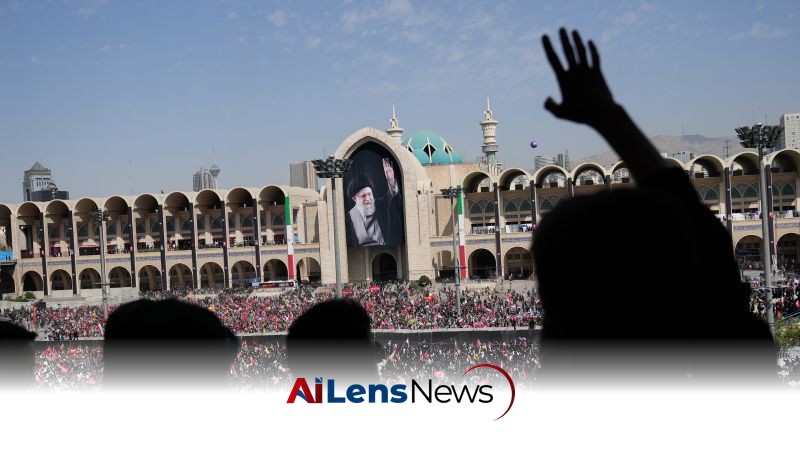


In a historic week for Iran, the country mourns the death of Supreme Leader Ali Khamenei, revealing deep-seated anger and calls for vengeance amidst ongoing tensions.
Washington DC, United States Jul 12, 2026 ALN: It’s been a historic week in Iran.
For just the second time in the nearly 50-year history of the Islamic Republic, the country has buried a supreme leader. Ali Khamenei ruled Iran – as a spiritual leader and an iron-fisted autocrat – for nearly four decades. For many in Iran, he’s the only leader they have known. Khamenei's tenure was marked by significant events that shaped not only Iran but also its relationships with the rest of the world. He presided over the country during periods of intense conflict, both internally and externally, and his death marks a significant turning point in the nation’s political landscape.
Then, as the frenzied funeral events reached their climax, US bombs and missiles struck across the country in retaliation at Iranian strikes on civilian shipping in the Strait of Hormuz. Just months ago, these strikes would have been an earthquake for the region. But after two wars in nine months, there was a sense of tired resignation when news of the airstrikes hit Tehran Wednesday. The complex geopolitical dynamics surrounding Iran, particularly in relation to the United States, have reached a critical juncture, and the implications of these military actions are profound.
Just a week in the Iranian capital has offered an eye-opening insight into where the country is today. The atmosphere is charged with both grief and anger, reflecting the multifaceted emotions of a populace that has experienced decades of isolation, conflict, and economic hardship.
The government claimed north of 10 million mourners attended funeral events for the late Ayatollah Khamenei this week. An independent assessment of the numbers is almost impossible, but in Tehran, hundreds of thousands at least flooded streets for Monday’s funeral procession. Much of the 20-kilometer (12-mile) marching route was a river of black-clad mourners carrying the red flags of martyrdom and revenge. This display of public mourning is not only a testament to Khamenei's influence but also an indicator of the government's ability to mobilize its supporters in times of crisis.
While many in Tehran chose to (literally) distance themselves from the funeral – we drove into Tehran past traffic jams as locals left the city to enjoy the nationwide holiday elsewhere – the funeral events were filled with Shia faithful and those loyal to the government. This dichotomy highlights a growing divide within Iranian society, where some citizens remain deeply committed to the regime, while others express discontent and seek alternatives to the current political structure.
The weight of support evident this week puts into question the notion that regime change in Iran is a feasible proposition for Iran’s enemies abroad – after all, US President Donald Trump called for the Iranian people to overthrow their leadership when the US and Israel launched their war on the country in February. The reality on the ground, however, suggests that calls for regime change may not resonate with a significant portion of the population, particularly in times of national mourning and crisis.
The funeral events – especially Monday’s procession through Tehran – were highly emotional affairs. That’s not unusual among followers of Shia Islam, whose tradition is one of outward displays of faith. But the funeral seemed deeply personal for many present. The loss of Khamenei resonates on a familial level for some, as expressed by mourners who compared their grief to losing a parent. This emotional connection underscores the deep-rooted loyalty many Iranians feel towards their leaders, particularly in the context of Shia Islamic beliefs that emphasize the importance of leadership and guidance.
“I even loved him more than my father. It’s as if I lost my father again,” 30-year-old Nafiseh Sadat Sadri told CNN. “I feel that I’ve become an orphan, it burns in my heart.” Such sentiments reflect the profound impact Khamenei had on the lives of many Iranians, shaping their identities and worldviews over the decades.
“He was our leader. He was a great man,” 25-year-old Fatemeh said. “I am going to continue his path.” She had driven through the night from the central Iranian city of Kashan to catch the funeral procession. The commitment to continue Khamenei's legacy speaks to the potential for his ideology to persist even in his absence, suggesting that the regime's narratives may continue to find resonance among the populace.
Others wanted payback. The calls for vengeance against perceived enemies, particularly the United States, were palpable. “We have come here to avenge the blood of our leader, and not for one second will we put this aside,” a young woman named Mahtab Ehsani told CNN as the crowd waited for Khamenei’s coffin on Monday. “Blood must be repaid with blood.” This rhetoric reflects a long-standing tradition of martyrdom and revenge within Iranian political culture, particularly in the context of conflicts involving foreign powers.
“We will not rest until we have killed Trump,” said Ghassem Kalateh, a cleric from Tehran. Such extreme statements illustrate the heightened emotions surrounding Khamenei's death and the potential for increased tensions between Iran and the United States. The calls for vengeance are not just personal; they are tied to a broader narrative of resistance against foreign intervention in Iranian affairs.
The call came from officials too. This week “was not merely a farewell ceremony and mourning, but… a call for vengeance for that beloved figure, signed by millions of grieving mourners,” Iran’s Speaker of Parliament Mohammad Bagher Ghalibaf said in a statement Thursday. This official endorsement of vengeance indicates a potential shift in the government's posture towards its adversaries, suggesting that the rhetoric of revenge could translate into policy actions in the coming weeks and months.
Anger at America – and above all Trump – was everywhere. Every day, dozens of mourners would come up to us with promises to kill the US president in revenge for the assassination of their leader. The visceral nature of this anger highlights the deep-seated animosity that exists between Iran and the United States, a relationship fraught with historical grievances and recent provocations. The chants of “death to America” serve as a reminder of the longstanding anti-American sentiment that has been a hallmark of Iranian political discourse since the 1979 Islamic Revolution.
Throat-slitting gestures and chants of “kill Trump” and “death to America” chants were common reactions to seeing a team of international journalists, though the CNN team also encountered greetings of “welcome,” polite questions, and selfie requests. This juxtaposition of hostility and hospitality illustrates the complexity of Iranian society, where public sentiment can be deeply polarized, reflecting a wide range of opinions and attitudes towards both domestic and international issues.
During this year’s Ramadan war, the mood was much darker. With many fearful for their safety as US bombs fell from Iran’s nighttime skies with no warning, there was far more open hostility on the street. Public anger was more raw as the country grappled with a largely unchecked hail of bombs from the sky. The ongoing conflict and the recent escalation of violence have exacerbated feelings of vulnerability among the Iranian population, leading to a heightened sense of urgency for retribution against those perceived as aggressors.
To learn more about the latest developments in Leaders & Politicians, stay updated with our exclusive reports and analyses on AiLensNews.

