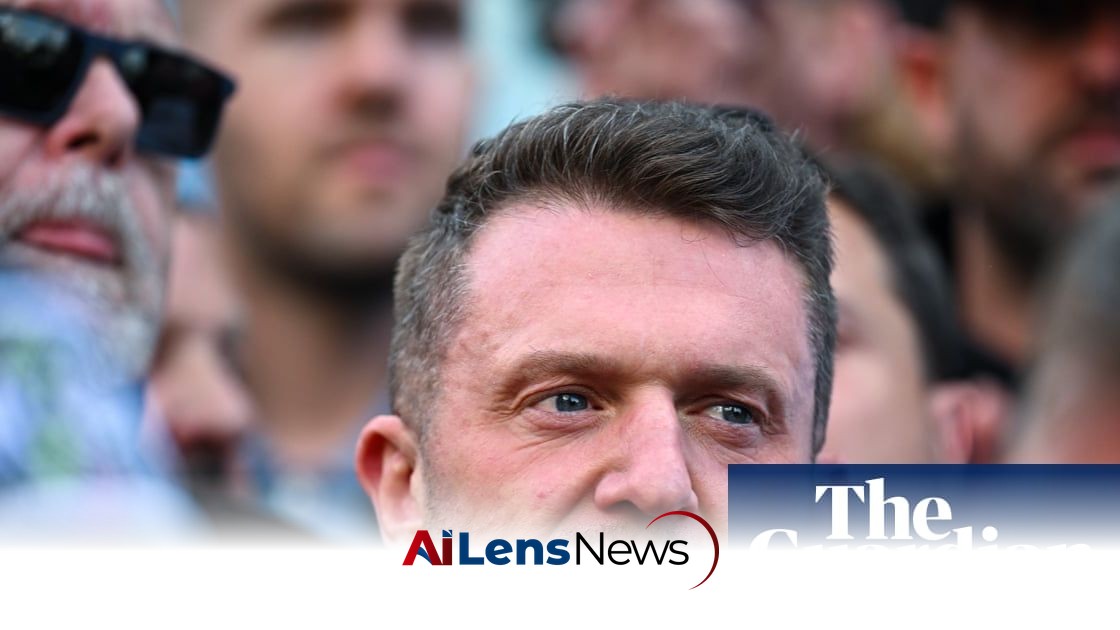


Errol Musk claims the family foundation facilitated Tommy Robinson's trip to Russia, where he engaged with local business figures amid rising far-right sentiments.
London, United Kingdom Jul 11, 2026 ALN: Elon Musk’s family foundation reportedly facilitated a trip for Tommy Robinson to Russia, as revealed by Errol Musk, the billionaire's father. During this trip, Robinson, a prominent British far-right activist, was in Moscow where he encouraged anti-migration protests in the UK. His visit has sparked significant controversy and discussion regarding the intersection of politics, philanthropy, and international relations.
Robinson, whose real name is Stephen Yaxley-Lennon, has been a polarizing figure in British politics. He gained notoriety for his outspoken views on immigration and Islam, often leading protests and rallies that have drawn both support and condemnation. His recent trip to Moscow made headlines last month when he appeared there, calling on his supporters to protest following a knife attack in Belfast. The incident in Belfast, which involved a stabbing, reignited discussions about crime and immigration in the UK, themes that Robinson has frequently linked in his activism.
During his stay in Moscow, Robinson shared videos from a luxury hotel, featuring himself alongside Errol Musk, who has been a vocal supporter of Robinson's activities. The images and videos shared on social media platforms stirred up a mix of reactions, with many questioning the motivations behind Robinson's trip and the implications of having a prominent figure associated with far-right activism being supported by a family foundation linked to one of the world's wealthiest individuals.
“I brought him out to Russia,” Errol Musk stated, noting that both he and Robinson had meetings with Russian business figures. The trip was funded by the Musk Foundation, a philanthropic organization established by Elon Musk and his brother Kimbal Musk. The Musk Foundation has been involved in various charitable endeavors, primarily focusing on renewable energy, education, and health. However, this incident raises questions about the extent to which philanthropic resources can be used to facilitate political activities, particularly those that align with controversial ideologies.
This visit to Moscow coincided with a period where Vladimir Putin’s regime was reportedly strengthening ties with various European far-right figures. Notably, Andrew Tate, a controversial influencer known for his polarizing views, was also in Russia during this time, sharing footage of himself engaging in military-style activities. The presence of both Robinson and Tate in Russia highlights a growing trend of far-right figures seeking validation and support from authoritarian regimes, which may view such alliances as beneficial to their geopolitical strategies.
Upon returning to the UK, Robinson had his phones seized by police. This action raised concerns about the implications of his trip and the potential legal ramifications of his activities while abroad. His previous visits to Russia had been less politically charged, but this time he openly praised the country, sharing videos of ultra-nationalist rallies in memory of a murdered British teenager. This shift in tone suggests a deeper engagement with Russian nationalist sentiments, which could resonate with his base in the UK but also alienate others who view such associations as dangerous.
Errol Musk described Robinson as “a fine young man,” acknowledging his hotheadedness but also noting his capacity for learning. The elder Musk, who has visited Russia multiple times and even met Putin, expressed pro-Russian sentiments regarding the ongoing conflict in Ukraine. His views reflect a broader narrative among some Western figures who romanticize aspects of Russian culture and governance while ignoring the complexities of its political landscape.
Topics discussed during meetings in Russia included the country’s efforts to combat declining birth rates, with Errol Musk stating, “Tommy really got into these meetings.” The discussions about demographic challenges are particularly relevant in the context of Russia's aging population and declining birth rates, which have been a concern for the Kremlin. Errol Musk mentioned that he became acquainted with Robinson after the activist's imprisonment for contempt of court, indicating a personal interest in Robinson’s political journey and the challenges he has faced.
“I contacted Tommy after I was asked on British television about my views on him,” Errol Musk added, indicating a personal interest in Robinson’s political journey. This connection raises questions about the role of influential figures in shaping political narratives and the responsibility that comes with such associations.
Last month, Robinson expressed to the media that his visit to Russia allowed him to appreciate the “beauty of a civilised society.” His comments reflect a sentiment that resonates with some of his supporters who may view Russia as a counter-narrative to Western liberalism. However, this perspective is contentious, as it overlooks the authoritarian nature of the Russian government and the significant human rights abuses that occur within its borders.
Professor Stephan Lewandowsky from the University of Bristol, who studies the impact of misinformation, commented on the implications of Robinson and Tate's visits to Russia. He noted that such trips occur within the context of a hybrid war that Putin is waging against the West, suggesting that Russia aims to recruit individuals who can undermine Western democracy. This assertion points to a strategic approach by the Kremlin to foster relationships with far-right figures who align with its ideological goals, potentially destabilizing liberal democratic values in Europe.
“There is a pragmatic reason for the Russians to be making links like this,” Lewandowsky explained. “It serves their political interests, but there is also a clear ideological alignment among these ultra-nationalist figures.” The implications of this alignment are significant, as it could lead to increased collaboration between far-right movements in Europe and Russian interests, further complicating the political landscape in both regions.
Earlier this year, reports surfaced about a leading British far-right figure addressing a summit of European nationalists in Russia, organized by an oligarch with ties to Putin. This event highlighted the ongoing collaboration between Russian interests and far-right movements in Europe, raising alarms among observers who are concerned about the erosion of democratic norms and the rise of extremist ideologies. The intersection of international relations and domestic politics is increasingly complex, with figures like Robinson and Tate at the forefront of a movement that seeks to challenge the status quo.
As the political climate continues to evolve, the implications of such international connections will likely be scrutinized more closely. The involvement of influential individuals and organizations in facilitating these relationships raises ethical questions about the role of philanthropy in politics and the potential consequences of fostering ties with authoritarian regimes. The situation remains fluid, and the reactions from both the public and political figures will shape the discourse surrounding these events in the coming months.
To learn more about the latest developments in Political Controversies, stay updated with our exclusive reports and analyses on AiLensNews.

