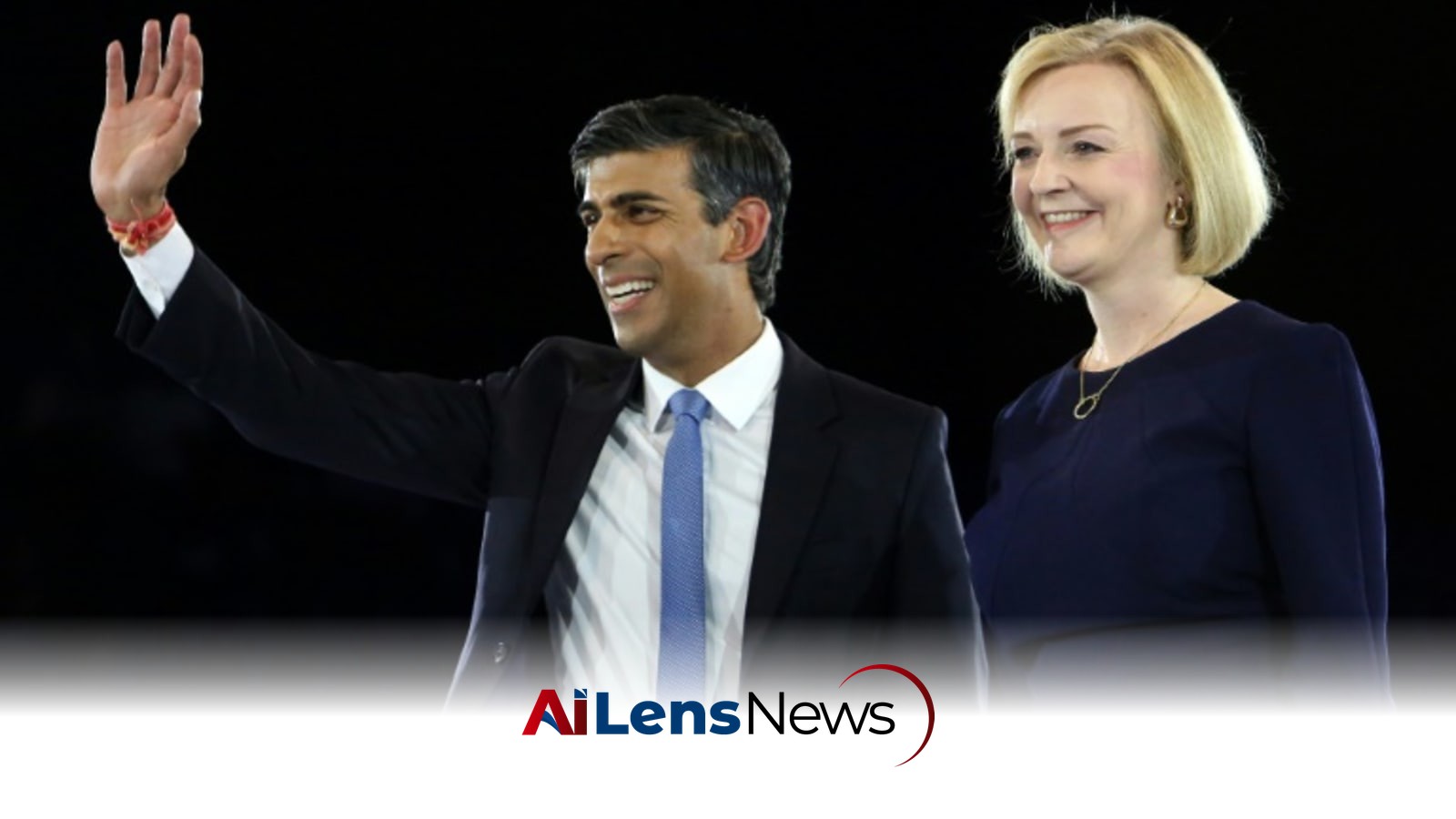


The UK will announce its new prime minister on Monday, with Liz Truss favored to succeed Boris Johnson amid a cost-of-living crisis.
Singapore, Singapore Sep 5, 2022 ALN: The United Kingdom will learn on Monday (Sep 5) who will be its next prime minister, with Liz Truss the favorite to succeed Boris Johnson and take charge as the country battles a spiraling cost-of-living crisis. The announcement of the new leader comes at a critical juncture for the UK, as it grapples with economic challenges exacerbated by external factors such as the ongoing war in Ukraine and the lingering effects of the COVID-19 pandemic.
The result of the leadership contest will be announced at 12.30pm (7.30pm, Singapore time), following a summer of campaigning between Truss, the current foreign minister, and her rival, former finance minister Rishi Sunak. Both candidates spent the last several weeks rallying support among the Conservative Party members, who cast the final vote in this leadership contest. The winner will be tasked with leading the country through one of its most challenging periods in recent history.
If she wins, Truss will become the UK's third female prime minister, following in the footsteps of Theresa May and Margaret Thatcher. This is significant not only for the Conservative Party but also for women in politics, as it reflects the increasing representation of women in high political offices, a trend that has been slowly gaining momentum over the past few decades.
The 47-year-old Truss has consistently been ahead of 42-year-old Sunak in polling among the estimated 200,000 Tory members eligible to vote. This support is crucial, as the leadership contest was initiated after Johnson announced his resignation following a slew of scandals and resignations from his government, which had significantly affected the party's standing in public opinion.
Postal and online voting closed on Friday after eight weeks of campaigning, a process that Truss described to the BBC as "the longest job interview in history." This lengthy contest has allowed both candidates to present their visions for the future of the UK, but it has also raised questions about the effectiveness of the party's internal voting mechanisms in reflecting the broader public sentiment.
However, the vote may not reflect general public opinion, as a YouGov poll conducted in late August indicated that 52 percent of respondents thought Truss would make a "poor" or "terrible" prime minister. Additionally, 43 percent expressed that they did not trust her "at all" to deal with the pressing issue of the rising cost of living, highlighting the disconnect between party members and the general populace.
Whoever emerges as the winner of this leadership contest faces what The Sunday Times described as "the worst in-tray for a new prime minister since Thatcher." The UK is currently gripped by its worst cost-of-living crisis in generations, with inflation soaring into double digits and energy prices escalating dramatically, largely due to the geopolitical ramifications of Russia's war in Ukraine. This situation has created a perfect storm for the new leader, who will need to address immediate economic challenges while also laying the groundwork for long-term solutions.
Millions of households are reportedly facing a painful choice between basic necessities such as food and heating this winter, with bills set to rise by 80 percent from October and potentially even higher in January. Truss has acknowledged the urgency of the situation, stating, "If I'm elected prime minister, I will act immediately on bills and on energy supply," though she has declined to provide specific details about her plans.
Truss has campaigned on a platform that includes promises to slash taxes and prioritize economic growth, a strategy that some analysts believe may be risky given the looming recession that the UK is expected to enter later this year. She has pledged to present a full plan for tax reduction within a month of taking office, emphasizing the need to stimulate the economy.
In contrast, Sunak has advocated for further government support to help alleviate the burden of rising energy bills on households. He has positioned himself as a candidate focused on curbing inflation and providing immediate assistance to those in need, criticizing Truss's tax-cutting proposals as reckless. Sunak stated, "Helping people with the cost of living and energy bills comes above everything else that I might like to do," underscoring his commitment to addressing the immediate economic crisis.
The current political landscape indicates a growing public demand for an early general election, as the Conservative Party faces increasing challenges to maintain its 12-year grip on power. The dynamics of the leadership contest and the subsequent policies of the new prime minister will play a crucial role in shaping the party's future and its ability to connect with voters.
Truss's political career has been marked by a series of significant roles, including her most recent position as foreign minister, which she assumed a year ago. Throughout her career, she has held various ministerial posts in departments such as education, international trade, and justice, showcasing her versatility within the government. Truss's political journey began as a teenage member of the centrist Liberal Democrats, but she later switched to the right-wing Conservative Party, reflecting her evolving political ideology.
In 2016, Truss campaigned for the UK to remain in the European Union, but she quickly changed her stance following the Brexit referendum, aligning herself with the majority of voters who favored leaving the EU. This adaptability has been a hallmark of her political strategy, but it has also drawn criticism from opponents who question her consistency and commitment to her principles.
Truss's public persona has often been characterized by her distinct dress sense and her penchant for photo opportunities, such as posing in a tank during a visit to Estonia and wearing a fur hat in Moscow. These moments have earned her comparisons to Tory icon Margaret Thatcher, though her sometimes stiff style has evolved to become more relaxed over time. Allies have sought to soften her image by revealing her personal interests, including her love of karaoke and socializing, which may help her connect with the electorate on a more personal level.
The announcement on Monday by Conservative Party officials regarding the new leader sets in motion a series of events that will culminate in a formal transition of power. On Tuesday, Johnson will deliver a farewell speech at Downing Street before formally tendering his resignation to Queen Elizabeth II. Following this, the queen will appoint the new prime minister in a traditional ceremony known as the "kissing of hands."
This particular transition is noteworthy as it marks the first time in her reign that the 96-year-old monarch will appoint a prime minister at her Scottish retreat, Balmoral, rather than at Buckingham Palace in London. This change in location is reflective of the queen's ongoing mobility challenges, which have led her to cancel several public engagements in recent months.
The next prime minister will be the 15th leader appointed during the queen's reign, a testament to the political changes and challenges that the UK has faced over the decades. As the country stands at this crossroads, the new leader's actions and policies will be closely scrutinized by both party members and the general public, as they seek to navigate the complexities of contemporary governance in a rapidly changing world.
To learn more about the latest developments in Leaders & Politicians, stay updated with our exclusive reports and analyses on AiLensNews.

