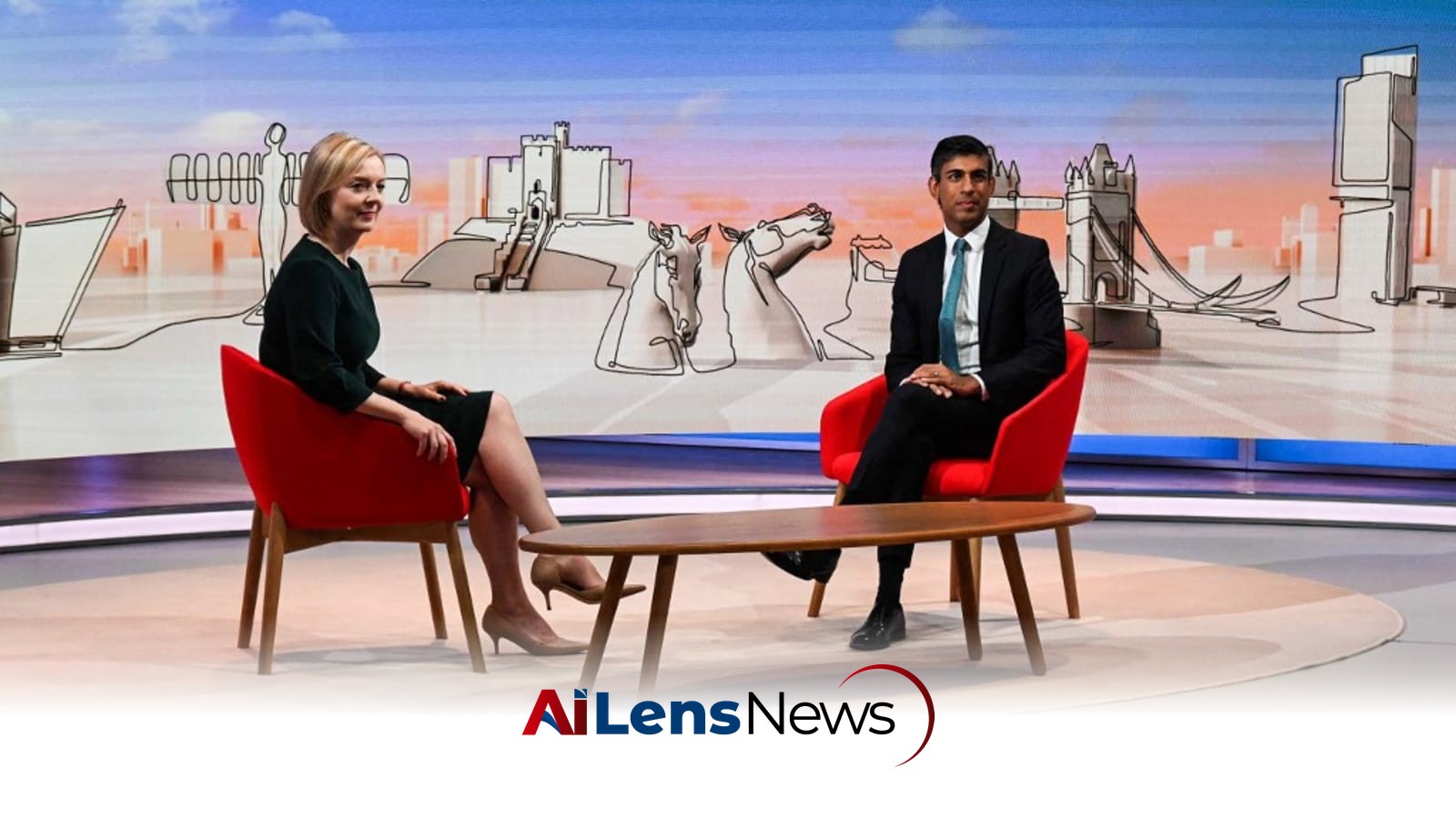


Liz Truss and Rishi Sunak present starkly different visions for the UK as they vie for leadership, highlighting their unique political styles amid a cost-of-living crisis.
Singapore, Singapore Sep 5, 2022 ALN: Liz Truss will become Britain's third female prime minister if she wins the Conservative leadership election, while rival Rishi Sunak hopes to be the first non-white incumbent in Downing Street.
The campaign, sparked by Prime Minister Boris Johnson's resignation in July, has highlighted the pair's differing approaches to tackling the country's spiralling cost of living crisis. This crisis has been exacerbated by various factors, including the economic repercussions of the COVID-19 pandemic, rising energy prices, and inflation rates that have reached levels not seen in decades. As households struggle to make ends meet, the candidates' proposed solutions have become a focal point of their campaigns.
Sunak, whose resignation as finance minister over a series of government scandals helped to spark the leadership contest, is considered a better public speaker. His tenure as Chancellor of the Exchequer was marked by significant fiscal interventions, including the furlough scheme aimed at protecting jobs during the pandemic. However, he has come under fire for clinging to fiscal orthodoxy to tackle runaway inflation, which some critics argue is insufficient given the urgent economic needs of the populace. Additionally, his image as a wealthy technocrat has led to accusations that he is disconnected from the struggles of everyday citizens.
At the same time, he has faced accusations of treachery for bringing down the Tories' Brexit hero Johnson, a move that has polarized opinions within the party and among the electorate. While some view his actions as necessary for the party's future, others see them as a betrayal of a leader who had significant support within the party.
Foreign Secretary Truss has, in contrast, emerged as the favourite in the vote of grassroots Tory members, the result of which will be announced on Monday (Sep 5). Her campaign has resonated with many party members who are eager for a return to traditional Conservative values, especially in times of economic uncertainty.
"She's a better politician," said John Curtice, a political scientist at the University of Strathclyde in Glasgow. He noted that Truss has effectively conveyed "traditional Conservative messages" to Tory members while Sunak has been more nuanced in his approach, which may not resonate as strongly with the party's base.
"If you ask me what Liz Truss's campaign was about I will immediately say to you - 'a tax cut not a handout'. Very clear," he told AFP. This slogan encapsulates her strategy of promoting tax cuts as a means to stimulate the economy and support households, contrasting with Sunak's more cautious fiscal approach. "There is no strapline for Sunak, nothing," Curtice added, emphasizing the clarity of Truss's messaging compared to Sunak's more complex narrative.
Truss, 47, has described her ascent towards the top of British politics as a "journey" that has seen her criticized for being ambitiously opportunistic. Her political career has been marked by a series of controversial decisions and positions that reflect her evolving ideology. She comes from a left-wing family and initially joined the centrist Liberal Democrats before jumping ship to the right-wing Conservatives. This shift has led some to question her authenticity, but she has managed to carve out a significant role within the party.
She became MP for the South West Norfolk constituency in eastern England in 2010, surviving revelations of an affair that almost cost her the nomination. This personal scandal did not derail her career; rather, it seemed to strengthen her resolve. Since 2012 she has held a series of ministerial posts in departments including education and finance as well as a difficult spell in justice, where she faced significant challenges in reforming the justice system.
In 2016, she campaigned for the UK to remain in the European Union but quickly became one of its strongest supporters when Britons voted for Brexit. Her ability to pivot from her previous stance on EU membership demonstrates her adaptability in the ever-changing landscape of British politics.
When the UK left the EU, Johnson put her in charge of negotiating new free trade deals before appointing her as foreign secretary last year. In the role, she took on the controversial task of trying to overcome differences with Brussels about post-Brexit trade in Northern Ireland, a sensitive issue that has significant implications for peace in the region.
Like Johnson, she has talked tough on Russia and given unswerving backing to Ukraine amidst the ongoing conflict, positioning herself as a strong advocate for national security and global stability. Truss's dress sense and choice of photo opportunities - posing in a tank in Estonia and wearing a fur hat in Moscow - have earned her comparisons to Tory icon Margaret Thatcher, invoking a sense of strength and determination.
Her sometimes stiff style has become visibly more relaxed, and allies have sought to soften her image, revealing her love of karaoke and socializing, which contrasts with the more serious persona often associated with politicians.
"For a party that's gone in quite a populist direction in recent years, she's been able to present herself as more authentic, more ordinary than Rishi Sunak, who is all too easily presented as part of the global elite," said Tim Bale, from Queen Mary University of London. This perception plays a crucial role in how voters relate to the candidates, especially in a political climate where populism has gained traction.
"Like Boris Johnson, she is keen on the idea that there is some kind of elite that has to be countered and she sets herself up as being outside the establishment, despite having been in government for eight years," Bale added, highlighting the paradox of her positioning. This strategy may appeal to party members and the electorate who are wary of established political figures and seek a leader who understands their concerns.
Sunak, 42, the grandson of Indian immigrants, grew up as the son of a doctor and a pharmacist in Southampton, on England's south coast. His background and rise to prominence in British politics reflect the changing demographics of the UK. He attended the prestigious fee-paying Winchester College school, then Oxford University, which has traditionally been a breeding ground for political leaders. His educational pedigree has contributed to his image as a capable and knowledgeable politician.
Truss, who went to a state school in Leeds, northern England, also studied at Oxford. Both studied politics, philosophy, and economics, a common foundation for many in British politics. This shared educational background provides a point of connection between the two candidates, though their life experiences have shaped their political outlooks differently.
Sunak met his wife, Akshata Murty, whose father founded the Indian tech giant Infosys, at US university Stanford before jobs at Goldman Sachs and investment funds. His financial background has been both an asset and a liability; while it demonstrates his expertise in economic matters, it has also led to perceptions of him as out of touch with the everyday realities faced by many voters.
He has represented the constituency of Richmond in northern England since 2015, where he was soon marked out as a potential future prime minister. His rise through the ranks was rapid, and he became finance minister in early 2020, quickly winning plaudits for spearheading government support to people and businesses affected by the coronavirus pandemic.
However, Sunak, a self-confessed geek with a love of "Star Wars", saw opinion turn against him this year after it emerged that his wife did not pay UK tax on her overseas income, a revelation that sparked public outrage and intensified scrutiny of his personal wealth. Critics have also used his private wealth, expensive clothes, and houses to portray him as out of touch with the ordinary public. This narrative has proven damaging, particularly in a time when many citizens are facing financial hardship.
The contrasting backgrounds, styles, and strategies of Truss and Sunak reflect broader themes within the Conservative Party and the UK electorate. As the leadership election unfolds, the implications of their differing approaches to governance, economic policy, and party identity will be crucial in shaping the future of the Conservative Party and the direction of the UK. With the cost of living crisis at the forefront of voters' minds, the next prime minister will face immense challenges in addressing the immediate needs of the populace while also navigating the complex political landscape that has emerged in recent years.
To learn more about the latest developments in Leaders & Politicians, stay updated with our exclusive reports and analyses on AiLensNews.

