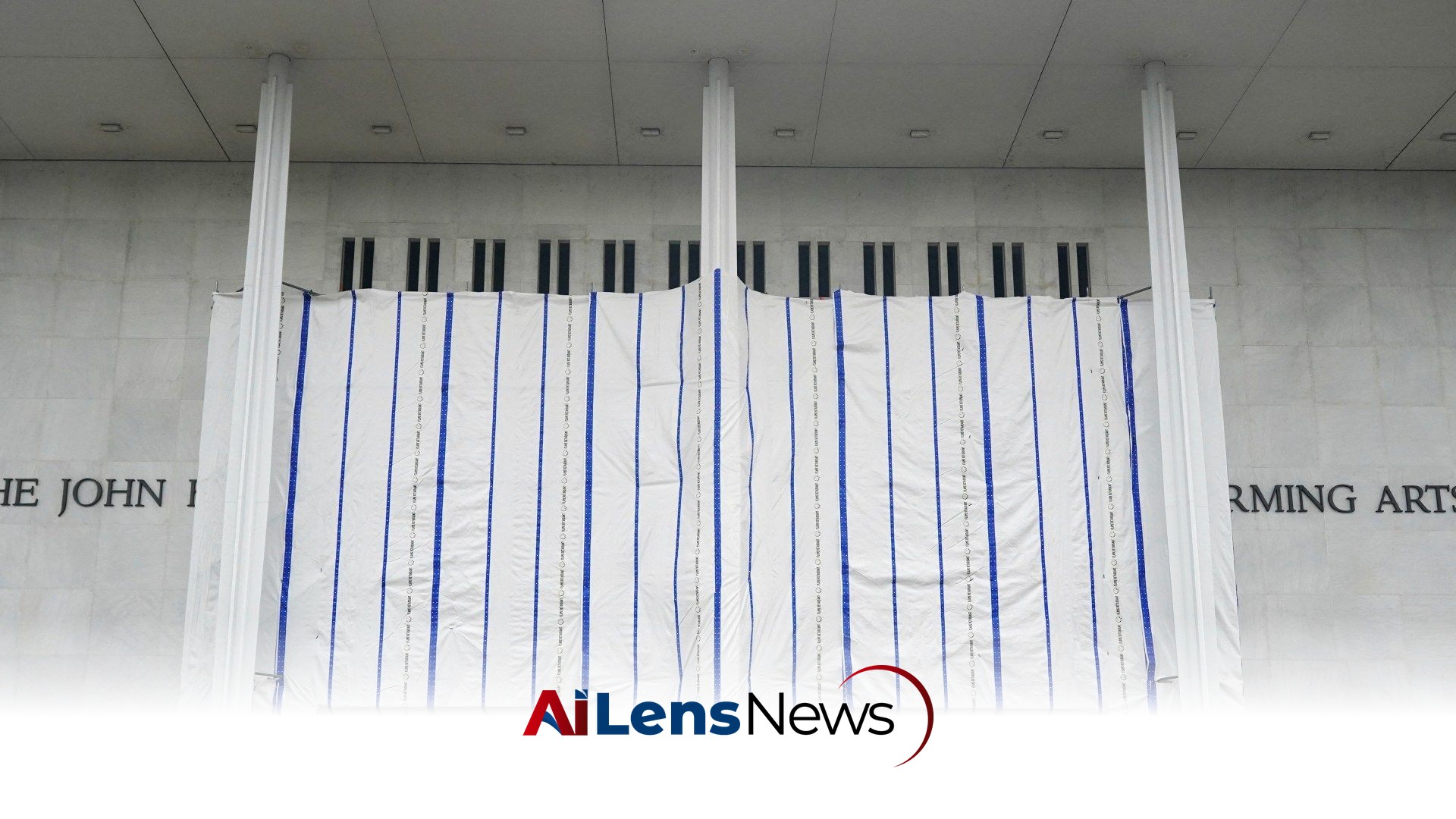


Senator Sheldon Whitehouse reveals mismanagement of Kennedy Center renovations under Trump, citing aesthetic changes and bypassed procedures.
Doha, Qatar Jul 12, 2026 ALN: A United States senator has published a whistleblower complaint alleging that allies of President Donald Trump mismanaged renovations at the John F. Kennedy Center for the Performing Arts, in order to please the president’s "aesthetic whims." This allegation raises significant questions about the governance of federally funded institutions and the potential influence of political figures on cultural landmarks.
On Saturday, Democratic Senator Sheldon Whitehouse of Rhode Island released a letter addressed to the Kennedy Center’s leadership, conveying the accusations. The Kennedy Center, located in Washington, DC, is not just a performing arts venue; it serves as a national cultural institution and a living memorial to President John F. Kennedy, who was assassinated in 1963. Established by an act of Congress, it plays a crucial role in the artistic and cultural landscape of the United States.
Whitehouse's letter includes claims that the Kennedy Center, under Trump, bypassed standard procedures for awarding government contracts and approved unnecessary — or faulty — projects. The senator's whistleblower report suggests a pattern of mismanagement that contradicts the commitments made by the Center to Congress regarding the use of public funds.
“These are not isolated lapses but a single pattern that runs counter to everything the Center has told Congress it would do with the public’s money,” Whitehouse wrote. This statement indicates a broader concern that the institution's integrity and accountability may have been compromised under political pressure.
“Instead of pursuing renovations tailored to the building’s actual needs, the Center rushed a series of renovations driven by the President’s aesthetic whims and his desire to star in a series of televised events in December.” This assertion highlights the potential conflict between political interests and the operational autonomy of cultural institutions.
In December 2017, Trump hosted the FIFA World Cup final draw, which is a significant event in the world of sports, determining the matchups for the tournament. The event was also designed to showcase Trump, who was awarded the inaugural FIFA Peace Prize by the organization's president, Gianni Infantino. This context is crucial as it illustrates the intersection of sport, politics, and the arts during Trump's presidency.
Two days later, on December 7, Trump again took the stage to emcee the Kennedy Center Honors, an annual ceremony that recognizes lifetime contributions to U.S. art and culture. Trump's involvement in this prestigious event was notable, as he was the first sitting president to host it. He claimed to be “very involved” in the honorees’ selection, further indicating his desire to shape the narrative surrounding cultural events.
To prepare the Kennedy Center for those high-profile dates, its officials reportedly worked “in unusually close consultation” with Trump’s White House, according to the whistleblower report Whitehouse obtained. This close collaboration raises concerns about the extent to which political influence may have dictated operational decisions at the Center.
Since taking office for a second term, Trump has sought to exert influence over the arts center and other government institutions that had previously operated independently from the president. This trend reflects a broader desire among some political leaders to assert control over cultural narratives and institutions, which can have long-lasting implications for the arts and public trust in these entities.
Shortly after his 2025 inauguration, Trump reportedly fired most of the Kennedy Center’s board and replaced the terminated members with allies. He also announced himself as its incoming chair, a proposal his hand-picked board subsequently voted to approve. This move underscores the potential for political patronage to shape the leadership of cultural institutions, raising questions about the qualifications of those appointed.
Saturday’s whistleblower disclosure sketches what happened afterwards. It explains that Trump objected to the gold-coloured columns outside the theatre complex, designed to look like strings on a musical instrument, stating a preference for them to be painted white to match the marble of the building. This aesthetic preference illustrates how personal tastes of political figures can influence decisions that should ideally be based on architectural integrity and historical significance.
However, as Whitehouse’s letter conveys, “Trump’s preferred contractor cut corners when repainting the Center’s columns,” resulting in the steel columns “rusting through the new white paint.” This outcome raises concerns about the quality and durability of work performed under political pressure, which can lead to long-term maintenance issues and increased costs for taxpayers.
Whitehouse also notes that the painting began in August “with no written contract in place” — and a $4.4 million deal was only awarded afterwards. He estimates the repairs will cost $1.5 million, suggesting that the initial decisions made under duress may lead to greater financial burdens in the future.
In another case, Whitehouse said the Kennedy Center’s Trump-appointed leadership ripped up newly installed bathroom tiles because the president “didn’t like the color.” Such actions highlight a troubling trend where the personal preferences of a political figure can override established protocols and best practices in project management.
Another example that Whitehouse cites mirrors Trump’s ongoing struggles with the Lincoln Memorial Reflecting Pool, which has faced criticism for its algae bloom and peeling paint after a Trump-approved renovation. The Kennedy Center has its own, smaller reflecting pool, which “is now unevenly painted and rusting” after the Kennedy Center board pushed ahead with a hasty “cosmetic revamp,” according to the whistleblower disclosure. This raises questions about the oversight and quality assurance processes in place for federally funded renovations.
Whitehouse wrote that the Kennedy Center’s management “set aside contracting rules to hit the President’s deadlines, telling staff, ‘We’ll deal with the lawsuits later.'” This statement indicates a willingness to circumvent established procedures for the sake of expediency, which can have serious implications for accountability and transparency.
“Longstanding federal contracting controls were set aside, no-bid contracts were awarded, and superficial cosmetic work was performed that staff warned would have to be redone,” Whitehouse explained. Such practices can undermine public confidence in government institutions and lead to a perception of wastefulness in the use of taxpayer dollars.
One contractor, he added, did not appear to have any experience working on concert halls, despite being awarded $8 million to do so. This raises concerns about the qualifications of contractors chosen for significant projects, which can impact the quality and safety of renovations.
Whitehouse accused the Trump administration of wasting taxpayer money and called for a full accounting of the renovations and their costs — including the price tag for affixing Trump’s name to the side of the building. A court later ruled in May that Trump’s name had to come off the building, citing Congress’s authority over the Kennedy Center. “Congress gave the Kennedy Center its name, and only Congress can change it,” Judge Christopher Cooper wrote at the time. This ruling reinforces the importance of legislative oversight in matters concerning federally funded institutions.
The Trump administration has long argued that the Kennedy Center was in a state of disrepair and called for the arts complex to be closed for two years, following backlash over attempts to rename the building. This ongoing conflict highlights the contentious relationship between political authority and cultural institutions, which can be influenced by the personal agendas of those in power.
The fight over the Kennedy Center, however, is part of a larger battle over Trump’s efforts to reshape Washington, DC. In addition to his work on the Kennedy Center and the Lincoln Memorial Reflecting Pool, Trump has demolished the White House’s East Wing, sought to build a triumphal arch, and proposed painting the historic Eisenhower Building white, despite concerns about its granite exterior. These actions reflect a broader trend in which political leaders attempt to leave their mark on the physical landscape of the nation’s capital, often without regard for historical preservation or public opinion.
Whitehouse, who serves on the Senate Committee on the Environment and Public Works, issued a warning against any half-baked projects, emphasizing the need for responsible governance. “Public funds ought to be spent lawfully, prudently, and in service of the institution, not on the stylistic whims of the current President,” he wrote. This statement encapsulates the core issue at stake: the need for accountability and integrity in the management of public resources, especially in cultural institutions that reflect the values and history of the nation.
To learn more about the latest developments in Political Controversies, stay updated with our exclusive reports and analyses on AiLensNews.

