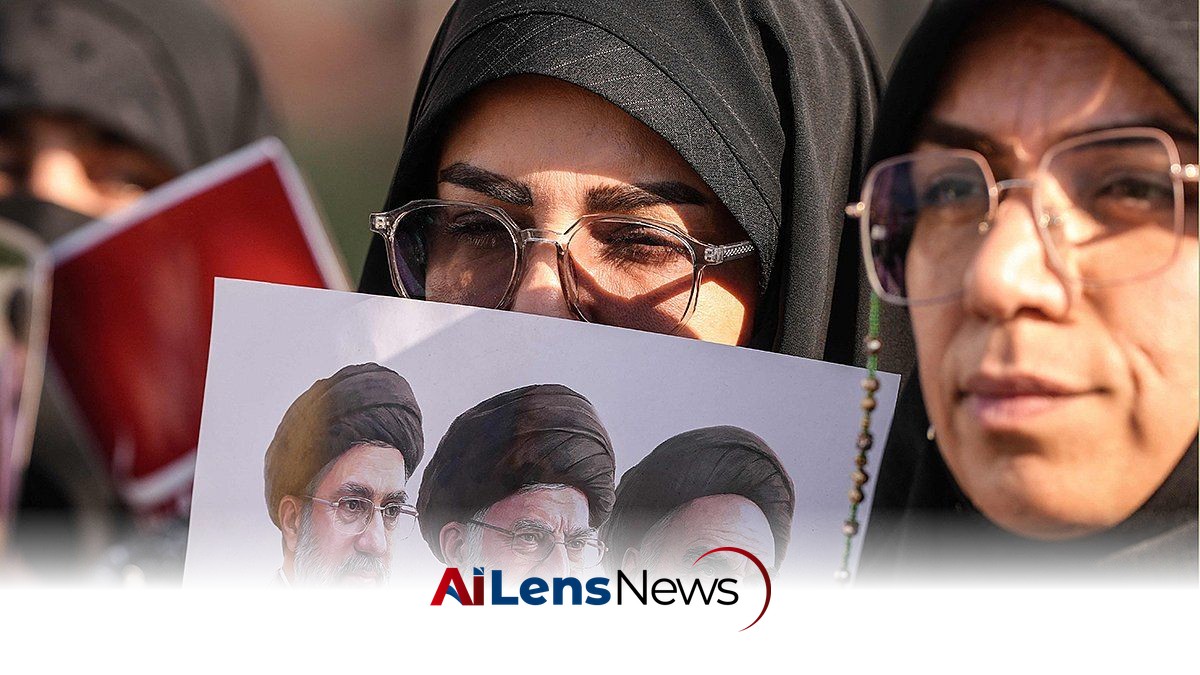


Iran's supreme leader pledges retaliation for his father's killing, escalating tensions with the US as Trump warns of military action.
Doha, Qatar Jul 11, 2026 ALN: Tehran: Iran's supreme leader on Saturday vowed revenge for the US-Israeli killing of his father and predecessor, hours after President Donald Trump warned against any attempt to assassinate him. This significant escalation in rhetoric underscores the ongoing tensions between Iran and the United States, particularly in light of the recent conflict that has seen both sides engaged in military actions and retaliatory strikes.
The backdrop to this situation is a prolonged and complex history of hostilities between Iran and the US, which have been marked by various confrontations over the decades. The current state of affairs can be traced back to the 1979 Iranian Revolution, which saw the overthrow of the US-backed Shah and the establishment of the Islamic Republic. Since then, relations have been fraught with tension, characterized by mutual distrust and accusations of interference in each other's domestic affairs. The Iranian Revolution was a watershed moment that fundamentally altered the geopolitical landscape of the Middle East, leading to a series of conflicts and proxy wars that have continued to this day.
In the most recent developments, both sides dialed up the rhetoric after exchanges of fire this week rocked an interim agreement aimed at ending their war. This conflict, which broke out in late February, was marked by massive US-Israeli strikes that targeted Iranian military assets and personnel. The escalation has not only heightened military tensions but has also raised fears of a broader regional conflict that could involve multiple actors in the Middle East. The involvement of Israel, which has historically viewed Iran as a major threat, complicates the situation further, as it has conducted numerous airstrikes aimed at Iranian positions in Syria and beyond, seeking to curtail Iran's influence in the region.
In a striking move, President Trump declared the ceasefire over, signaling a shift in the US stance towards Iran. This declaration came amid ongoing efforts by mediators to salvage diplomacy, with Iranian media reporting that a delegation from Qatar traveled to Iran on Friday to facilitate dialogue. Qatar has positioned itself as a neutral party capable of engaging with both the US and Iran, reflecting its strategic interests in maintaining stability in the region. The role of mediators like Qatar is crucial, as they navigate the complex web of alliances and enmities that characterize Middle Eastern politics, striving to prevent a further escalation that could spiral out of control.
Mojtaba Khamenei, who became Iran's supreme leader following the killing of his father, Ali Khamenei, expressed the sentiments of vengeance that resonate deeply within Iranian society. His written message emphasized that "Vengeance is the will of our nation and must inevitably be carried out." This statement not only reflects personal grief but also taps into a broader narrative of resistance against perceived aggression from foreign powers, particularly the US and Israel. The concept of vengeance is deeply embedded in Iranian political culture, often invoked in the context of national pride and sovereignty, and resonates with a population that has faced decades of sanctions and military threats.
Since the outbreak of the conflict, Mojtaba Khamenei has remained out of the public eye, which has led to speculation about the internal dynamics of Iran's leadership during this crisis. His message, which he described as his first since his father's funeral, conveys a sense of urgency and determination to respond to the attacks that have claimed the lives of Iranian leaders and military personnel. This period of mourning and transition in leadership is particularly sensitive, as it may influence the decision-making processes within the Iranian government and military.
Furthermore, Khamenei indicated that Iran has compiled a list of individuals to be targeted, suggesting a potential shift towards a more aggressive posture in terms of retaliation. This development raises significant concerns about the possibility of further violence and destabilization in the region, as Iran may seek to exact revenge not only against military targets but also against individuals perceived to be responsible for the death of its leaders. Such a list could include military officials, intelligence operatives, and political figures in both the US and Israel, heightening the stakes for all parties involved.
In response to these threats, President Trump took to his Truth Social platform to issue a stark warning. He stated that any attempt to assassinate him would lead the United States to "completely decimate" Iran. Trump's remarks included a chilling declaration that "1000 Missiles are Locked and Loaded and aimed at the Islamic Republic of Iran, with thousands of more to immediately follow." This hyperbolic language underscores the high stakes involved and the potential for miscalculation that could lead to a wider conflict. The rhetoric employed by Trump serves not only as a deterrent but also as a means to rally domestic support amid criticism of his foreign policy decisions.
Trump further elaborated that orders had already been given and that the US military was prepared for a sustained campaign against Iran, highlighting the serious implications of his statements. Such rhetoric not only escalates tensions but also complicates the efforts of mediators who are attempting to restore some level of diplomatic engagement. The potential for military action, whether by direct assault or through proxy forces, raises alarms among international observers who fear a repeat of past conflicts in the region.
The ongoing conflict and the exchange of threats have drawn international attention, with various countries and organizations calling for restraint and a return to dialogue. As the situation evolves, the role of mediators like Qatar becomes increasingly crucial. Iran's Foreign Minister Abbas Araghchi insisted that Tehran had adhered to its commitments under a memorandum of understanding signed last month, emphasizing the need for mutual compliance in any future negotiations. Araghchi's statements reflect a broader narrative within Iran that seeks to portray the country as a responsible actor willing to engage in diplomacy, despite the aggressive posturing from the US. This narrative is essential for maintaining domestic support and justifying Iran's actions on the international stage.
As both nations step up their threats, the implications for regional security and international relations are profound. The potential for miscalculations or unintended consequences looms large, particularly given the presence of various non-state actors and regional allies who may be drawn into the conflict. The stakes are high, not only for Iran and the US but also for neighboring countries that could be affected by any escalation. Countries like Iraq, Syria, and Lebanon, which have been battlegrounds for proxy conflicts, could see a resurgence of violence, further destabilizing an already volatile region.
In conclusion, the current situation between Iran and the US represents a critical juncture in a long-standing conflict characterized by cycles of aggression and retaliation. The vows of revenge from Iran's leadership and the stark warnings from the US president signal a dangerous escalation that could have far-reaching consequences. As mediators work to restore diplomacy, the international community watches closely, aware that the choices made in the coming days and weeks could shape the future of the region for years to come. The path forward remains fraught with challenges, and the need for dialogue and de-escalation has never been more urgent.
To learn more about the latest developments in Political Controversies, stay updated with our exclusive reports and analyses on AiLensNews.

