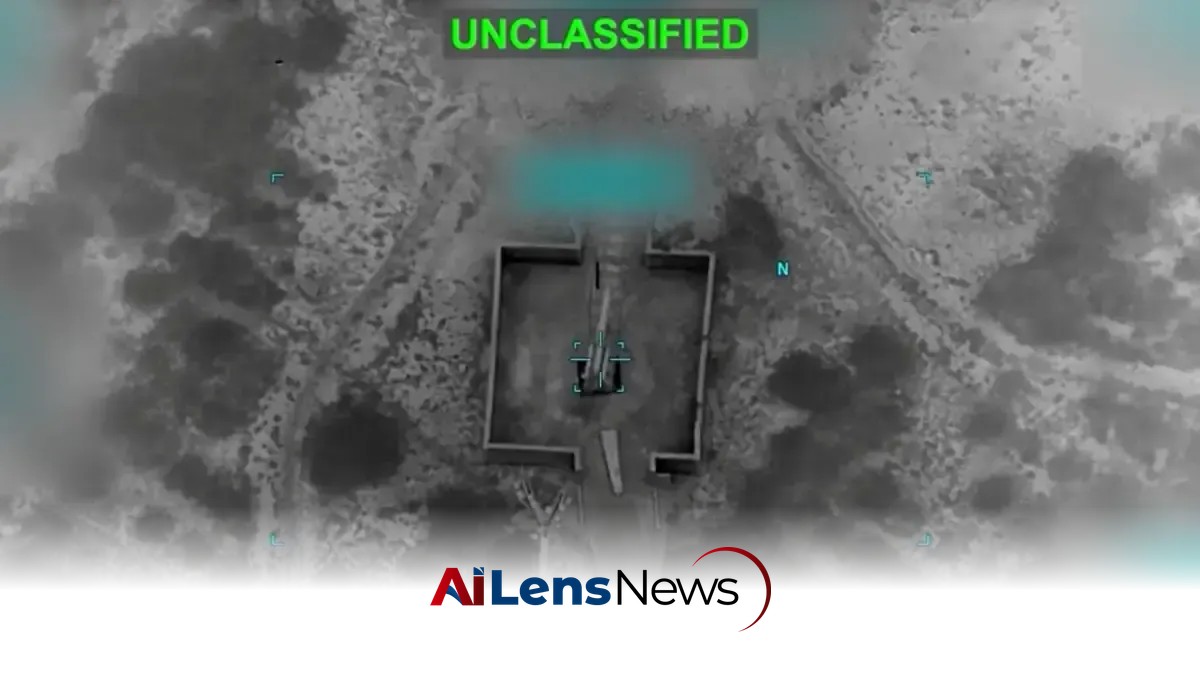


The US military has intensified strikes on Iran following an attack on a container ship, while Tehran asserts it has closed the Strait of Hormuz and escalated its military actions in the Gulf.
Islamabad, Pakistan Jul 12, 2026 ALN: The recent escalation of hostilities between the United States and Iran has marked a significant turning point in the ongoing conflict that has been simmering for years. The US military's latest strikes on Iranian targets come in the wake of Iran's aggressive actions, including the attack on a container ship and the reported closure of the vital Strait of Hormuz. This strategic waterway is a crucial passage for global oil and liquefied natural gas shipments, with approximately one-fifth of the world's oil trade passing through it before the onset of the war.
The conflict has its roots in a complex history of geopolitical tensions, sanctions, and military engagements that have characterized US-Iran relations since the 1979 Iranian Revolution. The US has long accused Iran of destabilizing the region through its support for militant groups and its nuclear ambitions, while Iran has condemned US military presence in the Middle East as a form of imperialism. The recent strikes and counterstrikes signal a return to a more aggressive military posture, with both sides seemingly willing to escalate the conflict.
On Sunday, Iran's Revolutionary Guards announced that they had closed the Strait of Hormuz, following their claim that they had fired a warning shot at a vessel traveling on an unauthorized route. This assertion was met with skepticism from the US Central Command, which reported that commercial vessels continued to transit the strait despite the heightened tensions. The US military's response included a series of strikes on Iranian military facilities, targeting what they described as key assets that could facilitate further attacks on commercial shipping in the region.
The US Central Command stated that it had conducted strikes on 140 Iranian military targets over the weekend, a significant escalation from previous military engagements. This operation aimed to degrade Iran's capacity to threaten civilian mariners and disrupt the flow of commercial vessels through the Strait of Hormuz. The scale of the US military response reflects a shift in strategy, suggesting a more proactive approach to countering Iranian aggression.
In retaliation, Iran's Revolutionary Guards claimed responsibility for a series of attacks on US military facilities in allied states, including Jordan, Kuwait, Oman, and Qatar. These strikes were characterized by the Iranian leadership as a demonstration of their military capabilities and resolve in the face of US aggression. The Guards also reported that they had targeted a second vessel in the Strait of Hormuz, further escalating tensions in an already volatile region.
The situation has drawn responses from other Gulf nations, with the United Arab Emirates (UAE) reporting that its air defense systems had engaged missiles and drones launched from Iran. Additionally, residents in Bahrain reported hearing warning sirens, and explosions were reported in Doha, Qatar. These developments highlight the regional implications of the conflict, as neighboring countries become increasingly entangled in the hostilities.
The economic ramifications of this conflict are significant, particularly given the critical role the Strait of Hormuz plays in global energy markets. The effective blockade of this waterway by Iranian forces has already led to a surge in energy prices, which could have broader implications for global inflation and economic stability. As the US approaches the November congressional elections, rising gasoline prices could become a politically sensitive issue for the Trump administration, potentially impacting voter sentiment and electoral outcomes.
Iran's Revolutionary Guards have stated that the Strait of Hormuz will remain closed until what they describe as "US interference" in the region ceases. This declaration underscores Iran's willingness to escalate the conflict further, potentially leading to a broader confrontation in the Gulf. The Iranian leadership has framed their actions as a necessary response to US aggression, arguing that their military operations are justified in the context of defending national sovereignty and regional stability.
In the diplomatic arena, Iran's Foreign Minister Abbas Araqchi has accused the US of violating the ceasefire agreement that was intended to de-escalate tensions. He emphasized the need for mutual compliance in any negotiations, suggesting that the current situation is untenable and requires a reevaluation of diplomatic strategies. Meanwhile, Iran's top negotiator, Mohammad Baqer Ghalibaf, has signaled a hardening of Iran's stance, stating that the era of one-sided deals is over, and emphasizing the need for the US to adhere to its commitments.
The US's recent decision to revoke the license authorizing the sale of Iranian crude oil further complicates the situation. This move came after attacks on commercial tankers in the region, which the US attributed to Iranian forces. In response, Iran has conducted strikes on US military installations in Gulf states, deepening the cycle of retaliation and counter-retaliation that has characterized this conflict.
Amidst the military and diplomatic tensions, there have been efforts to engage in dialogue. Araqchi met with Omani Foreign Minister Badr Albusaidi in Oman to discuss mechanisms for ensuring the safe passage of ships through the Strait of Hormuz. Oman has historically played a mediating role in US-Iran relations, and these discussions could represent a potential avenue for de-escalation, although the prospects for meaningful negotiations remain uncertain.
Furthermore, the recent statements from Iran's new supreme leader, Ayatollah Mojtaba Khamenei, have added a layer of complexity to the situation. He has vowed to avenge the assassination of his predecessor, Ayatollah Ali Khamenei, during the initial attacks of the war. This call for vengeance reflects the deeply entrenched sentiments within Iran regarding the conflict and may serve to rally domestic support for continued military actions against the US and its allies.
As the situation continues to unfold, the implications of this conflict extend beyond the immediate military engagements. The potential for a wider regional war remains a concern, particularly if Iran continues to escalate its military actions and the US responds with further strikes. The international community watches closely, as the stability of the Gulf region is critical not only for the countries directly involved but for global economic stability and security as well.
To learn more about the latest developments in Government & Governance, stay updated with our exclusive reports and analyses on AiLensNews.

