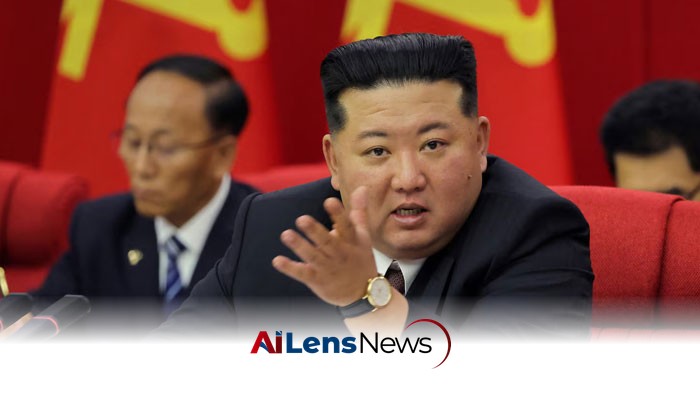


North Korea asserts that nuclear disarmament should initiate with U.S. allies, criticizing NATO's recent summit and claiming Western pressure has failed.
Islamabad, Pakistan Jul 12, 2026 ALN: North Korea's recent statements regarding nuclear disarmament highlight a complex and contentious issue in international relations, particularly in the context of its ongoing tensions with the United States and its allies. The North Korean government has made it clear that it believes any disarmament efforts should begin with the United States and its NATO allies, rather than with Pyongyang itself. This position is rooted in a broader narrative that frames North Korea as a victim of aggressive military posturing by the West.
The North Korean Foreign Ministry's criticism of the NATO summit underscores a long-standing belief in Pyongyang that the military alliances formed by the U.S. and its partners are inherently antagonistic. The ministry's assertion that NATO's nuclear-sharing arrangements represent a direct threat to regional stability is a reflection of North Korea's perception of its own security environment. For decades, North Korea has maintained that its nuclear arsenal is essential for deterring what it views as existential threats posed by the U.S. and its allies.
In its statement, North Korea accused the U.S. and its allies of rapidly expanding their military stockpiles, which it claims undermines global security and increases the risk of nuclear conflict. This claim is part of a broader narrative used by North Korea to justify its own military developments. The country has consistently argued that its nuclear weapons program is a necessary response to the perceived military aggressions of the United States and its allies, particularly in the context of joint military exercises in the region that North Korea views as provocations.
The recent NATO summit, which North Korea has criticized, focused on a variety of security issues, including the ongoing conflict in Ukraine and the challenges posed by Russia and China. The summit also addressed NATO’s nuclear posture and reaffirmed the alliance's commitment to collective defense. North Korea's reaction to the summit is indicative of its broader strategy of framing itself as a counterweight to what it perceives as Western imperialism and militarism.
North Korea's Foreign Ministry further argued that the efforts by Western nations to pressure it into abandoning its nuclear weapons have been unsuccessful. This assertion reflects a long-standing skepticism within North Korea regarding diplomatic negotiations that do not result in tangible security guarantees. In previous negotiations, including the six-party talks that involved South Korea, Japan, China, Russia, and the United States, North Korea has often viewed concessions made by itself as unreciprocated, leading to a cycle of distrust and failure to reach lasting agreements.
In the context of these developments, North Korea announced its intention to strengthen its nuclear capabilities. This decision aligns with leader Kim Jong Un's calls for the modernization of the military, emphasizing the importance of maintaining a robust defense posture. The North Korean leadership has framed this military modernization as essential not only for national security but also for asserting its sovereignty on the global stage. Kim's leadership has been characterized by a focus on military strength, which he views as a pillar of regime stability and legitimacy.
The Foreign Ministry’s statement also emphasized that North Korea would exercise its "sovereign rights" in a responsible manner, signaling that the country intends to continue its military development while attempting to position itself as a responsible member of the international community. This duality in messaging reflects the complex nature of North Korea’s foreign policy, which seeks to balance its military ambitions with a desire for recognition and legitimacy.
This latest declaration from North Korea comes against a backdrop of increasing global tensions, particularly regarding nuclear proliferation. The international community has been grappling with the implications of North Korea's nuclear program for regional security in East Asia, as well as the broader implications for global non-proliferation efforts. The ongoing developments in North Korea's nuclear capabilities have raised alarms not only in the U.S. and South Korea but also among other nations in the region, including Japan, which has been increasingly vocal about its own defense needs in light of North Korea's activities.
Moreover, North Korea's insistence that disarmament should begin with NATO countries instead of itself raises questions about the future of diplomatic engagement on nuclear issues. The prospect of negotiations appears dim, given the entrenched positions held by both sides. As North Korea continues to assert its nuclear status, the potential for dialogue may diminish, leading to a more volatile security environment in East Asia.
The implications of North Korea's stance on nuclear disarmament extend beyond the Korean Peninsula. They affect the strategic calculations of the United States, its allies, and even adversaries like China and Russia. The U.S. has long maintained a policy of deterrence against North Korean aggression, which includes a commitment to defend its allies in the region. This commitment is often reinforced through military exercises and the deployment of advanced military assets in response to North Korean provocations.
As North Korea continues to develop its nuclear capabilities, the international community faces the challenge of balancing deterrence with diplomatic efforts aimed at reducing tensions. The failure of previous disarmament talks has left many policymakers skeptical about the prospects for future negotiations. This skepticism is compounded by North Korea's consistent refusal to fully engage in disarmament discussions without receiving significant concessions in return.
In conclusion, North Korea's call for nuclear disarmament to start with U.S. allies rather than itself reflects its ongoing strategy of positioning itself as a defender against perceived external threats. The country's military developments and rhetoric are likely to continue to shape the security landscape in East Asia, raising concerns about the potential for conflict and the challenges of achieving lasting peace and stability in the region. As the situation evolves, the international community will need to navigate the complexities of North Korea's nuclear ambitions while seeking pathways for dialogue and resolution.
To learn more about the latest developments in Political Controversies, stay updated with our exclusive reports and analyses on AiLensNews.

