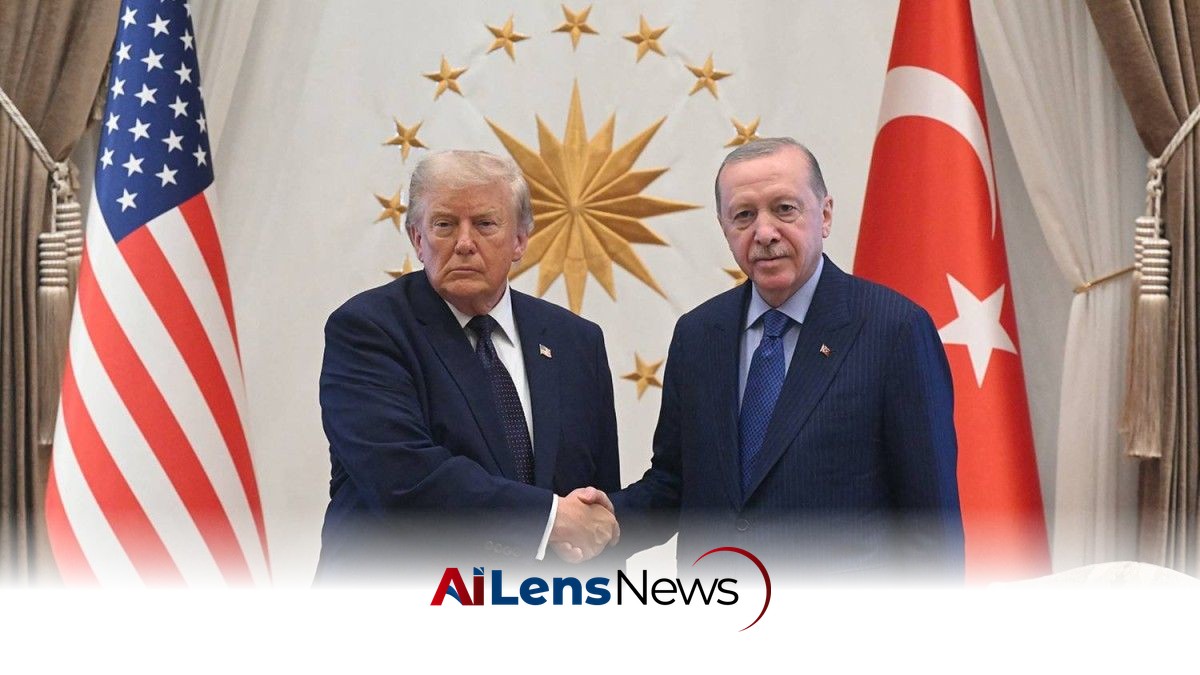


At a NATO summit in Ankara, France and Britain proposed a multinational maritime mission in the Strait of Hormuz, but Iran's rejection complicates efforts.
Kuwait City, Kuwait Jul 12, 2026 ALN: France and Britain outlined plans for a multinational maritime mission in the Strait of Hormuz at talks between NATO and Gulf Arab foreign ministers on Tuesday. However, diplomats indicate that Iran’s rejection of the initiative makes it unlikely to resolve the deadlock over this vital waterway.
The meeting, held on the sidelines of a NATO summit in Ankara, brought together ministers from Bahrain, Kuwait, Qatar, and the United Arab Emirates. This gathering follows weeks of heightened tensions in the strategically important waterway, despite an interim peace deal between the United States and Iran.
The Strait of Hormuz is a critical chokepoint for global oil transportation, serving as the transit route for approximately one-fifth of the world's oil supply. Its significance cannot be overstated, as it is a vital artery for energy exports from the Gulf states to international markets. The region's geopolitical landscape is fraught with complexities, including historical tensions between Iran and its neighbors, as well as the influence of external powers like the United States and European nations.
On Tuesday morning, the United Kingdom Maritime Trade Operations agency (UKMTO) reported that a tanker was struck east of Oman’s Limah. Axios also reported that Iran’s Revolutionary Guards fired at least two missiles at commercial ships transiting the Strait of Hormuz. These incidents highlight the ongoing volatility in the region and underscore the risks faced by commercial shipping in these waters.
“In the Gulf region, Bahrain, Kuwait, Qatar, and the United Arab Emirates were directly targeted by Iranian attacks this spring,” stated Belgian Foreign Minister Maxime Prevot before the meeting. “Their stability and ours are inextricably linked. This goes far beyond the Strait of Hormuz alone, however crucial it may be for Europe’s energy security,” he added. Prevot's remarks reflect a broader concern among European nations regarding regional stability and the potential repercussions that instability in the Gulf could have on global energy markets.
Iran began blockading the waterway after the United States and Israel launched military actions against it in February. Despite the mid-June interim accord, passage remains difficult, keeping shipping costs and global supply chains under pressure. The blockade has exacerbated tensions, leading to increased military posturing by both Iran and U.S. forces in the region. The U.S. has deployed additional naval assets to the area in a show of force aimed at deterring Iranian aggression, while Iran has responded with aggressive maneuvers and threats to disrupt maritime traffic.
NATO allies have sought to avoid direct involvement in the conflict, instead focusing on plans outside the alliance to reopen the strait. The multinational maritime mission proposed by France and Britain aims to ensure safe passage through the strait, but any long-term arrangement would ultimately require Iranian consent. Iran has consistently opposed any foreign military presence in the area, leveraging this issue in its negotiations with Washington. Last week, Iran dismissed remarks from France’s President Emmanuel Macron suggesting that the mission would proceed, indicating Tehran's firm stance against foreign intervention.
A European diplomat noted that Macron, who was set to arrive in Ankara after becoming the first European head of state to visit neighboring Syria, was attempting to assert Europe’s position as a loyal ally in front of Trump during the summit. “But in the end, as long as Iran doesn’t give a green light, everyone is too scared,” the diplomat remarked. This sentiment reflects the delicate balancing act that European nations must perform as they navigate their relationships with both the United States and Iran, particularly in light of the ongoing nuclear negotiations and the broader implications for regional security.
Two additional diplomats indicated that the meeting on Tuesday would be largely symbolic. Several NATO allies have deployed mine-hunters, warships, and support vessels in the surrounding region. Diplomats report that Paris and London hope to initiate a mission in the Gulf of Oman, an adjacent waterway linking the Arabian Sea to the Strait of Hormuz, bordered by Iran, Oman, and the UAE. “The Sultanate of Oman has agreed to work with the United Kingdom and France to ensure that its sovereign territorial waters are safe for navigation,” stated a Franco-British joint statement on July 3. Oman’s cooperation is seen as crucial, as the country has historically maintained a neutral stance in regional conflicts and has acted as a mediator in various diplomatic efforts.
Meanwhile, US President Donald Trump announced on Tuesday that Washington would consider selling F-35 fighter jets to Turkey after excluding it from the program in 2019 due to Ankara's acquisition of a Russian defense system. The potential sale of F-35s to Turkey has been a contentious issue, as it raises concerns about the interoperability of NATO assets and the implications for regional security dynamics. Turkey's decision to purchase the Russian S-400 missile defense system led to its removal from the F-35 program, a move that has strained relations between Ankara and Washington.
“That's a decision we're going to make... it's a great plane, the best plane by far and it's certainly something we will consider,” Trump said, sitting next to Turkish counterpart Recep Tayyip Erdogan after arriving in Ankara for the NATO summit. Turkey has long sought to resolve the issue of its readmittance to the F-35 program and the lifting of US sanctions that have strained relations and hindered Turkish defense projects. Erdogan has looked to Trump's visit as an opportunity to break the deadlock, emphasizing the importance of U.S.-Turkey relations in the context of both countries' security interests.
When the two leaders met at the White House last September, both expressed a desire to move past the issue, although lifting the sanctions remains a decision for Congress. The complexity of U.S.-Turkey relations is further complicated by Turkey's involvement in various regional conflicts, including its military operations in Syria and its role in supporting Ukraine against Russian aggression. The balancing act required to maintain a strategic partnership while addressing divergent interests presents a significant challenge for both nations.
When asked if he would lift the CAATSA sanctions, Trump stated: “We’re going to be taking the sanctions off. We don’t want to sanction friends.” Erdogan expressed confidence that Trump would resolve the issue and end the dispute. “Mr. Trump has also personally given us his word on this matter,” he said through a translator. “On this issue, Mr. Trump always stands by his word. Here again, God willing, I believe a favorable decision on the F-35s will emerge from this leaders' summit.” Erdogan's optimism reflects his reliance on personal diplomacy with Trump, which has been a hallmark of their relationship. However, the broader implications of such a sale on regional security dynamics and NATO cohesion remain to be seen.
Earlier this week, Israeli Prime Minister Benjamin Netanyahu urged Washington not to sell the jets to NATO ally Turkey, arguing that it would “upset the power balance” in the region. “I don't think they should be given F-35s or the engines for their fighter jets, because that'll upset the power balance in the Middle East, which is ultimately guaranteed by Israeli air superiority and also, I think, by America’s posture in the Middle East,” Netanyahu stated on Fox News. This perspective underscores the complexities of U.S. arms sales and their potential impact on regional stability, as Israel has historically viewed Turkey's military capabilities with caution.
Erdogan is relying on his good relations with Trump and Turkey's return to favor with Washington, notably due to its support for Ukraine, to secure the delivery of five jets, for which payment has already been made. The outcome of these discussions will likely have far-reaching implications not only for U.S.-Turkey relations but also for the broader geopolitical landscape in the Middle East and beyond, as nations navigate the challenges posed by shifting alliances and power dynamics in a rapidly evolving global context.
To learn more about the latest developments in Regional Politics, stay updated with our exclusive reports and analyses on AiLensNews.

