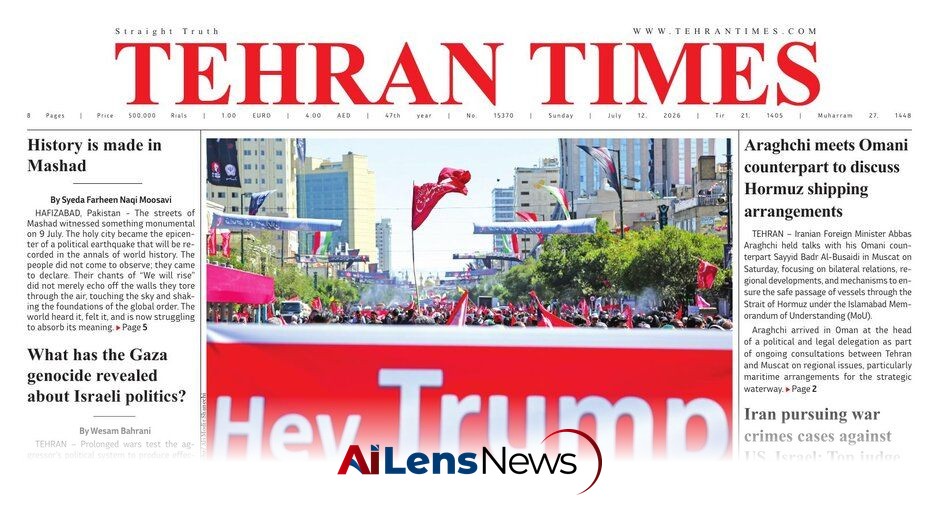


Ayatollah Seyed Mojtaba Khamenei emphasizes the need for vengeance against the killers of the martyred leader, highlighting the ongoing struggle for justice.
Tehran, Iran Jul 12, 2026 ALN: In a powerful address, Ayatollah Seyed Mojtaba Khamenei reiterated the call for vengeance against those responsible for the martyrdom of a prominent leader. This statement comes in the wake of ongoing tensions and conflicts that have plagued the region, particularly in relation to the recent Gaza situation. Khamenei's remarks are emblematic of a broader narrative that intertwines the concepts of martyrdom, justice, and the quest for retribution in the context of Middle Eastern politics.
The Ayatollah's remarks were made during a significant event commemorating the leader's legacy, where he emphasized the importance of justice and accountability. "The killers of our leader will never die in peace," he stated, underscoring the enduring commitment to seek retribution for the injustices faced. This rhetoric is not merely about seeking revenge; it is deeply rooted in a cultural and historical context where martyrdom is revered and seen as a noble sacrifice for the cause of freedom and justice.
The backdrop of Khamenei's comments is marked by escalating violence and political strife in the Middle East. The recent events in Gaza have reignited discussions about the broader implications of leadership and martyrdom in the region. The ongoing conflict has seen a significant loss of life, widespread destruction, and a humanitarian crisis that has drawn international attention. This volatile environment serves as fertile ground for leaders to harness the emotions of their constituents, framing narratives that resonate with the collective memory of suffering and resistance.
In this context, Khamenei’s statement can be understood as an effort to galvanize support among his followers, reminding them of their shared struggles and the sacrifices made by their leaders. The concept of martyrdom is particularly potent in Iranian political discourse, where leaders who have died in the struggle against perceived oppression are often elevated to a status of near-divinity, serving as symbols of resistance against external threats.
The leader in question has been a pivotal figure in shaping the political landscape, and his martyrdom has become a rallying point for many. The legacy of such leaders is often characterized by their unwavering commitment to their cause, which, in the eyes of their supporters, justifies the call for vengeance against their killers. Khamenei's emphasis on vengeance reflects a deep-seated belief in the need to honor the sacrifices made by leaders who have fought for their people's rights. This belief is not only a personal sentiment but a collective ethos that binds communities together in their pursuit of justice.
Moreover, the martyrdom of leaders is often utilized to reinforce national identity and solidarity. In Iran, for instance, the memory of leaders who have been martyred in the struggle against Western imperialism or regional adversaries is a cornerstone of the national narrative. This legacy fosters a sense of purpose and direction, galvanizing citizens to continue the fight for what they perceive as justice and liberation.
In addition to calls for vengeance, Khamenei urged for unity among the people in the face of adversity. He stressed that the struggle for justice is not just a personal vendetta but a collective responsibility that binds the community together. This call for unity is particularly significant in a region often marred by sectarian divides and political fragmentation. By framing the fight for justice as a communal effort, Khamenei seeks to transcend individual grievances and foster a sense of shared destiny among his followers.
Unity in the face of external threats is a recurring theme in Iranian political rhetoric, which often emphasizes the importance of solidarity against perceived aggressors. This narrative is especially relevant in the context of the ongoing conflict in Gaza, where many in Iran view the Palestinian struggle as a reflection of their own fight against oppression. Khamenei's call for unity serves not only to rally support domestically but also to position Iran as a leader in the broader Islamic resistance against injustice.
The implications of Khamenei's statements extend beyond national borders, as they resonate with various factions and groups across the region. The call for justice may influence diplomatic relations and ongoing conflicts, particularly with countries like Israel. Iran's support for groups such as Hamas and Hezbollah is often framed as a moral obligation to defend oppressed peoples, and Khamenei's rhetoric could bolster these alliances by reinforcing a shared narrative of resistance.
Furthermore, Khamenei's address may have repercussions on Iran's relations with Western nations. The insistence on vengeance and justice could complicate diplomatic efforts aimed at resolving tensions over Iran's nuclear program or its regional activities. As international actors seek to engage with Iran, they must navigate the complex interplay of domestic sentiments and external pressures that Khamenei's statements encapsulate.
As the situation continues to evolve, the words of Ayatollah Seyed Mojtaba Khamenei serve as a reminder of the enduring quest for justice and the complexities of leadership in times of turmoil. The martyrdom of leaders often ignites a flame of resistance that can shape the future of nations. In a region fraught with conflict, Khamenei's call for vengeance and unity highlights the intricate dynamics of political power, cultural identity, and the relentless pursuit of justice that define the Middle Eastern landscape.
Ultimately, the implications of such rhetoric reach far beyond the immediate context, influencing not only domestic politics but also the broader geopolitical landscape. As leaders continue to invoke the legacies of martyrs in their narratives, the cycle of vengeance and resistance may persist, complicating efforts towards peace and reconciliation in a region that has long been marked by strife.
To learn more about the latest developments in Political Controversies, stay updated with our exclusive reports and analyses on AiLensNews.

