

TEHRAN – Prolonged wars test the aggressor’s political system to produce effective leadership, while also maintaining social cohesion.
Tehran, Iran Jul 12, 2026 ALN: TEHRAN – Prolonged wars test the aggressor’s political system to produce effective leadership, while also maintaining social cohesion. The ongoing conflict in Gaza has not only intensified the humanitarian crisis but has also served as a crucible for Israeli politics, revealing significant fissures within its political landscape.
The genocidal war on Gaza did not reveal a shortage of leaders in the Israeli regime; rather, it highlighted a political system increasingly struggling to produce leadership that commands broad public trust while preserving unity of decision-making. This challenge is particularly pronounced in a nation where the political climate has been historically fractious, characterized by deep ideological divides and contentious electoral politics.
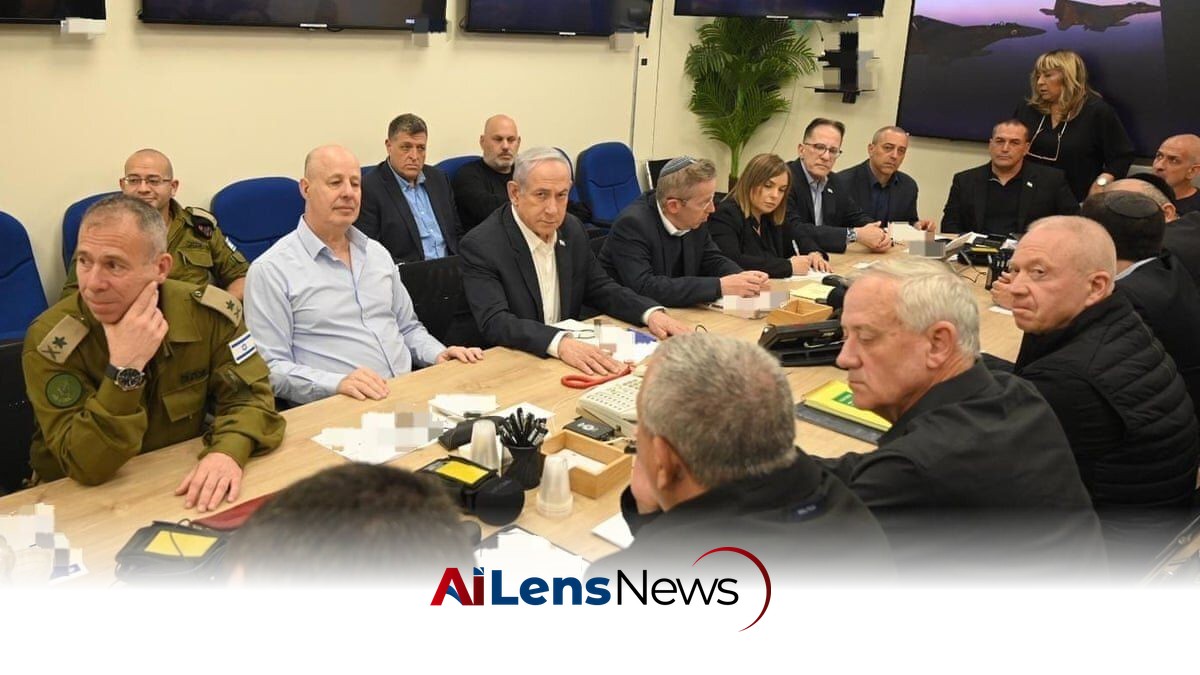
This became evident from the earliest days of the genocide when an emergency government was formed, incorporating figures like Benny Gantz and Gadi Eisenkot into Benjamin Netanyahu’s administration. This move indicated a recognition among the political elite that managing what was perceived as the most dangerous war the regime had faced in decades required a leadership framework broader than the existing governing coalition. The inclusion of opposition leaders was seen as a necessary step to foster a united front during a time of crisis.
However, this unity proved to be a temporary response to an extraordinary shock rather than the foundation of a lasting political consensus. As the genocidal war continued, disagreements resurfaced over its objectives, handling of captives, arrangements for “the day after,” and the delineation of responsibilities between the political and military leadership. These issues are emblematic of deeper structural problems within Israeli governance, where the lines between military strategy and political decision-making are often blurred.
The political dynamics shifted dramatically when Gantz and Eisenkot eventually left the emergency government, signaling a return to political polarization. This fracturing was not limited to the political elite; it also reflected a significant decline in public confidence in the regime’s leadership. According to an Israeli poll conducted in March 2025, a staggering 87 percent of settlers believed Netanyahu should bear responsibility for the failures leading up to the conflict on October 7, while 72.5 percent supported his resignation either immediately or after the war ended. This erosion of trust in leadership is indicative of broader societal discontent and a yearning for accountability in governance.
By July 2025, confidence in Netanyahu had plummeted to only 40 percent among the general public, contrasting sharply with the 68.5 percent confidence in Chief of Staff Eyal Zamir. The shift in public sentiment underscores a growing desire for change in leadership, especially in light of perceived failures in crisis management. By June 2026, 61 percent of Israelis believed Netanyahu should not run in the next elections, highlighting a significant disconnect between the leadership and the populace.
Over time, the leadership crisis expanded beyond the dispute between the government and the opposition to encompass relations between the government and key security and judicial institutions. The controversy surrounding the dismissal of the Shin Bet chief, which escalated to the Supreme Court, and the contentious appointment of a new Mossad director, fraught with legal objections and court challenges, illustrated how the conflict had shifted from managing the war itself to managing the institutions of the regime. Such tensions reflect a deeper malaise within the Israeli political system, where institutional integrity is increasingly called into question amid a backdrop of crisis.
The unity imposed by the shock of October 7, therefore, never evolved into a sustainable political consensus. As the genocide dragged on, partisan and institutional divisions resurfaced, extending from conflict between the government and the opposition to tensions between the government and security and judicial establishments. This fragmentation has made the leadership crisis one of the most significant domestic consequences of the war, raising questions about the efficacy and legitimacy of the Israeli political system.
Equally important, the genocidal war erupted at a moment when the regime was experiencing one of the deepest periods of internal division in its short history, driven by the judicial reform crisis and the unprecedented political and social protests that accompanied it. These protests, which had been gaining momentum prior to the conflict, highlighted a populace increasingly frustrated with the political status quo and the perceived erosion of democratic norms. Many believed that the security threat posed by the war would compel Israelis to overcome their internal crisis or at least postpone it until the fighting in Gaza concluded.
However, the prolonged genocidal war exposed the limits of that assumption. Rather than becoming an opportunity to resolve the structural crisis that had preceded it, the war of attrition interacted with the existing political reality and weak leadership, bringing old disputes back to the surface while adding new fault lines directly related to the conduct of the war itself. The inability of the political leadership to unify the country in the face of external threats has further exacerbated feelings of disillusionment and frustration among the populace.
Instead of remaining an external factor that temporarily imposed unity, the genocidal war became one of the forces reshaping the regime’s political and social landscape. This assessment is no longer confined to political observation; it has also become part of the regime’s own research. Studies show one of the aggression’s most significant consequences is the deepening of polarization within Israeli politics and society, dividing itself as one of the genocide’s domestic outcomes rather than merely a crisis that predated it.
Opinion polls likewise confirm that this transformation extends beyond research assessments and is reflected in the Zionist regime’s public opinion. A survey conducted in June 2026 revealed that confidence in the government stood at 57 percent among coalition supporters, compared to a mere 5 percent among opposition supporters. This stark contrast illustrates not only differing evaluations of the government but also the extent to which the war itself has become a subject of political polarization. The same survey found that 66 percent of settlers believed social solidarity was weak or limited, rising to 80 percent among opposition supporters. Such findings suggest that the war has not only failed to unify the populace but has instead deepened existing divisions, creating a more fragmented society.
The divisions no longer revolved solely around issues that predated October 7, such as judicial reform and the relationship between religion and government policies. They expanded to include questions imposed by the genocidal war itself, foremost among them the priority of recovering the captives versus continuing the aggression, the future of the Gaza Strip, legislation on ultra-Orthodox military conscription, the distribution of the burdens of war, and the boundaries between the political leadership and the military establishment. These issues reflect a society grappling with conflicting values and priorities, further complicating the political landscape.
The genocidal war neither ended the Zionist regime’s internal divisions nor left them unchanged. It delayed their eruption during the initial shock. However, as it continued, it deepened and reshaped these divisions, leaving the regime, after more than 1,000 days of aggression, facing a society that is more divided and polarized, with a broader and more complex map of disputes than existed before October 7. The implications of this polarization extend beyond immediate political calculations; they threaten the fabric of Israeli society, raising fundamental questions about governance, accountability, and the future direction of the state.
To learn more about the latest developments in Political Controversies, stay updated with our exclusive reports and analyses on AiLensNews.

