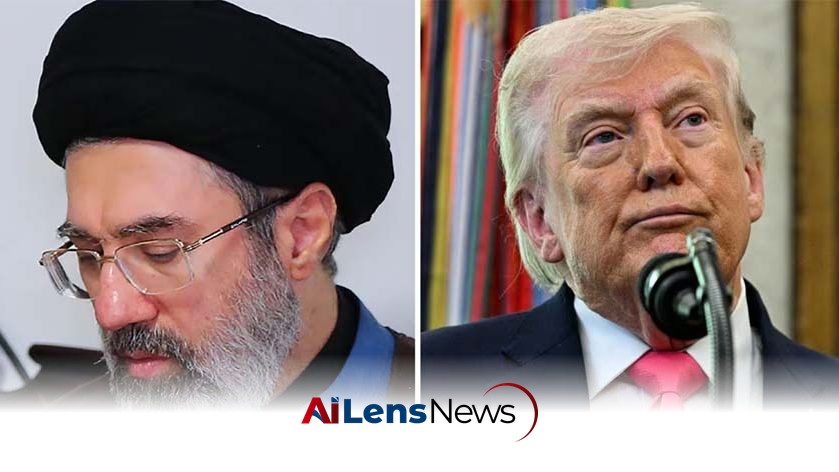


President Trump announced that the interim ceasefire with Iran is 'over,' leading to a significant spike in oil prices amid escalating tensions.
New Delhi, India Jul 8, 2026 ALN: President Trump stated on Wednesday that the interim agreement with Iran was "over," while expressing a willingness to continue discussions. When asked about the ceasefire's status, he remarked, "For me, I think it’s over," and referred to Iran's leadership as "sick," adding that engaging with them is "just a waste of time." These comments were made during the two-day NATO summit in Ankara, Turkey, shortly after the U.S. conducted strikes against Iran in response to attacks on tankers in the Strait of Hormuz.
The Strait of Hormuz, a vital waterway through which a significant portion of the world’s oil supply is transported, has long been a flashpoint for U.S.-Iran tensions. The recent attacks on tankers in this region have heightened concerns over maritime security and the potential for conflict, which could have far-reaching implications for global energy markets. The strategic importance of the Strait cannot be overstated; it is a narrow passage that connects the Persian Gulf to the Arabian Sea, and it is estimated that about 20% of the world's oil passes through this corridor. Any disruption in this area could lead to significant fluctuations in global oil prices and supply chains.
Oil Prices Surge Following Trump's Announcement
Following Trump's declaration, world oil prices experienced a significant increase, soaring more than five percent on Wednesday. The international benchmark, Brent North Sea crude, rose by 5.3 percent to $78.09 a barrel, while the main U.S. contract, West Texas Intermediate, climbed 5.4 percent to $74.23 a barrel. This sudden spike in oil prices reflects the market's sensitivity to geopolitical events, particularly those involving major oil-producing nations such as Iran. Analysts suggest that the surge in oil prices could be attributed to fears of supply disruptions stemming from increased hostilities in the region. The market often reacts sharply to any signs of escalating conflict, especially in the Middle East, where oil production and transportation are critical to the global economy.
The U.S. military reported that it had targeted over 80 Iranian sites overnight as retaliation for attacks on ships in the Strait of Hormuz. This escalation has prompted fears of further reprisals against American bases in the Gulf region. The military's actions underscore the seriousness with which the U.S. is treating the recent provocations from Iran, as well as the potential for a broader military engagement that could further destabilize the region. The risk of miscalculation is particularly concerning, as both sides may misinterpret actions or statements, leading to a rapid escalation of conflict.
As tensions continue to rise, the implications for global oil markets and geopolitical stability remain a significant concern for analysts and policymakers alike. The situation in the Gulf is precarious, and any further escalation could lead to a dramatic increase in oil prices, which would have a cascading effect on economies around the world. Countries that are heavily reliant on oil imports, particularly in Europe and Asia, could face economic challenges if prices continue to rise. Furthermore, nations that export oil may see their revenues increase, but this could also lead to geopolitical instability as rivalries deepen and competition for resources intensifies.
Historically, U.S.-Iran relations have been fraught with tension, particularly since the 1979 Iranian Revolution, which resulted in the overthrow of the U.S.-backed Shah and the establishment of the Islamic Republic of Iran. The U.S. has since imposed various sanctions on Iran, particularly targeting its oil exports, in an effort to curb its nuclear program and limit its influence in the region. The Joint Comprehensive Plan of Action (JCPOA), commonly known as the Iran nuclear deal, was an attempt to address these issues through diplomatic means. However, the U.S. withdrawal from the agreement in 2018 under the Trump administration marked a significant deterioration in relations, leading to increased hostilities. The re-imposition of sanctions has severely impacted Iran's economy, leading to domestic unrest and further complicating the relationship.
The recent military strikes and Trump's comments signal a shift in the U.S. approach to Iran, moving away from diplomatic engagement and towards a more confrontational stance. This change raises questions about the future of U.S. foreign policy in the region and the potential for renewed conflict. The implications extend beyond Iran and the U.S., as regional powers such as Saudi Arabia and Israel closely monitor the situation, given their own interests in countering Iranian influence. Both countries have historically viewed Iran as a significant threat, and any perceived weakness from the U.S. may embolden Iran's regional ambitions.
In addition to the immediate effects on oil prices and geopolitical stability, the situation also has broader implications for global trade and economic growth. Rising oil prices can lead to increased costs for consumers and businesses, potentially stifling economic recovery in various countries still grappling with the impacts of the COVID-19 pandemic. Higher fuel costs can also contribute to inflationary pressures, complicating monetary policy decisions for central banks worldwide. The interconnectedness of global markets means that a crisis in the Middle East can have ripple effects across continents, affecting everything from transportation costs to consumer prices.
Furthermore, the U.S. military's actions and Trump's rhetoric may complicate efforts to engage in diplomatic negotiations with Iran in the future. With both sides entrenched in their positions, finding common ground may become increasingly difficult. The potential for miscalculations or unintended escalations remains a significant risk, particularly in a region already marked by volatility and conflict. Diplomatic channels, which could serve to de-escalate tensions, may be closed off as both sides adopt more aggressive postures.
In summary, President Trump's declaration that the ceasefire with Iran is "over" has significant implications for global oil markets, geopolitical stability, and future U.S.-Iran relations. As tensions escalate and military actions unfold, the international community watches closely, aware that the stakes are high and the potential for conflict looms large. The unfolding situation will likely continue to be a focal point for analysts, policymakers, and market participants as they navigate the complexities of this critical geopolitical landscape. The future of U.S.-Iran relations, the stability of oil markets, and the broader implications for global economic conditions remain uncertain as the situation develops.
To learn more about the latest developments in Political Controversies, stay updated with our exclusive reports and analyses on AiLensNews.

