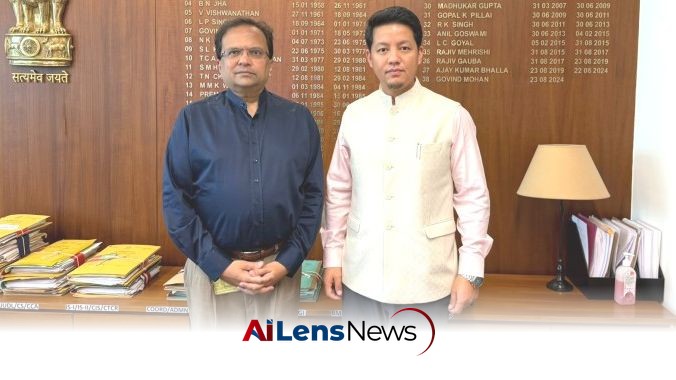


Indra Hang discusses crucial issues including LT seat reservation, strategic border road development, and SSB welfare with the Ministry of Home Affairs.
Gangtok, India Jul 12, 2026 ALN: Indra Hang, a prominent political figure in the region, has recently engaged in discussions with officials from the Ministry of Home Affairs (MHA) to address several pressing issues that not only affect his constituency but also have broader implications for the region and the nation as a whole. The discussions primarily revolved around three key topics: the reservation of seats for the Loktantrik Party (LT), the development of strategic border roads, and the welfare of the Sashastra Seema Bal (SSB). Each of these elements plays a crucial role in shaping the political landscape, enhancing security, and improving infrastructure in the border areas of the country.
One of the key topics on the agenda was the reservation of seats for the Loktantrik Party. Indra Hang emphasized the importance of ensuring adequate representation for the LT in local governance and legislative bodies. He argued that this reservation is crucial for empowering marginalized communities and enhancing their participation in the democratic process. The concept of seat reservation has been a contentious issue in Indian politics, often seen as a means to uplift underrepresented groups and provide them with a voice in governance.
The Loktantrik Party, which aims to represent the interests of various marginalized communities, has been advocating for a greater role in local governance. By securing reserved seats, the LT can ensure that the voices of these communities are heard in decision-making processes that directly affect their lives. This is particularly significant in a diverse country like India, where different regions and communities have varying needs and challenges. Reservation, therefore, is not merely a political strategy; it is a step towards ensuring social justice and equity in representation.
The history of seat reservation in India dates back to the early 20th century, with the British colonial government implementing measures to provide political representation to various communities. Post-independence, the Indian Constitution enshrined the principle of reservation in legislative bodies for Scheduled Castes and Scheduled Tribes, acknowledging the historical injustices faced by these groups. Over the years, this has expanded to include Other Backward Classes (OBCs) and more recently, economically weaker sections (EWS) of society. The ongoing debates surrounding reservation policies often reflect the complexities of caste dynamics, socio-economic disparities, and the need for equitable representation in governance.
In addition to the LT seat reservation, Hang raised concerns about the development of strategic border roads. He highlighted that improved infrastructure is essential for national security and economic development in border areas. The proposed road projects aim to facilitate better connectivity, promote trade, and enhance the mobility of security forces. The geographical landscape of India includes several remote and strategically significant border areas, which often suffer from inadequate infrastructure.
The development of border roads is critical not only for the movement of goods and people but also for the deployment and operational efficiency of security forces stationed in these regions. Improved roads can significantly reduce travel time, enhance logistical support, and ensure that security personnel can respond swiftly to any incidents or threats. Furthermore, better connectivity can stimulate local economies by enabling easier access to markets, healthcare, and education, thereby improving the overall quality of life for residents in these border areas.
Moreover, the strategic development of border roads can have geopolitical implications. In an era where national security is paramount, having robust infrastructure along the borders can deter potential threats and enhance the country’s defensive capabilities. It can also serve as a means of asserting territorial integrity and sovereignty, particularly in areas that may be prone to disputes or tensions with neighboring countries. The recent geopolitical tensions in various regions underscore the need for India to bolster its infrastructure along its borders with countries such as China and Pakistan, where historical disputes and ongoing conflicts require a vigilant and responsive security posture.
Another significant aspect of the meeting was the welfare of the Sashastra Seema Bal (SSB). Hang urged the MHA to prioritize the needs and well-being of SSB personnel, who play a vital role in maintaining security along the borders. The SSB, which is responsible for guarding the borders with Nepal and Bhutan, faces numerous challenges, including harsh working conditions, limited resources, and the need for specialized training.
Indra Hang called for improved facilities, better training, and adequate resources to support the SSB in fulfilling its duties effectively. The welfare of security personnel is a critical concern, as their morale and efficiency directly impact national security. Ensuring that SSB members have access to quality training and resources is essential for maintaining high operational standards, as well as for their physical and mental well-being. The challenges faced by security personnel often include long hours of duty in difficult terrain, exposure to extreme weather conditions, and the psychological toll of border security work.
Furthermore, the welfare of security forces extends beyond mere provisions; it encompasses their families and communities as well. By advocating for better support systems for SSB personnel, Hang is also addressing the broader social implications of security work, which often involves significant sacrifices from both the personnel and their families. Improved welfare measures can lead to enhanced job satisfaction, reduced attrition rates, and ultimately, a more effective security apparatus. The government has a responsibility to ensure that those who serve in these critical roles are adequately supported, both in terms of their immediate needs and their long-term career prospects.
Indra Hang's meeting with the Ministry of Home Affairs underscores the importance of addressing local issues that have broader implications for national security and governance. By advocating for LT seat reservation, strategic border road development, and SSB welfare, Hang aims to foster a more inclusive and secure environment for all citizens. These discussions highlight the interconnectedness of political representation, infrastructure development, and security, emphasizing that effective governance requires a holistic approach that considers the diverse needs of the population.
The implications of these discussions are significant. If the MHA responds positively to Hang's advocacy, it could lead to enhanced representation for marginalized communities, improved infrastructure in border regions, and better support for security personnel. Such developments would not only strengthen local governance but also contribute to national security and socio-economic stability. The outcomes of these discussions will be closely watched, as they may set a precedent for future policies aimed at addressing similar issues across the country. As India continues to navigate the complexities of its diverse society and its geopolitical landscape, the importance of inclusive policies and robust infrastructure cannot be overstated. Ensuring that all communities have a voice in governance and that security personnel are adequately supported is essential for building a resilient and cohesive nation.
To learn more about the latest developments in Regional Politics, stay updated with our exclusive reports and analyses on AiLensNews.

