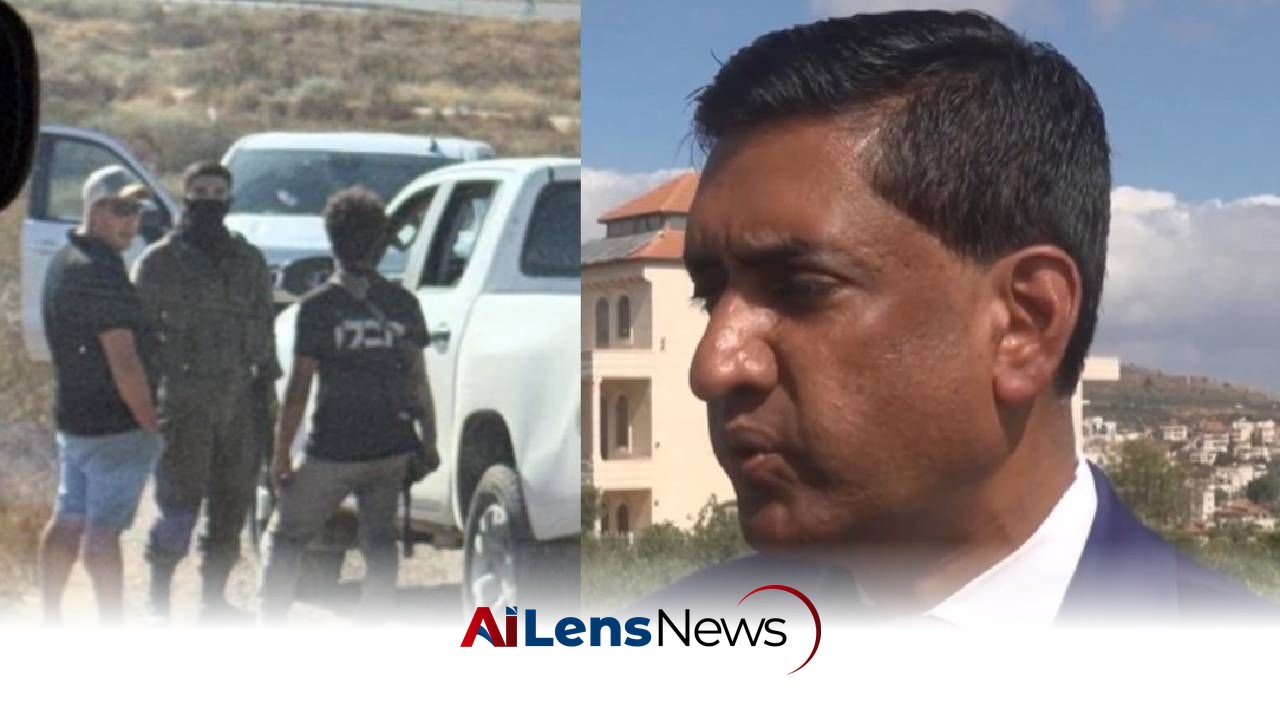


Congressman Ro Khanna claims armed Israeli settlers detained him and his delegation in the West Bank, calling for an investigation into the incident.
New Delhi, India Jul 12, 2026 ALN: Washington: Indian American Congressman Ro Khanna has accused armed Israeli settlers and soldiers of detaining him and other American citizens in the West Bank, demanding an investigation into the episode. This incident raises significant questions about the safety of American citizens in conflict zones and the role of foreign military forces in civilian affairs.
Khanna, a California Democrat, told NBC News that settlers carrying M4 rifles stopped his delegation during a three-day visit to the occupied territory. The use of military-style firearms by settlers has been a point of contention in the Israeli-Palestinian conflict, highlighting the often volatile interactions between settlers and Palestinians, as well as the broader implications of armed civilians in areas of military occupation.
The group reportedly feared for its safety during the encounter. “They had violent settlers detain American citizens, including an American government official,” Khanna stated. The presence of American officials in the region is not uncommon, as the U.S. has a vested interest in the Israeli-Palestinian conflict, often acting as a mediator in peace negotiations. However, incidents like this can complicate diplomatic relations and raise concerns about the protection of American citizens abroad.
“You had these settlers brandishing M4s, kicking the tires of our van, laughing at us, mocking us, videotaping us,” he added. Such behavior from armed individuals can create a hostile environment, particularly for foreign nationals who may already feel vulnerable in a politically charged atmosphere. The act of videotaping the encounter may also suggest an intent to intimidate or provoke a reaction from the delegation, further complicating the dynamics of civilian interactions in the region.
According to Khanna, the settlers held the delegation for about 20 minutes before four Israel Defense Forces (IDF) soldiers arrived. Instead of clearing the road, he alleged that the soldiers continued to block the group. This raises critical questions about the role of the IDF in protecting civilians and the extent to which they are influenced by the actions of settlers. The interaction between the IDF and settlers has often been scrutinized, particularly regarding the military's responsibility to uphold law and order in occupied territories.
“We were detained for about 20 minutes, fearful for our lives,” Khanna recounted. “Then the IDF comes—four soldiers—they tell our translator that they’re on the side of the settlers. They further detain us and block us in.” This account highlights the perceived complicity of the IDF in the actions of the settlers, which could lead to international scrutiny and calls for accountability from both the U.S. government and human rights organizations.
After contacting the US Embassy, Khanna mentioned that an official named David Brownstein intervened, reaching out to Israeli authorities. The group was eventually allowed to proceed approximately 75 minutes after the incident began. The involvement of the U.S. Embassy underscores the importance of diplomatic channels in resolving conflicts and ensuring the safety of American citizens abroad. It also raises questions about the effectiveness of U.S. diplomatic efforts in the region, particularly concerning the treatment of American citizens in conflict zones.
The IDF disputed Khanna’s account, stating that troops were dispatched to the scene and cleared the obstruction. “IDF troops were dispatched to the scene quickly, dispersed the Israeli civilians, and reopened the blocked road. The IDF soldiers operating in the area did not take part in blocking the road,” the statement read. This discrepancy between the IDF's account and Khanna's allegations illustrates the complexities of reporting on incidents in conflict zones, where narratives can vary significantly based on perspective.
Khanna rejected this narrative, asserting, “The IDF is lying. What happened was unprecedented.” His insistence on an investigation reflects a broader concern among some U.S. lawmakers regarding the treatment of Palestinians and the actions of settlers in the West Bank, as well as the accountability of the IDF in civilian interactions.
He called on Israeli Prime Minister Benjamin Netanyahu to order an investigation into the actions of the settlers and the soldiers involved, emphasizing the need for accountability. “The Prime Minister needs to open an investigation on these violent settlers,” Khanna insisted. “They need to be prosecuted.” This call for accountability resonates with ongoing discussions about the rule of law in the occupied territories and the need for transparency in military and civilian interactions.
Khanna also linked those involved to Yanon Levy, whom he accused of destroying a Palestinian village and killing Palestinians. The interview material did not include a response from Levy regarding these allegations. This connection to previous incidents of violence raises concerns about the broader implications of settler violence and its impact on the peace process, as well as the potential for further escalation in tensions between settlers and Palestinians.
“Their outpost needs to be investigated, and he needs to have an investigation on these four IDF officers,” Khanna stated. “Security cameras can see that they were involved in the detention of American citizens. How dare they mistreat people with an American passport that way?” This statement points to the importance of evidence in establishing accountability and the role of technology in documenting incidents in real-time, which can be crucial in understanding the dynamics of violence and power in the region.
Khanna has represented a Silicon Valley-area district in the US House of Representatives since 2017. He serves on the House Armed Services Committee and has frequently called for a U.S. foreign policy that emphasizes diplomacy and human rights. His position on the Armed Services Committee gives him a platform to advocate for a foreign policy that prioritizes the protection of human rights and the need for accountability in military actions, particularly in regions of conflict.
This incident not only highlights the challenges faced by American citizens in conflict zones but also serves as a reminder of the broader implications of U.S. foreign policy in the Israeli-Palestinian conflict. As tensions continue to rise in the region, the need for diplomatic solutions and accountability becomes increasingly crucial. The actions of both settlers and military forces in occupied territories will likely continue to be a focal point of international scrutiny, particularly as U.S. lawmakers like Khanna seek to address these issues through legislative and diplomatic channels.
To learn more about the latest developments in Political Controversies, stay updated with our exclusive reports and analyses on AiLensNews.

