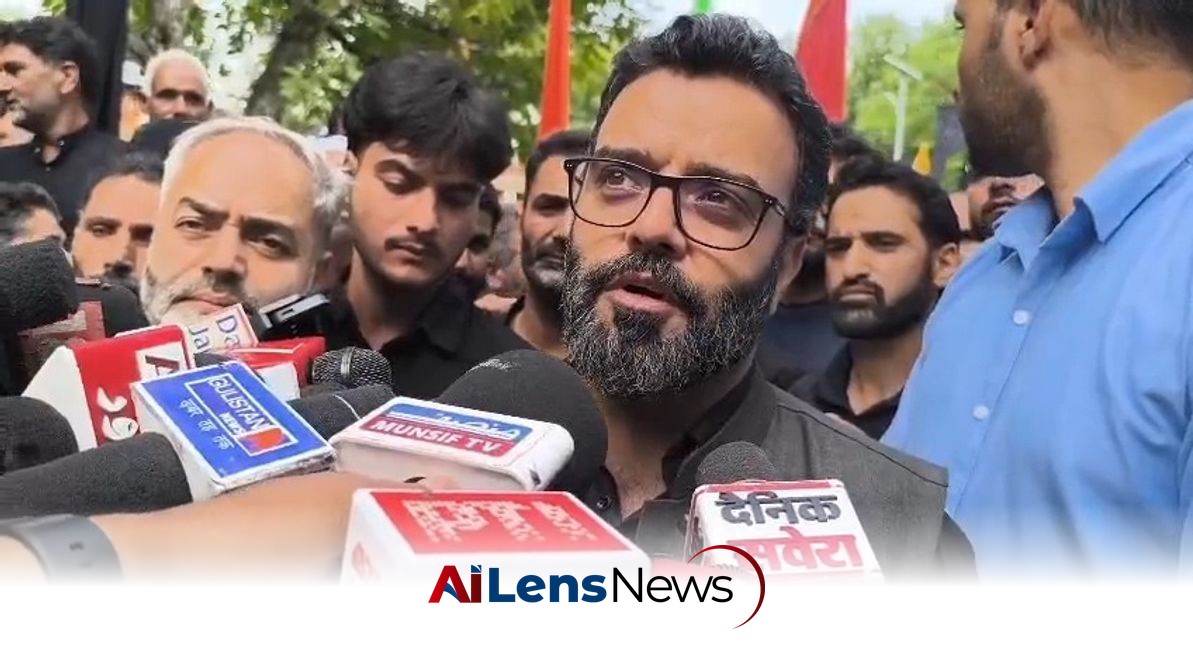


Aga Ruhullah emphasizes the National Conference's commitment to restoring Article 370, asserting that statehood is secondary to this goal.
New Delhi, India Jul 11, 2026 ALN: Aga Ruhullah, a prominent leader of the National Conference (NC), recently articulated the party's primary objective in the current political landscape. He stated that the NC was elected not merely to advocate for statehood but to focus on the restoration of Article 370, which grants special status to Jammu and Kashmir. This statement comes amidst ongoing discussions about the political future of the region, particularly following the abrogation of Article 370 in 2019. Ruhullah's remarks highlight a significant shift in the party's narrative, emphasizing the importance of Article 370 over the immediate demand for statehood.
Article 370 was a constitutional provision that granted Jammu and Kashmir a degree of autonomy, allowing it to have its own constitution and a significant level of control over its internal affairs. This provision was a result of the unique circumstances surrounding the accession of Jammu and Kashmir to India in 1947. The article allowed the region to maintain its own laws and regulations, particularly in matters of property rights, citizenship, and governance, which were distinct from those applicable in the rest of India.
The abrogation of Article 370 by the Indian government in August 2019 was a watershed moment in the region's history. The move was met with widespread condemnation from various political parties, including the National Conference, which argued that it undermined the rights and identity of the people of Jammu and Kashmir. The decision led to a significant political upheaval, with the region being placed under a strict lockdown, a communication blackout, and the imposition of heavy security measures. This drastic shift has since sparked intense debates about the governance, rights, and future of Jammu and Kashmir.
Ruhullah's comments reflect a broader strategy within the NC to rally support by focusing on the restoration of Article 370 as a means to regain the trust of the electorate. He argued that the party's mandate is clear: the people voted for the NC to fight for their rights and restore their identity, which they believe was compromised by the removal of the article. This strategic pivot suggests that the NC is prioritizing long-term goals over immediate political gains, seeking to position itself as the defender of the rights of the people of Jammu and Kashmir.
The implications of this focus on Article 370 are manifold. Firstly, it underscores the NC's commitment to its historical roots and its foundational principles. The party, which has been a significant political force in Jammu and Kashmir for decades, is attempting to realign itself with the aspirations of its core constituency, which has traditionally viewed Article 370 as a symbol of their unique identity and autonomy.
Moreover, this emphasis on Article 370 may also serve as a rallying point for various groups within Jammu and Kashmir that are disillusioned with the current political landscape. The NC's stance could potentially unify different factions that share a common interest in restoring the special status of the region, thereby strengthening the party's position in future political contests.
The public's response to Ruhullah's statements has been mixed. While many supporters of the NC resonate with the call for the restoration of Article 370, others express concerns about the feasibility of such a goal in the current political climate. The discourse surrounding statehood remains a critical issue, with various factions within Jammu and Kashmir advocating for different paths forward. Some groups continue to push for full statehood, arguing that it is essential for restoring democratic processes and governance in the region.
Critics of the NC's renewed focus on Article 370 argue that the party may be overlooking pressing issues that affect the daily lives of the people, such as economic development, employment opportunities, and infrastructure improvements. They contend that while the restoration of Article 370 is important, it should not overshadow the immediate needs of the populace. This tension between long-term aspirations and short-term necessities continues to shape the political discourse in Jammu and Kashmir.
To fully understand the implications of the NC's focus on Article 370, it is essential to delve into the historical significance of this provision. Article 370 was not merely a legal framework but a reflection of the unique circumstances surrounding the region's accession to India. Jammu and Kashmir's accession was marked by a distinct set of challenges, including the region's demographic diversity, its historical context, and the political aspirations of its people. The article was designed to safeguard these unique characteristics, allowing the region to maintain a certain degree of autonomy and self-governance.
The abrogation of Article 370 has since been viewed by many as an attempt to dilute this autonomy and integrate Jammu and Kashmir more fully into the Indian Union. This perception has fueled resentment among various segments of the population, who see the move as an infringement on their rights and identity. The National Conference, as a party that has historically championed the cause of the people of Jammu and Kashmir, finds itself at a crossroads where it must navigate these complex sentiments while attempting to restore its political relevance.
As the National Conference seeks to refocus its agenda on the restoration of Article 370, it faces several challenges. The political landscape in Jammu and Kashmir has evolved significantly since 2019, with new players emerging and the public's priorities shifting. The NC must contend with the rise of other political entities that may also seek to capitalize on the sentiments surrounding Article 370, thereby complicating its efforts to dominate the discourse.
Additionally, the party's leadership must grapple with the diverse opinions within its own ranks regarding the best approach to take. While there is a strong desire to restore Article 370, there are also voices advocating for a more pragmatic approach that addresses immediate concerns such as economic development and governance. Balancing these competing interests will be essential for the NC to maintain unity and effectively advocate for the people of Jammu and Kashmir.
As the National Conference navigates the complexities of regional politics, Aga Ruhullah's emphasis on Article 370 serves as a reminder of the party's foundational principles. The focus on restoring this provision may define the NC's approach in the coming years, as it seeks to address the aspirations of the people of Jammu and Kashmir. The party's commitment to this issue could either reinvigorate its base or risk alienating segments of the population that prioritize other pressing concerns.
In the broader context, the debate over Article 370 and the status of Jammu and Kashmir continues to evoke strong emotions and differing opinions among the populace. As political dynamics evolve, the National Conference's strategy will be critical in shaping the future of the region. The party's ability to balance its historical commitments with the contemporary needs of its constituents will ultimately determine its relevance and effectiveness in the years to come.
To learn more about the latest developments in Regional Politics, stay updated with our exclusive reports and analyses on AiLensNews.

