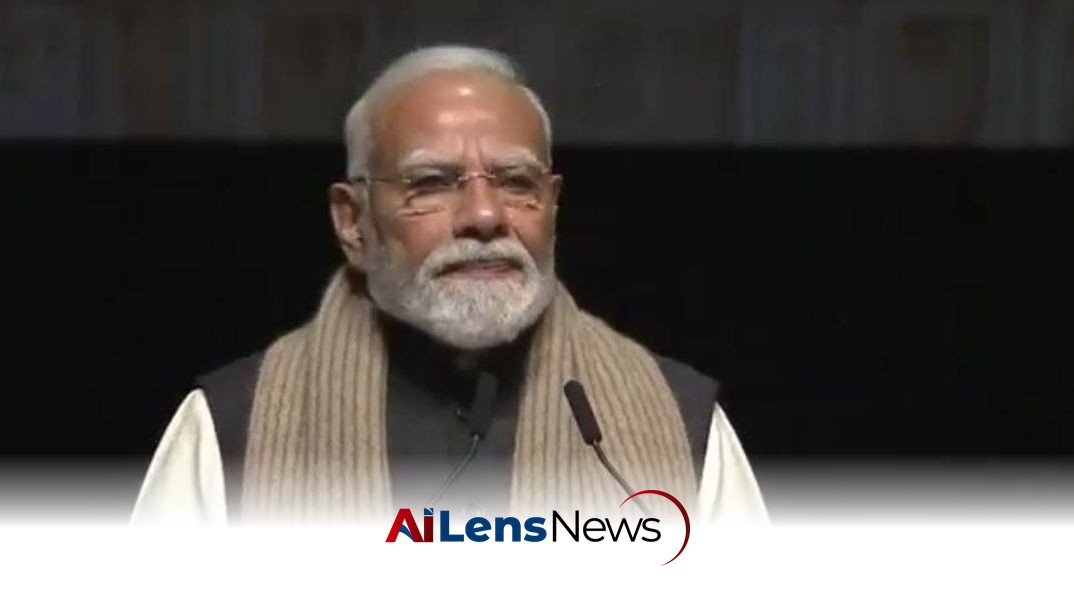


In Auckland, PM Modi highlighted India's rapid development amidst global challenges, emphasizing new models of growth and the significance of India-New Zealand relations.
New Delhi, India Jul 11, 2026 ALN: India's pace of development is "unprecedented" despite global challenges, Prime Minister Narendra Modi stated on Saturday, highlighting that the country is providing the world with new models of development. This assertion comes at a time when many nations are grappling with economic slowdowns, geopolitical tensions, and environmental crises. Modi's remarks were made during an Indian community event titled 'Kia Ora Modi' in Auckland, which was also attended by New Zealand's Prime Minister Christopher Luxon.
During his speech, Modi emphasized the longstanding relationship between India and New Zealand, which he described as being built on cherished memories, enduring friendship, shared values, and a mutual commitment to progress. This relationship is particularly significant as it marks the first visit of an Indian Prime Minister to New Zealand in 40 years, a milestone that underscores the importance of bilateral ties in the contemporary global landscape.
"Amidst global challenges, the speed at which India is developing is unprecedented. Today, India is the world's fastest-growing major economy," Modi stated, receiving enthusiastic applause from the audience. This claim aligns with various economic indicators that show India has been experiencing significant growth rates, especially in sectors like technology, agriculture, and manufacturing, despite the global economic headwinds exacerbated by the COVID-19 pandemic and ongoing geopolitical tensions.
Modi elaborated on India's technological advancements, noting, "Today in India, billions of digital transactions are happening every month through UPI (Unified Payments Interface). India is touching new heights in drone technology and the space economy." The reference to UPI highlights India's strides in digital finance, where the UPI system has revolutionized how transactions are conducted, promoting financial inclusion and economic efficiency.
Moreover, Modi pointed to the potential of the space sector as a demonstration of the economic partnership between India and New Zealand. He stated, "The same spirit is reflected in our trade agreement. This agreement will accelerate our journey towards a developed India. It will create new opportunities for businesses in both India and New Zealand." The emphasis on a bilateral trade agreement indicates a strategic move to strengthen economic ties, which could lead to increased trade volumes and investment opportunities, benefiting both nations.
During his address, Modi presented a vision of a new India that balances ecological concerns with economic growth. He stated, "This is the picture of the new India, showing how India is maintaining a balance in both ecology and economy, just like New Zealand." This assertion reflects India's commitment to sustainable development, a crucial issue as countries worldwide face the impacts of climate change and environmental degradation.
Modi's visit also highlighted cultural ties, as he expressed a shared commitment with New Zealand to celebrate and preserve indigenous cultures. He remarked on the significance of the term "Waka" in New Zealand culture, symbolizing unity and a shared journey. Modi's use of cultural references serves to deepen the connection between the two nations, suggesting that their collaboration extends beyond mere economic interests to include cultural appreciation and mutual respect.
In his remarks, Modi acknowledged the contributions of the Indian diaspora in New Zealand, thanking his Kiwi counterpart Luxon and other officials for their support of the India-New Zealand relationship. He specifically mentioned notable figures within the Indian community, such as Air New Zealand CEO Nikhil Ravi Shankar and cricketer Rachin Ravindra, as examples of successful integration and contribution to New Zealand society. This recognition underscores the importance of the Indian community as a bridge between the two nations, fostering goodwill and mutual understanding.
Modi also touched upon the role of women in both societies, stating, "Today, we see that women are contributing on a massive scale in New Zealand's society. India, too, is today opening new doors of opportunity for women with the mantra of women-led development." This focus on gender equality and women's empowerment is a crucial aspect of modern governance and development, reflecting a global trend towards inclusivity in economic and social policies.
In a poignant moment, Modi recounted a personal anecdote about receiving a muffler, cap, and gloves as gifts during a visit to New Zealand approximately 25-30 years ago, before his political career. This personal touch added warmth to his address, illustrating the long-standing ties he has with the country and its people.
Furthermore, Modi emphasized India's dedication to preserving its cultural heritage, citing the example of safeguarding the sacred Saroop of the Guru Granth Sahib during a crisis in Afghanistan. This remark illustrates India's commitment to religious tolerance and cultural preservation, values that resonate with both Indian and New Zealand societies.
As Modi concluded his address, he urged the Indian community in New Zealand to continue serving as a conduit for friendship, trust, and cooperation between the two nations. He expressed optimism about the future, stating, "A vast ocean of opportunities lies before India and New Zealand." This forward-looking perspective encapsulates the spirit of collaboration that both leaders aim to foster.
New Zealand Prime Minister Luxon reciprocated Modi's sentiments, expressing gratitude for the historic visit and likening it to a family reunion after 40 years. He reminisced about his own experiences in India, noting that New Zealand's free trade agreement with India opens up a market of 1.4 billion people. Luxon’s remarks highlight the strategic importance of India as a partner for New Zealand, emphasizing trust and mutual growth as foundational elements of their relationship.
In summary, Prime Minister Modi's visit to New Zealand signifies a pivotal moment in India-New Zealand relations, characterized by a shared vision for economic growth, cultural appreciation, and sustainable development. As both nations look to the future, the potential for collaboration across various sectors, including trade, technology, and culture, appears promising. The ongoing dialogue and partnerships established during this visit may pave the way for a stronger, more interconnected relationship that benefits both countries and their citizens.
To learn more about the latest developments in Leaders & Politicians, stay updated with our exclusive reports and analyses on AiLensNews.

