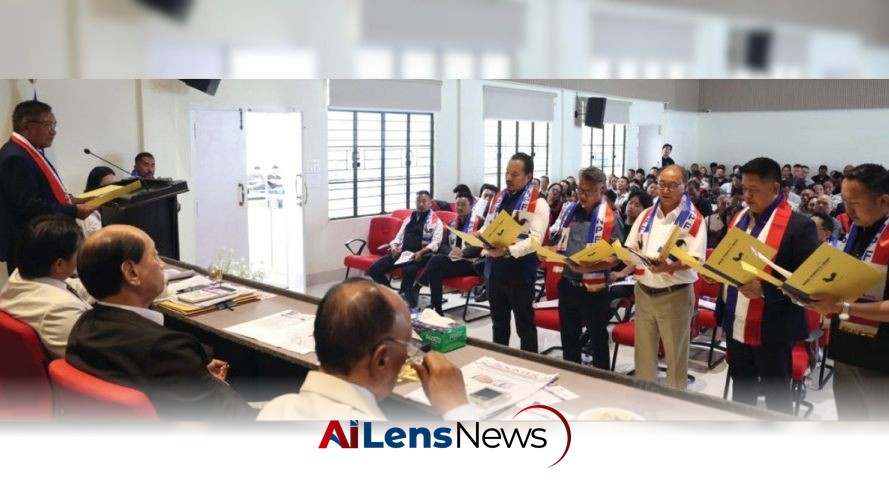


Nagaland CM Neiphiu Rio emphasizes the importance of Naga unity in the political landscape as the Rising People's Party merges with the Naga People's Front.
Imphal, India Jul 11, 2026 ALN: The Rising People's Party (RPP) formally merged with the ruling Naga People's Front (NPF) on Saturday, a move that Nagaland Chief Minister Neiphiu Rio believes will enhance Naga unity. This merger is significant as it aligns two regional parties with a common goal of addressing the long-standing Naga political issue, which has been a source of contention and a major concern for the people of Nagaland for decades.
Rio stated that resolving the Naga political issue is the government's top priority. The Naga political issue refers to the demand for greater autonomy and recognition of Naga identity, which has historical roots in the region's colonial past and subsequent conflicts. The Naga people have been engaged in a struggle for self-determination and recognition, which has led to various peace talks and negotiations over the years. During a program to mark the merger, Rio, who also serves as the NPF president, described the union of the two regional parties as more than just a political realignment. He emphasized that this merger signifies a broader convergence of people, ideas, experiences, and aspirations in the larger interest of the Naga people.
"It is the convergence of people, ideas, experiences and aspirations in the larger interest of the Naga people," he remarked, highlighting the importance of unity among the Naga tribes and communities. The Naga society is made up of numerous tribes, each with its distinct culture and identity, which has often led to divisions. The merger is seen as a step towards fostering a collective identity that transcends tribal affiliations.
Rio emphasized that the opposition-less government in Nagaland reflects the collective resolve of all elected legislators to work collaboratively towards addressing the Naga political issue. This approach aims to create a more cohesive political environment where various stakeholders can come together to discuss and negotiate solutions to the challenges facing the Naga people. "The Naga political issue remains at the very top of the agenda of the Naga People's Front and the PDA government," Rio asserted, adding that the party would continue to facilitate efforts to create a conducive environment for an early and lasting political settlement.
The Chief Minister acknowledged the deep-seated frustrations of the Naga people, who have waited generations for a solution to their political aspirations. He expressed that the aspiration remains for an "inclusive, honourable and acceptable" settlement that reflects the collective will of the people. This sentiment resonates with many Nagas who have long yearned for a resolution that honors their unique cultural identity while providing them with the autonomy they seek.
While recognizing that the physical integration of Naga-inhabited areas across the Northeast may not be immediately achievable, he urged the Nagas to continue striving for "emotional integration" by strengthening ties among communities and fostering a shared sense of identity. This emotional integration is critical in a region where tribal identities often take precedence over collective aspirations, and where historical grievances can create rifts among communities.
"It has always been the aspiration of the Naga people to come together as one family under one administrative umbrella," he noted, adding that although immediate physical integration might not be possible, the aspiration should never be abandoned. The idea of a unified Naga identity is central to many political discussions, and leaders like Rio are working to promote this vision as a means of achieving greater political stability and unity.
Rio also appealed to Nagas in neighboring states, where Assembly elections are approaching, to strengthen the NPF and work towards building a common political platform that represents Naga aspirations. This call to action emphasizes the need for collaboration among Nagas across different regions, which could lead to a more unified political front that can effectively advocate for their rights and interests.
"Politics must not always be about differences and divisions. Politics must also be about building bridges, reconciliation and creating hope for future generations," he stated, highlighting the importance of fostering a political culture that prioritizes unity and collaboration over division. This perspective is particularly relevant in the context of Nagaland's history, which has been marked by political strife and conflict.
Reiterating his government's development agenda, Rio emphasized that peace and development must go hand in hand. He highlighted the state's focus on improving infrastructure, connectivity, healthcare, education, employment, investment, entrepreneurship, and rural livelihoods, while ensuring greater participation of women and youth in development. This comprehensive approach aims to address not only the political concerns of the Naga people but also their socio-economic needs, which are crucial for fostering long-term stability and growth in the region.
The merger was formally announced by NPF secretary general and Adviser Achumbemo Kikon, who welcomed the incoming RPP leaders and members. NPF working president Pusazo Luruo administered the oath to the new entrants, marking a significant moment in the political landscape of Nagaland. The integration of RPP members into the NPF is expected to bolster the party's strength and enhance its capacity to address the various challenges facing the state.
The RPP was formed on October 2, 2020, and received recognition from the Election Commission of India in June 2021. The party, led by Joel Naga, aimed to present itself as a regional alternative focused on clean governance and electoral reforms. However, it failed to secure any seats in the 2023 Nagaland Assembly election and currently has no representation in the 60-member Assembly or in the state's urban local bodies. This lack of electoral success may have prompted the RPP to seek a merger with the NPF as a strategic move to remain politically relevant and influential in the state's governance.
As Nagaland continues to navigate its complex political landscape, the implications of this merger may extend beyond immediate political gains. It could serve as a catalyst for greater unity among the Naga tribes, fostering a collective identity that may lead to more effective advocacy for the rights and aspirations of the Naga people. The commitment of the NPF and its leadership to address the Naga political issue may also resonate with the electorate, potentially impacting future elections and the political dynamics in the region.
In conclusion, the merger of the RPP with the NPF is a significant development in Nagaland's political arena, reflecting a broader push for unity and collaboration among the Naga people. As stakeholders work towards addressing the long-standing Naga political issue, the success of this merger will depend on the ability of the NPF to effectively translate this political alignment into tangible benefits for the Naga community, fostering a sense of hope and progress for future generations.
To learn more about the latest developments in Political Parties, stay updated with our exclusive reports and analyses on AiLensNews.

