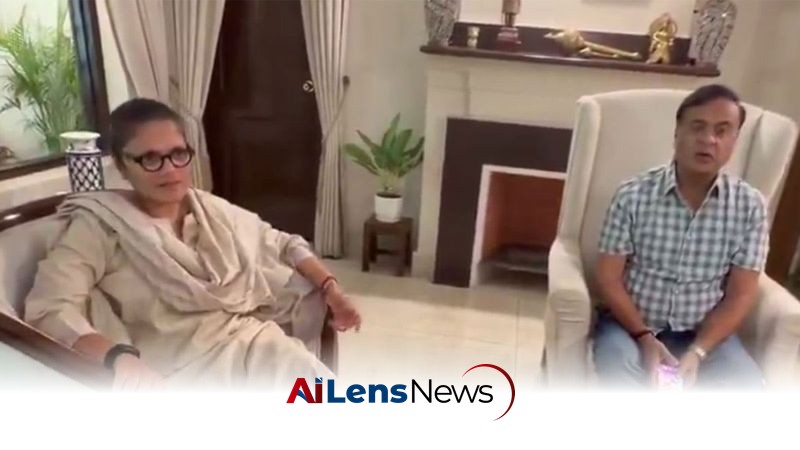


Sushmita Dev's resignation from the Trinamool Congress and Rajya Sabha highlights internal strife within the party following recent electoral losses.
Leh, India Jun 10, 2026 ALN: Kolkata (West Bengal), Jun 10: In a significant blow to the Trinamool Congress (TMC), Rajya Sabha MP Sushmita Dev announced her resignation from both the party and her position in the Upper House on Wednesday. This development comes amid escalating internal conflicts within the party, which has faced a series of resignations following its disappointing performance in the recent Legislative Assembly elections.
Dev's departure is particularly notable as it follows a pattern of dissent within the TMC, raising questions about the party's stability and future direction. On the same day, she met with Assam Chief Minister Himanta Biswa Sarma in New Delhi, fueling speculation about her potential alignment with the Bharatiya Janata Party (BJP) in the near future.
Before joining the TMC, Sushmita Dev was a member of the Congress party, where she had established her political career. Her father, the late Santosh Mohan Dev, served as a Union Minister in the UPA-1 government, highlighting a legacy of political involvement. Sushmita Dev’s political journey has been marked by her efforts to connect with the grassroots, particularly focusing on women’s issues and social development. Her experience in the Congress party, where she served in various capacities including as the President of the All India Mahila Congress, has shaped her approach to politics.
In her resignation letter, Dev expressed her gratitude for the support she received during her tenure, stating,
“I do hereby resign from the membership of Rajya Sabha, which may please be accepted with immediate effect. I convey my sincere gratitude to your Excellency, Hon’ble Deputy Chairman and all functionaries of the Rajya Sabha Secretariat extending all help and cooperation during my tenure as a Member of the Rajya Sabha.”
This resignation adds to the growing list of challenges facing the TMC, as it grapples with internal divisions and the fallout from its electoral setbacks. The party, which has been a dominant force in West Bengal politics since it came to power in 2011, has recently faced criticism for its governance and electoral strategies. The 2021 West Bengal Legislative Assembly elections were particularly contentious, with the TMC managing to retain power but experiencing a significant loss of seats to the BJP, which had emerged as a formidable opponent.
The internal strife within the TMC has been exacerbated by allegations of corruption and mismanagement, leading to a wave of resignations from party members who have expressed dissatisfaction with the leadership under Chief Minister Mamata Banerjee. The party’s inability to effectively address these concerns has raised questions about its ability to unify its ranks and present a cohesive front to the electorate.
Dev’s resignation is emblematic of the broader discontent within the party. Several other leaders have also left the TMC in recent months, citing similar grievances. This trend highlights a potential fracture in the party’s base, which could have significant implications for its future electoral prospects. Analysts suggest that if the TMC fails to address these internal conflicts, it may struggle to maintain its influence in West Bengal, particularly as opposition parties like the BJP continue to capitalize on the ruling party's vulnerabilities.
As the political landscape continues to evolve, the implications of Sushmita Dev's resignation will be closely watched, particularly regarding her next steps and the potential impact on the TMC's future. There is considerable speculation about whether she will join the BJP, which has been actively seeking to strengthen its presence in West Bengal. The BJP's strategy has included attracting leaders from other parties, and Dev's political experience and connections could be seen as valuable assets for the party.
The TMC, on the other hand, will need to engage in damage control to prevent further defections and to reassure its supporters and party workers. The leadership might consider restructuring its approach to governance and party organization to address the underlying issues that have led to dissatisfaction among its members. This could involve greater transparency in decision-making processes, enhanced communication with party workers, and a renewed focus on grassroots engagement.
Moreover, Dev's exit raises questions about the future of the TMC's women's wing and its commitment to promoting women in politics. As a prominent female leader, her departure could signal a setback for the party's efforts to empower women and address gender-related issues within its framework. The TMC has historically positioned itself as a champion of women's rights, and losing a leader like Dev might undermine those claims, particularly at a time when gender equality remains a pressing issue in Indian politics.
In conclusion, Sushmita Dev's resignation from the TMC and the Rajya Sabha marks a pivotal moment for the party, reflecting deeper issues of internal discord and electoral challenges. As the TMC navigates this tumultuous period, its ability to regroup and redefine its strategies will be crucial in determining its future trajectory in West Bengal's political arena. The coming weeks and months will be critical as the party seeks to stabilize its ranks and respond to the changing dynamics of the state's political landscape.
To understand the implications of this resignation, it is essential to consider the historical context of the TMC's rise and the challenges it faces today. The TMC, under the leadership of Mamata Banerjee, has been a significant player in West Bengal politics, successfully challenging the Left Front's decades-long rule. However, the party's recent electoral performance has raised concerns about its ability to maintain its hold on power.
The 2021 assembly elections were seen as a litmus test for the TMC, which faced a strong challenge from the BJP. Although the TMC secured a victory, the loss of seats indicated a weakening support base. This has led to a series of resignations from key party members, signaling a crisis of confidence in the party's leadership and direction. The situation is compounded by ongoing allegations of corruption and mismanagement, which have further eroded trust among party workers and supporters.
In light of these developments, the TMC leadership must take immediate steps to address the issues that have led to discontent among its ranks. This may involve not only a reassessment of its governance strategies but also a renewed commitment to engaging with grassroots issues and addressing the concerns of its constituents. The party's ability to present a unified front and effectively communicate its vision will be critical in the coming months.
Furthermore, the political landscape in West Bengal is evolving, with the BJP actively seeking to expand its influence. The party has made significant inroads in the state, and the departure of leaders like Sushmita Dev could provide the BJP with additional momentum. The TMC must be vigilant in countering this trend and reinforcing its position as the primary political force in West Bengal.
In conclusion, Sushmita Dev's resignation is not just a personal decision; it reflects broader trends within the TMC and the political dynamics of West Bengal. The party's response to this challenge will be crucial in shaping its future and determining its ability to navigate the complexities of state politics. As the situation unfolds, both the TMC and the BJP will be closely watched, and the implications of these developments will resonate throughout the political landscape of West Bengal.
To learn more about the latest developments in Political Parties, stay updated with our exclusive reports and analyses on AiLensNews.

