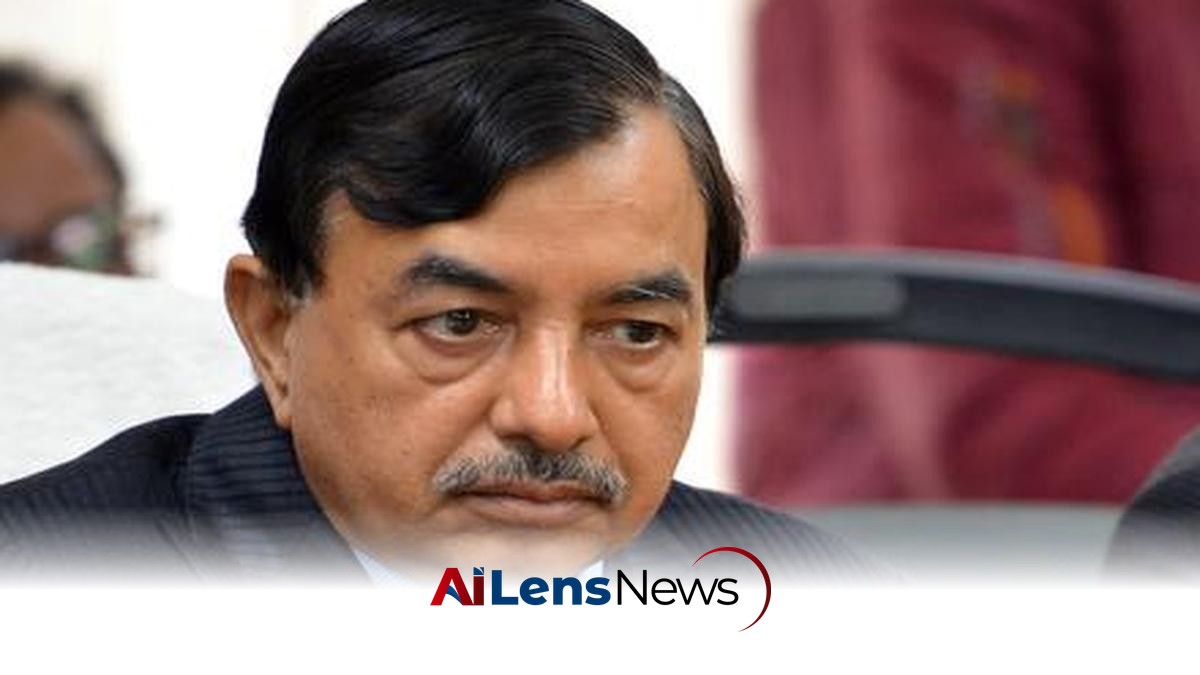


Sushil Chandra has been appointed as the Chief Election Commissioner, succeeding Sunil Arora, whose term ended recently.
Leh, India Apr 12, 2021 ALN: In a significant development for India's electoral landscape, President Ram Nath Kovind has appointed Sushil Chandra as the new Chief Election Commissioner. This appointment comes as the incumbent Chief Election Commissioner, Sunil Arora, concludes his tenure on April 12. The transition of leadership within the Election Commission of India (ECI) is a critical moment, particularly as it coincides with a busy election period in the country.
The Law Ministry issued a statement confirming the appointment, stating, “The President appointed Shri Sushil Chandra, the senior-most Election Commissioner, as the Chief Election Commissioner in the Election Commission of India.” This transition is set to take place officially on Tuesday, following a notification from the Legislative Department. The timing of this announcement is particularly noteworthy, as it comes just weeks before crucial state assembly elections, underscoring the importance of stable leadership in the ECI.
Sushil Chandra has been serving as an Election Commissioner since February 15, 2019. His tenure in this role has been marked by significant electoral events, including the general elections of 2019, which were conducted under his watch. Prior to this role, he held the position of chairman of the Central Board of Direct Taxes (CBDT), where he was responsible for overseeing the administration of direct tax laws in India. With a background as a 1980 batch Indian Revenue Service officer, Mr. Chandra has extensive experience in international taxation and investigation, which may provide him with a unique perspective on the financial aspects of electoral processes.
The Election Commission of India plays a vital role in ensuring free and fair elections in the world's largest democracy. Established in 1950, the ECI is tasked with overseeing elections at both the national and state levels, as well as the elections for the President and Vice President of India. The Commission's responsibilities include preparing electoral rolls, conducting elections, and enforcing the Model Code of Conduct, which governs the conduct of political parties and candidates during elections.
Chandra's appointment is particularly timely as the Election Commission is currently preparing for Assembly elections in four states and one Union Territory, with results expected to be announced on May 2. These elections are crucial as they will determine the political landscape in several key regions of India, impacting governance and policy decisions at the state level. His leadership will be crucial in ensuring the smooth conduct of these elections, which are vital for the democratic process in India.
As the new Chief Election Commissioner, Sushil Chandra faces the challenge of maintaining the integrity and transparency of the electoral process, especially in a politically charged environment. The upcoming elections are expected to be fiercely contested, and there is a growing concern over issues such as electoral malpractices, the influence of money in politics, and the use of social media for political campaigning. His previous experience in tax administration and governance will likely inform his approach to overseeing the upcoming elections.
Moreover, the ECI has been increasingly focusing on technological advancements to enhance the electoral process. Initiatives such as the Electronic Voting Machines (EVMs) and Voter Verifiable Paper Audit Trail (VVPAT) systems have been implemented to ensure transparency and reliability in elections. Chandra's role will involve not only upholding these standards but also exploring further innovations to improve the electoral process.
In addition to the immediate challenges posed by the upcoming elections, Sushil Chandra will also have to navigate the broader implications of electoral reforms in India. Discussions around reforms such as the introduction of state funding for elections, the regulation of political party funding, and the need for greater representation of marginalized communities are ongoing. His leadership will be vital in steering these discussions and implementing necessary reforms to enhance the democratic process.
Furthermore, the ECI has faced scrutiny over its handling of various electoral issues, including allegations of bias and the need for greater accountability. Chandra's appointment comes at a time when there is a heightened demand for the Commission to restore public confidence in its impartiality. His commitment to upholding democratic values will be essential in addressing these concerns and ensuring that the ECI operates as an independent and unbiased body.
In conclusion, Sushil Chandra's appointment marks a new chapter for the Election Commission of India, as he steps into a role that is pivotal for upholding democratic values and ensuring fair elections across the nation. His extensive experience in tax administration and governance, coupled with his previous role as an Election Commissioner, positions him well to tackle the challenges ahead. As India approaches a crucial electoral phase, all eyes will be on Chandra and the ECI to ensure that the electoral process remains transparent, free of malpractices, and reflective of the will of the people. The upcoming elections will not only shape the political landscape of the states involved but also set a precedent for the future of electoral integrity in India.
To understand the significance of this appointment, it is essential to consider the historical context of the Election Commission of India. Established in 1950, the ECI was created to administer elections in a manner that preserves the democratic ethos of the nation. Over the decades, the Commission has evolved, adapting to the changing political landscape and the challenges posed by new technologies and electoral practices. The role of the Chief Election Commissioner has become increasingly vital as the stakes of elections have risen, and the public's expectations for transparency and fairness have intensified.
In recent years, the ECI has faced various challenges, including accusations of bias, especially in the context of high-stakes elections where political parties often question the impartiality of the Commission's decisions. Allegations of electoral malpractice, including the misuse of state resources for political gain and the influence of money in politics, have put the Commission under scrutiny. As such, Chandra's leadership will be pivotal in addressing these concerns and reinforcing the Commission's credibility.
Moreover, the political environment in India has become increasingly polarized, with significant implications for electoral conduct. The use of social media as a campaigning tool has transformed the way elections are contested, leading to new challenges related to misinformation and the regulation of political advertising. Chandra will need to navigate these complexities while ensuring that the Commission remains a neutral arbiter in the electoral process.
As Chandra takes on his new responsibilities, he will also have to engage with various stakeholders, including political parties, civil society organizations, and the public. Building consensus around electoral reforms and addressing the concerns of various groups will be essential in fostering a collaborative approach to improving the electoral process. His experience in tax administration may provide him with insights into regulatory frameworks that could be beneficial in this regard.
In addition, the implementation of technological solutions in the electoral process will require careful consideration and planning. While technologies like EVMs and VVPATs have been introduced to enhance transparency, there are ongoing debates about their reliability and security. Chandra will need to ensure that the ECI continues to invest in research and development to keep pace with technological advancements while maintaining public confidence in the electoral process.
Looking ahead, Chandra's leadership will also be tested by the need for greater inclusivity in the electoral process. As discussions around representation of marginalized communities gain traction, the ECI may need to explore innovative approaches to ensure that all voices are heard in the democratic process. This could involve outreach initiatives aimed at increasing voter participation among underrepresented groups, as well as efforts to address systemic barriers that hinder their engagement in elections.
Ultimately, Sushil Chandra's appointment as Chief Election Commissioner is not just a change in leadership; it represents a critical juncture for the Election Commission of India as it seeks to uphold the democratic values enshrined in the Constitution. As India prepares for a series of elections that will shape its political future, the Commission's ability to navigate the complexities of the electoral landscape will be paramount. Chandra's experience, commitment to integrity, and vision for electoral reforms will be closely observed by all stakeholders as they look to the ECI to fulfill its mandate in the coming years.
To learn more about the latest developments in Elections, stay updated with our exclusive reports and analyses on AiLensNews.

