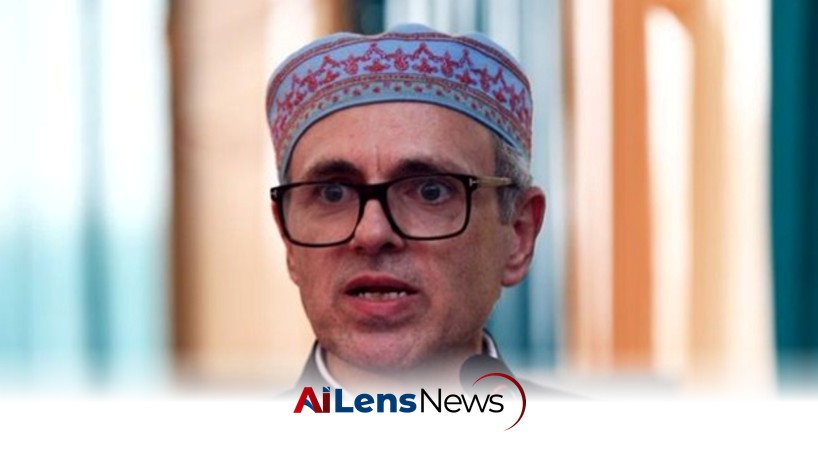


Omar Abdullah declares a protest in Delhi on July 20 for the restoration of Jammu and Kashmir's statehood, criticizing the BJP's handling of the issue.
Leh, India Jul 12, 2026 ALN: In recent weeks, political tensions have escalated in Jammu and Kashmir (J&K) regarding the restoration of statehood, a status that was revoked in August 2019 when the region was reorganized into two Union Territories: Jammu & Kashmir and . The decision was met with widespread criticism and concern from local leaders and parties, who view the move as a significant reduction in the region's autonomy and political representation. The announcement by Omar Abdullah, the Chief Minister and vice-president of the National Conference (NC), to launch a fresh agitation for the restoration of J&K's statehood reflects the ongoing struggle for political rights and representation in the region.
Omar Abdullah's declaration of a protest scheduled for July 20 at Jantar Mantar in New Delhi underscores the urgency felt by many in J&K regarding the political promises made by the Indian government. His statements emphasize the need for accountability from the central government, which has been accused of neglecting the commitments made to the people of J&K. The Chief Minister's assertion that "Promises made to people must be honoured" resonates with a populace that has experienced significant upheaval and uncertainty since the abrogation of Article 370, which previously granted special status to the region.
In his speeches, Abdullah has articulated the frustrations of the people of Jammu and Kashmir, who have been waiting for nearly two years for the restoration of their statehood. He criticized the central government for its inaction, stating, "We waited, engaged in discussions and hoped that the promise would be fulfilled. Nearly two years have passed and the people of Jammu and Kashmir are still waiting." This sentiment reflects a broader discontent among the populace, which has been compounded by economic challenges and security concerns in the wake of the constitutional changes.
Omar Abdullah's protest announcement was made against the backdrop of his previous remarks made in Srinagar at the mausoleum of his grandmother, Begum Akbar Jahan, a significant figure in the region's political history. The choice of location to announce the protest highlights the deep-rooted political legacy of the Abdullah family in J&K and their ongoing commitment to advocating for the rights of the people. His reference to the mausoleum, known as Madar-e-Meherban, symbolizes a connection to the past and a call for continuity in the struggle for political rights.
Furthermore, Abdullah's allegations against the Bharatiya Janata Party (BJP) regarding attempts to destabilize the National Conference government in J&K by offering inducements to party leaders reflects the intense political rivalry in the region. Such accusations highlight the contentious political landscape in J&K, where parties often engage in fierce competition for influence and power. The BJP has denied these allegations, emphasizing that its focus is on governance and development in the Union Territory.
Omar Abdullah's insistence on taking the demand for statehood to the national capital is a strategic move aimed at drawing attention to the plight of Jammu and Kashmir on a larger stage. His rhetorical question, "If not in Delhi, then where?" encapsulates the frustration felt by many in the region, who believe that decisions affecting their lives are made far removed from their realities. The protest at Jantar Mantar is not just a local issue but a call for national recognition of the unique challenges faced by the people of J&K.
Abdullah's comments regarding the Supreme Court's observations during hearings on Article 370-related petitions add a legal dimension to the political discourse. The Supreme Court's emphasis on restoring statehood post-electoral process is seen as a validation of the NC's demands. This legal backing could potentially strengthen the party's position as they mobilize support for their cause. The Chief Minister's assertion that these demands are rooted in constitutional assurances reinforces the legitimacy of the call for statehood restoration.
Moreover, Abdullah's acknowledgment of the sacrifices made by the people of Jammu and Kashmir, particularly those in border areas, serves to highlight the resilience and loyalty of the region's residents amid ongoing challenges. His reference to Mahatma Gandhi’s characterization of Jammu and Kashmir as a symbol of communal harmony during the Partition era invokes a historical narrative that resonates with many in the region. It raises questions about the current political dynamics and whether the region is being penalized for its legacy of unity and coexistence.
As the National Conference prepares for the July 20 protest, Abdullah has reiterated his party's commitment to peaceful and democratic methods of advocacy. His declaration that the campaign for statehood will persist until the demand is met signifies a long-term strategy aimed at sustaining public engagement and pressure on the central government. The Chief Minister's determination to "continue knocking at the doors of our own country's capital" reflects a belief in the democratic process and the power of collective action.
The upcoming protest is not merely an event but a pivotal moment that could shape the future political landscape of Jammu and Kashmir. It serves as a reminder of the ongoing struggle for rights and representation in a region that has faced significant challenges over the years. As the National Conference mobilizes support, the response from the central government and other political parties will be closely watched, as it could have implications for the broader political discourse surrounding Jammu and Kashmir's status within India.
In conclusion, Omar Abdullah's announcement of a protest for the restoration of J&K's statehood is emblematic of the persistent quest for political rights in a region marked by historical complexities and ongoing challenges. The National Conference's efforts to engage with the central government and the public reflect a commitment to advocate for the democratic rights of the people of Jammu and Kashmir, while also navigating the intricacies of national politics. The July 20 protest at Jantar Mantar will not only be a significant demonstration of political will but also a critical juncture in the ongoing dialogue about the future of Jammu and Kashmir within the Indian Union.
To learn more about the latest developments in Political Controversies, stay updated with our exclusive reports and analyses on AiLensNews.

