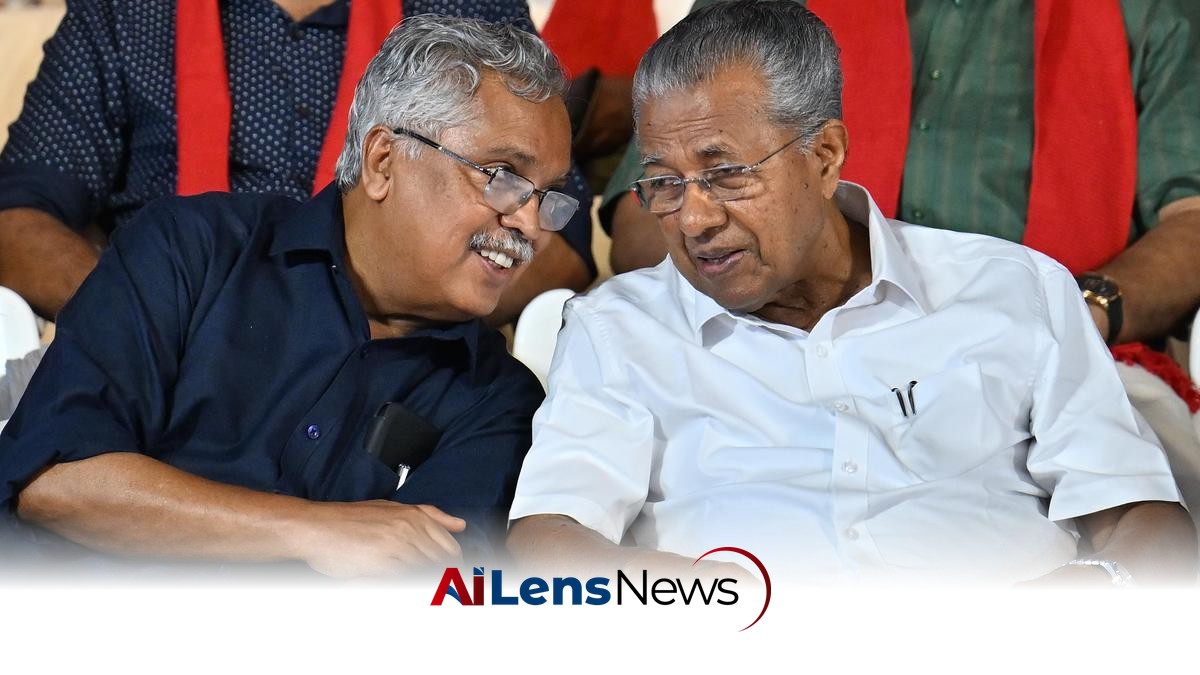


CPI State Secretary Binoy Viswam insists on the necessity of the Deputy Leader of the Opposition position for the unity of the Left Democratic Front ahead of crucial talks.
Thiruvananthapuram, India Jul 12, 2026 ALN: The differences between the Communist Party of India (CPI) and the Communist Party of India (Marxist) [CPI(M)] regarding the former’s claim for the post of the Deputy Leader of the Opposition in the Assembly remain unresolved. CPI State Secretary Binoy Viswam has emphasized that securing this position is essential for maintaining unity within the Left Democratic Front (LDF). This ongoing debate highlights not only the internal dynamics of the LDF but also reflects broader trends in coalition politics in India, where parties often seek to balance power and representation to maintain stability and unity.
The CPI's firm stance on this issue comes just before a scheduled meeting with CPI(M) in the presence of LDF convener T.P. Ramakrishnan on Tuesday, July 14, 2026. This meeting is crucial as it represents a potential turning point in the negotiations between the two parties, which have historically shared a complex relationship characterized by both cooperation and contention. The LDF, an alliance of left-wing parties in , has been instrumental in shaping the political landscape of the state, and the unity of its constituents is vital for its continued relevance and effectiveness.
During a CPI event in Thiruvananthapuram, Mr. Viswam directly addressed Leader of the Opposition Pinarayi Vijayan’s claim that the issue is settled and that there is no precedent for granting the Deputy Leader of the Opposition post to an alliance partner. “No one can avoid this issue by citing any precedent. All such precedents have to change. Politics is bigger than precedents, and the LDF is bigger than precedents. Moving forward unitedly is more important than anything else,” he stated. This assertion underscores a critical aspect of political evolution; as parties adapt to changing circumstances and public expectations, they must sometimes challenge established norms and practices.
Mr. Viswam asserted that the position rightfully belongs to the CPI and called for a shift in the current situation where all significant posts are monopolized by one party. This monopolization of power can lead to disenfranchisement of coalition partners, which may ultimately threaten the stability and effectiveness of the coalition government. In the context of the LDF, where the CPI(M) has held a dominant position, calls for a more equitable distribution of power resonate with the CPI’s desire to assert its role within the alliance.
“We are not raising this demand to weaken the LDF. Rather, it is intended to strengthen the LDF. This is necessary for the LDF to maintain its integrity. Sharing responsibilities is crucial for unity. Even the power or salary associated with the post does not matter. The CPI is a party that has previously relinquished the Chief Minister's post,” he remarked. This statement reflects a broader ideological commitment within the CPI to prioritize collective strength and unity over individual ambition or gain. The historical context of the CPI's willingness to step back from leadership roles for the sake of coalition stability is significant, as it illustrates the party's long-standing commitment to leftist principles and solidarity among allied factions.
He also dismissed allegations that the CPI is wrong to publicly raise this issue, which could potentially empower its opponents. “Initially, we did not raise this openly. We brought it up in meetings, and there were letters exchanged between us and the CPI(M),” the CPI leader clarified. This indicates that the CPI has sought to address its concerns through internal channels before resorting to public statements, suggesting a preference for diplomacy over confrontation in coalition politics.
Following the LDF's significant defeat in the Assembly elections, the CPI has been critical of its alliance partner, interpreting the loss as a warning from the electorate. Leadership meetings within the CPI have expressed strong criticism regarding the focus on Pinarayi Vijayan and his governance style as Chief Minister. The electoral defeat serves as a backdrop to the current tensions, as it raises questions about the effectiveness of the LDF's strategies and the need for introspection and reform within the coalition. The CPI's push for the Deputy Leader of the Opposition post can be seen as part of a broader strategy to reassert its influence within the LDF and ensure that its voice is heard in the face of electoral challenges.
The implications of this internal conflict extend beyond the CPI and CPI(M) and may affect the LDF's overall electoral strategy moving forward. As the political landscape in continues to evolve, the ability of the LDF to present a united front will be critical in addressing issues such as governance, public service delivery, and socio-economic development. The ongoing discussions about leadership roles within the opposition are emblematic of the challenges faced by coalition governments, particularly in a diverse and politically vibrant state like .
Moreover, the demand for the Deputy Leader of the Opposition post raises broader questions about representation and power-sharing in political alliances. In many coalition governments across India, smaller parties often struggle to assert their interests against larger, more dominant partners. The CPI's insistence on this issue may resonate with other regional parties facing similar challenges, potentially leading to a reevaluation of how coalition politics operates in India. The outcome of the negotiations between the CPI and CPI(M) may set a precedent for future alliances and could influence the strategies of other political entities in the country.
As the scheduled meeting approaches, all eyes will be on the discussions between the CPI and CPI(M). The ability of these parties to navigate their differences and reach a consensus will not only impact their internal dynamics but also shape the political landscape of in the coming years. The stakes are high, as the LDF seeks to regain the trust of the electorate and reaffirm its commitment to the principles of leftist governance while addressing the challenges posed by opposition parties and the changing political environment.
To learn more about the latest developments in Political Controversies, stay updated with our exclusive reports and analyses on AiLensNews.

