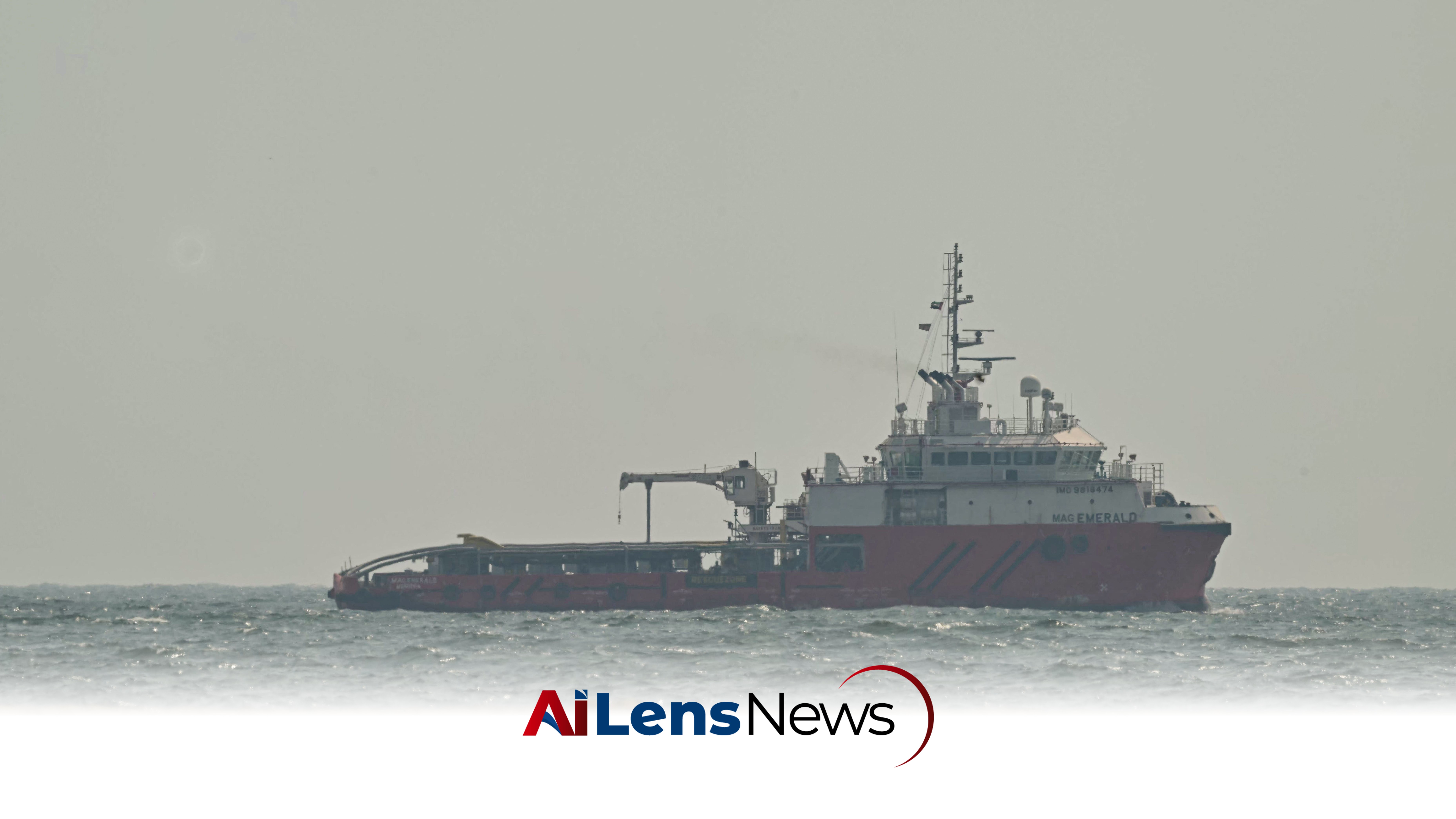


Iran's Revolutionary Guards announced the closure of the Strait of Hormuz after firing warning shots at a vessel using an unauthorized route, complicating US-Iran negotiations.
New Delhi, India Jul 12, 2026 ALN: Tehran: Iran's Revolutionary Guards announced on Sunday that the Strait of Hormuz would remain closed "until further notice" following the firing of warning shots at a vessel they claimed was using an unauthorized route, according to state media reports. This development is significant not only for regional security but also for global energy markets, given the strait's critical role as a transit route for oil and gas shipments.
The Strait of Hormuz is a narrow passage between the Persian Gulf and the Gulf of Oman, and it serves as a key chokepoint for maritime traffic. Approximately 20% of the world's oil and liquefied natural gas trade passes through this strait, making it one of the most strategically important waterways in the world. The closure of the strait, even temporarily, can lead to significant fluctuations in oil prices and create ripples across global markets, affecting economies far beyond the Middle East.
The geopolitical importance of the Strait of Hormuz cannot be overstated. It is the only sea passage from the Persian Gulf to the open ocean, and its closure would disrupt not only oil supplies but also natural gas shipments to various parts of the world. This situation is particularly concerning for countries that rely heavily on energy imports, such as Japan, South Korea, and several European nations. A prolonged closure could lead to energy shortages and necessitate a reevaluation of energy policies globally.
This action poses a significant challenge to ongoing efforts to revive US-Iran negotiations, which have recently been marred by mutual strikes and escalating threats. The tensions between the two nations have been exacerbated by a series of incidents involving military confrontations and hostile rhetoric. As negotiations for a renewed nuclear agreement have stalled, both sides have resorted to displays of military strength and strategic posturing, further complicating diplomatic efforts.
Reports from news outlets such as Axios and Politico indicate that Washington had set a deadline for Tehran to cease its attacks on commercial vessels navigating through Hormuz and to formally acknowledge that the waterway remains open. This ultimatum reflects the broader U.S. strategy of applying pressure on Iran to comply with international norms regarding maritime navigation and to deter aggressive actions that threaten global trade.
A major point of contention in reaching a final agreement is the future of the Strait of Hormuz. Tehran insists on its right to control shipping through this critical maritime route, while Washington demands unrestricted navigation for all vessels. This disagreement is rooted in a complex historical context, where Iran has often viewed its maritime rights as a matter of national sovereignty, while the U.S. and its allies see free navigation as essential for global commerce and security.
The Revolutionary Guards stated that the vessel in question was "hit by warning shots and stopped" after it ignored repeated instructions to adhere to an approved shipping corridor. This incident highlights the increasing risks faced by commercial shipping in the region, where military encounters can escalate quickly and unpredictably. The firing of warning shots is a clear indication of Iran's willingness to assert its authority over the strait, but it also raises concerns about the potential for miscalculations that could lead to broader conflict.
Following this incident, the Guards declared, "the Strait of Hormuz will be closed until further notice and until the end of American interventions in this region, and no vessels will be allowed to pass through." They also warned that they would target "new enemy bases in the region" if further military actions were taken against them. Such statements reflect Iran's broader strategy of deterrence, aimed at signaling to the U.S. and its allies that any military action will be met with a robust response.
The historical context of Iran's actions in the Strait of Hormuz cannot be overlooked. Iran has previously closed the strait to commercial shipping during its conflicts with the United States and Israel, which has led to sharp increases in oil prices and disrupted maritime traffic across the region. These historical precedents serve as a reminder of the volatility that can arise from geopolitical tensions in this critical area. The 1980s Iran-Iraq War, for example, saw significant disruptions in oil shipments, which had lasting impacts on the global oil market.
Iran maintains that it has the right to regulate passage through the strait and has even announced plans to impose fees on vessels utilizing this route. Iranian officials have consistently stated that there will be no return to the pre-war system of unrestricted navigation. This assertion is indicative of Iran's broader strategy to leverage its control over maritime routes as a means of exerting influence and negotiating power in its dealings with the international community.
The United States has firmly rejected this stance, asserting that commercial shipping must be allowed to move freely through the waterway. According to customary international law, countries are generally prohibited from imposing tolls on straits used for international navigation. The U.S. position is bolstered by its alliances with Gulf states and its commitment to ensuring the security of maritime trade routes, which are vital for the global economy. This commitment is evidenced by the U.S. Navy's presence in the region, which is intended to deter Iranian aggression and ensure the safe passage of vessels.
The implications of this situation extend beyond immediate military concerns. The closure of the Strait of Hormuz could lead to increased shipping costs, as vessels may be forced to take longer routes around the Cape of Good Hope or seek alternative shipping lanes. Such disruptions could have a cascading effect on oil prices, potentially leading to inflationary pressures in energy-dependent economies. Moreover, the uncertainty surrounding the strait could deter investment in the region, impacting economic growth and stability.
In addition to the economic ramifications, the closure of the strait could also lead to heightened military tensions in the region. Other countries with interests in the area, such as Saudi Arabia and the United Arab Emirates, may feel compelled to bolster their military capabilities in response to perceived threats from Iran. This could trigger an arms race and further destabilize an already volatile region.
As the situation unfolds, the international community will be closely monitoring developments in the Strait of Hormuz. Diplomatic efforts to de-escalate tensions and resume negotiations will be critical in preventing further military confrontations and ensuring the free flow of trade through this vital maritime corridor. The response from global powers, particularly those with vested interests in the stability of the region, will also play a crucial role in shaping the future dynamics of U.S.-Iran relations and the broader geopolitical landscape in the Middle East.
In conclusion, the closure of the Strait of Hormuz by Iran's Revolutionary Guards underscores the precarious balance of power in the region. The actions taken by Iran will not only affect the immediate area but will also have far-reaching implications for global energy markets and international relations. As stakeholders from various nations assess the situation, the need for a diplomatic resolution becomes increasingly urgent to prevent an escalation that could have dire consequences for all parties involved.
To learn more about the latest developments in Government & Governance, stay updated with our exclusive reports and analyses on AiLensNews.

