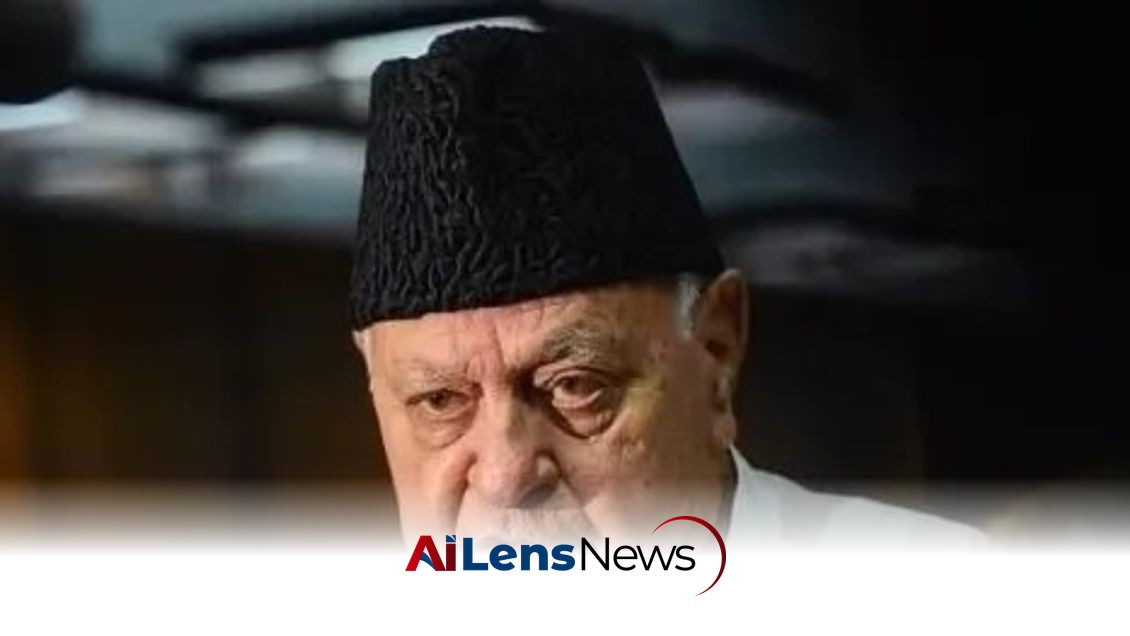


Dr. Farooq Abdullah emphasizes the demand for constitutional rights for Jammu and Kashmir, criticizing past government failures and urging unity among local leaders.
New Delhi, India Jul 11, 2026 ALN: National Conference president Dr. Farooq Abdullah on Saturday stated that the people of Jammu and Kashmir were not seeking charity or favors but demanding the restoration of their constitutional rights and dignity. This statement comes amidst ongoing discussions about the political landscape in the region, particularly in light of the changes implemented by the Indian government in August 2019, when the special status of Jammu and Kashmir was revoked under Article 370 of the Indian Constitution.
Addressing party workers and supporters at Dargah Hazratbal during the commemorative program for Begum Akbar Jehan Abdullah, Farooq highlighted the repeated failures of successive governments at the Centre to honor their promises to Jammu and Kashmir despite numerous assurances over the decades. The historical context of these assurances is crucial, as they reflect the long-standing grievances of the people in this region, which has faced political instability, violence, and socio-economic challenges for decades. The National Conference, founded in 1932, has been a significant political force in Jammu and Kashmir, advocating for the rights and interests of the local population.
Recalling discussions during the tenure of former Prime Minister P.V. Narasimha Rao, Abdullah noted that assurances had been made to address the shortcomings and injustices faced by Jammu and Kashmir. This reference to past political dialogue underscores the continuous struggle for recognition and rights that the people of the region have faced. Hundreds of NC supporters gathered to pay tribute to Begum Akbar Jehan, showcasing strength before the party's proposed protest outside Jantar Mantar to seek restoration of Statehood. The gathering was not just a tribute but also a demonstration of the party's resolve to mobilize support for their cause.
"Decades have passed, but those promises remain unfulfilled. We are human beings and equal citizens of this country. We too are the crown of India and possess our own dignity and honor," he stated. This assertion speaks to the identity of the people of Jammu and Kashmir, who have often felt marginalized in the broader national discourse. The emphasis on dignity and honor reflects a deep-seated need for recognition and respect from the central government.
The former Chief Minister also referred to a meeting with Prime Minister Narendra Modi, attended alongside senior leader Ghulam Nabi Azad, where concerns regarding the trust deficit between New Delhi and Jammu and Kashmir were discussed. The issue of trust is pivotal in the relationship between the central government and the region, particularly given the historical context of conflict and unrest. Abdullah's comments highlight a critical aspect of political discourse: the necessity of rebuilding relationships and trust between different stakeholders.
"We told the Prime Minister that unfortunately we do not trust each other and that the first step should be to rebuild this trust. We were told the distance between Delhi and Kashmir would be reduced, but unfortunately that distance has only grown wider," he remarked. This statement encapsulates the sentiments of many in Jammu and Kashmir who feel disconnected from the central government, particularly in light of the political changes that have occurred in recent years.
In a veiled attack on political opponents, Abdullah accused some local leaders of publicly echoing Delhi's positions while claiming to represent the interests of Jammu and Kashmir. This critique points to a broader concern about political integrity and the representation of local interests in the face of national policies. Questioning their commitment to the people, he asked whether they were prepared to compromise the interests and honor of the state for political gains and urged them to stand with the people rather than pursue what he termed political servitude. This call for accountability resonates with many constituents who are disillusioned with political leaders who prioritize personal or party interests over the welfare of the populace.
The National Conference president asserted that his party had continued to work for the development of Jammu and Kashmir, even during difficult periods, highlighting investments in schools, colleges, hospitals, roads, and other public infrastructure. This emphasis on development is critical, as it reflects the party's narrative that they are committed to the progress and wellbeing of the region. The reference to infrastructure development also serves to remind the audience of the tangible benefits that can arise from political engagement and advocacy.
Concluding his address, Abdullah emphasized that the demand for restoration of rights was rooted in justice and constitutional entitlement rather than political favor. This framing of the issue as a matter of justice rather than mere political negotiation is significant, as it elevates the conversation from one of political bargaining to one of fundamental rights and dignity.
"We are not asking for anything that does not belong to us. We are only asking for our own right and for that right to be returned to us," he concluded. This assertion encapsulates the essence of the National Conference's position: a plea for recognition of the rights that they believe have been unjustly stripped away. The implications of such a stance are profound, as they not only challenge the current political framework but also call for a reevaluation of the relationship between Jammu and Kashmir and the rest of India.
The ongoing political discourse in Jammu and Kashmir is emblematic of broader issues concerning regional autonomy, identity, and governance in India. As the National Conference and other political entities continue to advocate for the restoration of statehood and constitutional rights, the response from the central government will be pivotal in shaping the future political landscape of the region. The complexities of these negotiations will require careful consideration of historical grievances, current realities, and the aspirations of the people of Jammu and Kashmir.
To learn more about the latest developments in Regional Politics, stay updated with our exclusive reports and analyses on AiLensNews.

