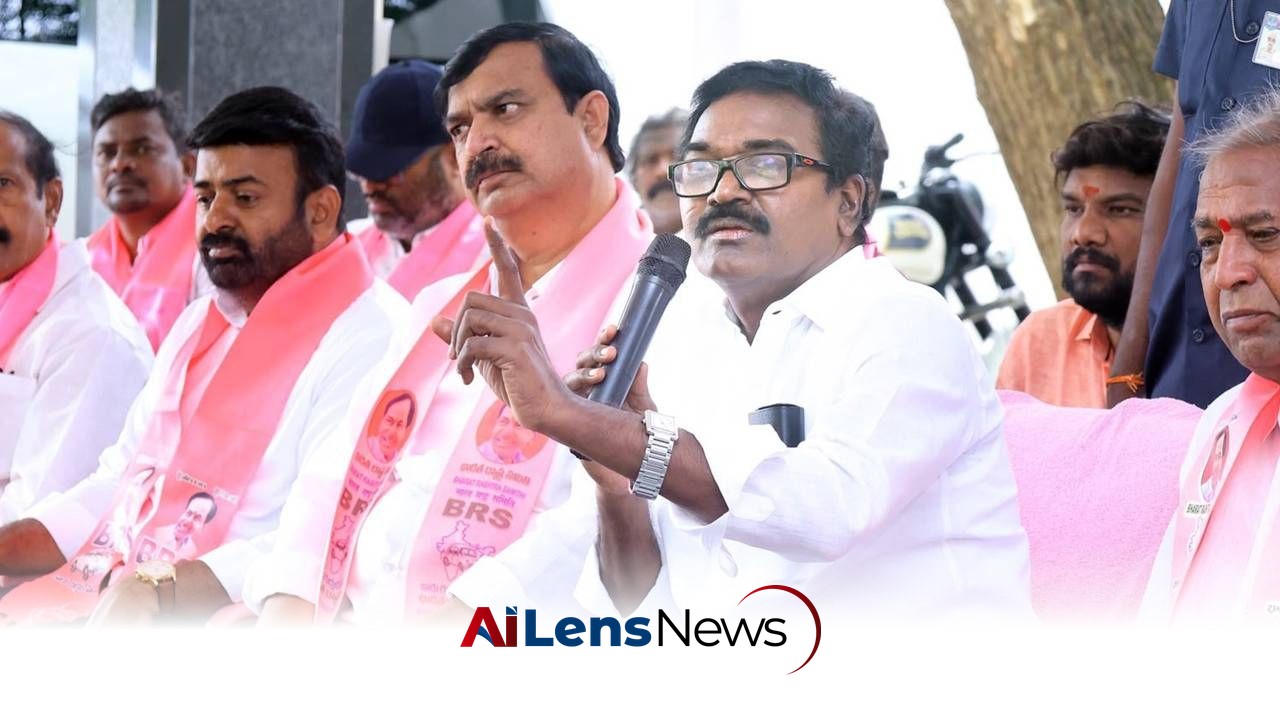


Former minister Puvvada Ajay Kumar accuses CM A Revanth Reddy of personal insults and body-shaming, defending his record and criticizing the Congress government's handling of water resources.
New Delhi, India Jul 11, 2026 ALN: Khammam: Former minister Puvvada Ajay Kumar has accused Chief Minister A Revanth Reddy of resorting to personal insults and body-shaming during his public addresses. This accusation comes in light of derogatory remarks made by Revanth regarding Puvvada's lost eye, which he lost in a car accident years ago. The incident has sparked a broader conversation about the nature of political discourse in Telangana, where personal attacks have increasingly become a fixture in political campaigns.
Puvvada stated that such behavior reflects a lack of subject knowledge and a disregard for the dignity of the Chief Minister's office. He emphasized that the public values a leader's character over their physical appearance, highlighting the need for more respectful discourse in political discussions. The implications of such remarks are significant, as they not only undermine the integrity of political dialogue but also set a concerning precedent for how leaders engage with one another in the public sphere.
Speaking to the media, Puvvada defended his record as a minister, asserting that he achieved significant development despite his disability. He challenged Revanth to compare his accomplishments with those of the current ministers, all of whom have full eyesight. Puvvada expressed confidence that the public recognizes the effectiveness of his work. This challenge underscores a critical aspect of political accountability, where elected officials are expected to demonstrate their contributions to their constituencies rather than engage in personal attacks.
Additionally, he criticized the Congress government's handling of the Godavari waters, pointing out that while the Andhra Pradesh government has been lifting and diverting these waters through the Pattiseema project, the Congress government has allowed them to flow downstream. This accusation highlights ongoing regional tensions regarding water resource management, a critical issue in both Andhra Pradesh and Telangana. Water scarcity and management have been contentious topics in the region, affecting agriculture, drinking water supply, and overall economic development.
Puvvada accused Revanth of lacking sincerity regarding Telangana's interests, a claim that resonates with many constituents who are concerned about the effective governance of water resources. The management of the Godavari waters is not just a technical issue; it is deeply intertwined with the livelihoods of farmers and the sustainability of rural communities. Such accusations can have broader implications for voter sentiment and party loyalty in the upcoming elections.
Furthermore, he addressed the Sitarama project, initiated by former Chief Minister K Chandrashekhar Rao, and accused the current government of claiming credit for it while contributing negligibly to its funding. He noted that the previous BRS regime had invested Rs 9,000 crore into the project, contrasting it with the current government's minimal expenditure. This kind of political rhetoric is common in election seasons, where parties often seek to claim ownership of successful initiatives while downplaying the contributions of their predecessors.
The Sitarama project itself has been a significant infrastructure initiative aimed at improving irrigation and agricultural productivity in the region. By drawing attention to the funding disparities, Puvvada is not only defending his party's legacy but also attempting to position the BRS as the more competent option for governance. This strategy could resonate with voters who prioritize developmental issues over personal grievances.
Senior BRS leaders, including Gundala Krishna, Bachu Vijay Kumar, and K Nagabhushanam, were present during Puvvada's statements, underscoring the political tensions in the region. Their presence indicates a unified front within the party, which is crucial as they navigate the challenges posed by the Congress party's criticisms and the upcoming electoral contests.
In conclusion, Puvvada's remarks highlight the ongoing political rivalry in Telangana, emphasizing the need for substantive discussions over personal attacks in the political arena. The trend of personal insults in politics raises concerns about the overall health of democratic discourse in the region. As the political landscape continues to evolve, it will be essential for leaders to focus on issues that matter to the electorate, such as development, governance, and public welfare, rather than descending into personal conflicts that detract from the important work of public service.
Moreover, the current political climate in Telangana reflects broader trends seen across India, where political campaigns often devolve into mudslinging rather than focusing on policy and governance. This shift can alienate voters who are seeking genuine representation and meaningful discourse on issues that directly affect their lives. The challenge for politicians like Puvvada and Revanth will be to rise above personal animosities and engage in constructive dialogue that prioritizes the needs and aspirations of their constituents.
As the election season approaches, it will be crucial for all political leaders in Telangana to recognize the implications of their words and actions. Engaging in respectful and informed discussions can help restore faith in the political process and create a more conducive environment for addressing the pressing challenges facing the state. Ultimately, the path forward for Telangana's political leaders lies in their ability to balance the competitive nature of politics with the responsibility of serving the public interest.
Political discourse in Telangana has historically been marked by a blend of regional pride and intense rivalry between parties, particularly between the Bharat Rashtra Samithi (BRS) and the Indian National Congress (INC). The backdrop of this rivalry is rooted in the formation of Telangana as a separate state in 2014, which was a culmination of a long-standing movement for statehood that involved significant sacrifices and aspirations from the people of the region. The political narrative often revolves around issues of identity, development, and resource allocation, particularly in relation to water resources, which are vital for agriculture and livelihoods in the state.
Water resource management, as highlighted by Puvvada's remarks, is a particularly sensitive topic in Telangana. The Godavari and Krishna rivers are crucial for irrigation and drinking water supply, and disputes over their usage often lead to political tensions between Telangana and Andhra Pradesh. The Pattiseema project, mentioned by Puvvada, is a key initiative by the Andhra Pradesh government to divert Godavari waters for irrigation purposes, which has raised concerns in Telangana about the equitable distribution of water resources. The political implications of these water disputes extend beyond immediate governance issues, affecting the electoral prospects of parties based on their perceived effectiveness in addressing the needs of farmers and rural communities.
Furthermore, the Sitarama project represents a significant development initiative aimed at enhancing irrigation facilities in Telangana. The project is part of a broader strategy to improve agricultural productivity and ensure food security in the region. By emphasizing the funding disparities and the contributions of the previous BRS government, Puvvada is attempting to frame the narrative around governance capabilities and developmental achievements, which are critical factors for voters as they head to the polls.
In the context of the upcoming elections, the rhetoric surrounding personal attacks and body-shaming can have profound implications for voter behavior. Voters often seek candidates who not only understand their issues but also embody the values of respect and integrity. The shift towards personal insults may alienate a segment of the electorate that prioritizes substantive policy discussions over personal grievances. As such, both Puvvada and Revanth face the challenge of navigating this complex landscape while appealing to their respective bases of support.
Ultimately, the current political climate in Telangana serves as a microcosm of broader trends in Indian politics, where the emphasis on personal attacks can overshadow critical policy discussions. As political leaders prepare for the electoral contests ahead, the need for a return to respectful and informed political discourse becomes increasingly urgent. Engaging in meaningful dialogue that prioritizes the needs and aspirations of constituents can not only enhance the quality of political engagement but also foster a more robust democratic process in the region.
To learn more about the latest developments in Political Controversies, stay updated with our exclusive reports and analyses on AiLensNews.

