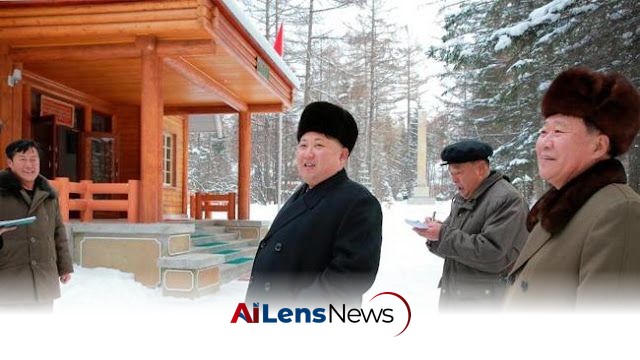


China has called on the US to take more responsibility in addressing North Korea's nuclear ambitions, countering President Trump's claims about Beijing's influence over Pyongyang.
New Delhi, India Jul 12, 2026 ALN: China has issued a call for the United States to take on greater responsibility in addressing North Korea's contentious nuclear program. This statement comes in the wake of remarks made by President Donald Trump, who suggested that Beijing has the ability to control North Korea's actions with relative ease. The Chinese government responded firmly to these claims, emphasizing that the complexities of the situation require a collaborative approach rather than placing undue blame on one party.
North Korea has recently engaged in provocative actions, including a missile test that defied international norms and a shocking assassination of Kim Jong-Un's half-brother in Malaysia. These incidents have heightened tensions in an already volatile region, following North Korea's nuclear test in September. The international community has expressed increasing concern over North Korea's nuclear ambitions, which pose a significant threat not only to regional stability but also to global security.
China, which shares a border with North Korea, has often been criticized by the United States for not doing enough to rein in its neighbor's aggressive behavior. In response to President Trump's assertions, Chinese Foreign Ministry spokesman Geng Shuang stated that the core issue of the Korean nuclear dilemma lies in the differences between the Democratic People's Republic of Korea (DPRK) and the United States. He urged both Washington and Pyongyang to take responsibility for their roles in the ongoing crisis and to work collaboratively with China to maintain regional stability and pursue denuclearization of the Korean Peninsula.
While China acknowledges the seriousness of the situation and shares the U.S. concerns regarding North Korea's pursuit of nuclear weapons, it advocates for a diplomatic resolution through negotiations rather than the imposition of sanctions. Beijing is wary that harsh sanctions could lead to greater instability in North Korea, potentially resulting in a humanitarian crisis that would see a large influx of refugees crossing into China. This concern underscores the delicate balance that China must maintain as it navigates its relationship with both North Korea and the United States.
In a significant move, China recently decided to halt imports of coal from North Korea, a critical economic lifeline for the isolated regime. This decision is seen as an effort to mitigate international criticism of China's role in the North Korean crisis while also signaling to both North Korea and the United States that it is serious about pursuing a diplomatic solution. By taking such steps, China aims to nudge both parties toward negotiations, highlighting its willingness to engage in constructive dialogue while also exerting its influence over North Korea.
The United Nations Security Council has imposed a series of sanctions on North Korea, totaling six sets, since the country first conducted an atomic test in 2006. Despite these measures, North Korea has continued to demonstrate defiance through a series of missile launches and nuclear tests, with two significant detonations occurring in 2016 alone. This ongoing pattern of behavior has raised questions about the effectiveness of sanctions and the need for a more comprehensive strategy to address the North Korean threat.
The international response to North Korea's nuclear program has been characterized by a mix of diplomatic efforts and economic sanctions. The sanctions imposed by the UN aim to pressure Pyongyang to abandon its nuclear ambitions, but they have also had the unintended consequence of exacerbating the humanitarian situation within the country. The North Korean regime has often used its nuclear program as a bargaining chip in negotiations, making it challenging for the international community to find a viable solution.
In the context of these ongoing tensions, China has positioned itself as a key player in the diplomatic landscape surrounding North Korea. As the only country with significant economic ties to the DPRK, China wields considerable influence over its neighbor. However, this influence is often counterbalanced by China's own national interests, which include maintaining stability along its border and preventing a potential influx of refugees in the event of regime collapse or conflict in North Korea.
In addition to addressing the North Korean issue, China also responded to President Trump's remarks regarding currency manipulation. Trump labeled China as a "grand champion" of such practices, to which the Chinese authorities reacted by stating that they have no intention of devaluing the yuan to gain trade advantages. They pledged to maintain a stable exchange rate, emphasizing their commitment to economic development rather than manipulation. Geng Shuang remarked that if the label of a "grand champion" were to be applied, it should be in the context of China's economic growth over the past three decades, which has seen the country emerge as a major global economic power.
The relationship between China and the United States is multifaceted, encompassing not only trade and economic issues but also significant geopolitical challenges, such as the North Korean crisis. As both nations navigate these complexities, the call for collaboration on North Korea highlights the necessity for dialogue and cooperation in addressing shared security concerns. The potential for mutual benefit exists, should both parties be willing to engage in constructive discussions aimed at achieving a peaceful resolution to the ongoing tensions on the Korean Peninsula.
As the situation evolves, the international community will be closely monitoring the interactions between China, the United States, and North Korea. The implications of these diplomatic efforts could have far-reaching consequences for regional stability, global security, and the future of international relations in the Asia-Pacific region. The ongoing dialogue and actions taken by each of these nations will be pivotal in shaping the trajectory of the North Korean issue and determining the effectiveness of collective efforts to denuclearize the peninsula.
Moreover, the dynamics of the U.S.-China relationship are further complicated by other regional issues, including trade disputes, maritime security in the South China Sea, and differing perspectives on human rights. These factors contribute to a broader context in which the North Korean crisis must be addressed. The need for a coordinated response is underscored by the potential for miscalculation or escalation, which could have dire consequences not only for the Korean Peninsula but for global peace and stability.
In conclusion, the call from China for increased U.S. responsibility in addressing North Korea's nuclear ambitions is a reflection of the complex interplay of regional and global politics. Both countries must navigate their respective interests while working towards a common goal of denuclearization and stability. The future of the Korean Peninsula hangs in the balance, and the actions taken by both China and the United States will play a crucial role in determining the outcome of this long-standing crisis.
To learn more about the latest developments in Political Controversies, stay updated with our exclusive reports and analyses on AiLensNews.

