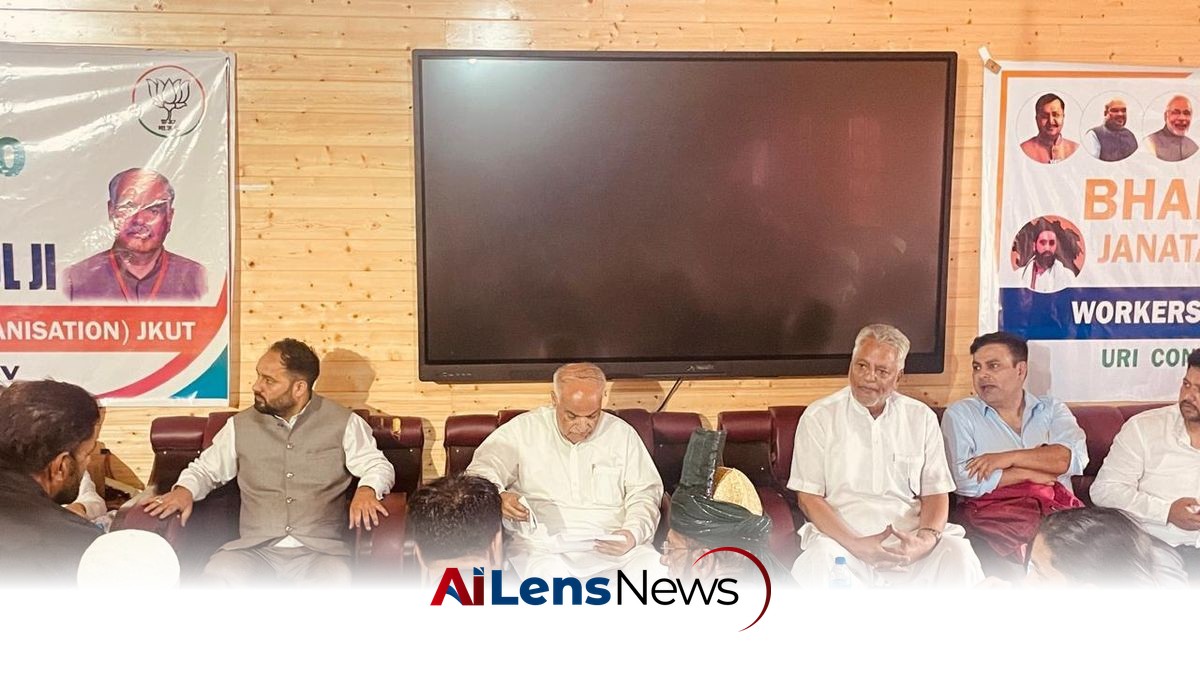


BJP General Secretary Ashok Koul emphasized the need for strong organizational structure and grassroots connection during a Workers' Convention in Uri.
New Delhi, India Jul 11, 2026 ALN: BJP General Secretary (Organisation), J&K, Ashok Koul addressed a Workers' Convention at Town Hall, Lagama, Uri, where he interacted with dedicated party workers and reviewed the party's organisational activities in the region.
This convention comes at a time when political dynamics in Jammu and Kashmir are undergoing significant changes. Since the abrogation of Article 370 in August 2019, which granted special status to Jammu and Kashmir, the Bharatiya Janata Party (BJP) has been focusing on strengthening its presence in the region. The party aims to consolidate its base among the local populace, particularly in the Kashmir Valley, which has historically been a challenging area for the BJP.
The abrogation of Article 370 was a pivotal moment in the political landscape of Jammu and Kashmir. This constitutional change not only revoked the special status that had been granted to the region but also opened the door for increased central government control and the implementation of various national laws that were previously not applicable. The BJP's strategy following this landmark decision has involved a concerted effort to enhance its grassroots presence, especially in areas where it has traditionally struggled to gain traction.
During the convention, Ashok Koul emphasized the importance of a strong and disciplined organisational structure. He urged party workers to remain actively connected with the people and work with commitment to strengthen the BJP at the grassroots level. This call for enhanced organizational coordination is particularly relevant as the party seeks to improve its outreach and influence in a region where it has faced skepticism and resistance from various local groups. The BJP has been actively working to counter the narratives of established parties, such as the National Conference and the People's Democratic Party, which have historically dominated the political scene in Jammu and Kashmir.
Koul highlighted the significance of effective coordination among karyakartas to ensure the successful implementation of the party's programmes and initiatives. He stressed that a well-organized party structure can lead to better communication and a more effective dissemination of the party's policies and ideologies. This is crucial in areas where misinformation can easily spread, and where the party's message may not always resonate due to historical and cultural differences. The BJP's approach involves not only addressing local grievances but also aligning its policies with the aspirations of the people.
The meeting focused on various organisational matters, upcoming party programmes, and strategies to enhance coordination and outreach. Koul's remarks reflect a broader strategy by the BJP to not only solidify its existing support but also to attract new members from diverse backgrounds. The party has been working to present itself as a viable alternative to the traditional political parties in the region, aiming to engage with a demographic that has often felt marginalized or disconnected from the national political discourse.
Koul appreciated the dedication and tireless efforts of the party workers and encouraged them to continue serving the public with sincerity while taking the party's vision and policies to every household. This grassroots approach is essential for the BJP as it seeks to build a narrative of development and governance that resonates with the local populace. The party has been promoting various welfare schemes and development projects aimed at improving the quality of life for the residents of Jammu and Kashmir, and Koul's emphasis on grassroots engagement is a strategic move to ensure these initiatives are well-received.
Moreover, the BJP's focus on development is not merely a political strategy but also a response to the pressing needs of the region. Jammu and Kashmir has faced numerous challenges, including economic instability, unemployment, and a lack of infrastructure development, particularly in rural areas. By promoting welfare schemes and engaging with the local populace, the BJP aims to create a positive perception of its governance model and counteract the narratives propagated by opposition parties.
The convention witnessed enthusiastic participation from party workers, who reaffirmed their commitment to strengthening the organisation and ensuring the success of the BJP's future programmes. This level of enthusiasm among party members is indicative of a growing confidence in the party's direction and its leadership under the current political climate. The presence of senior leaders at the convention also highlights the importance of unity and collective effort within the party ranks as they work towards common goals.
Among those present on the occasion were BJP J&K Secretary Mudasir Wani, District Prabhari Baramulla Bilal Parray, and District President Baramulla Ghulam Hussain Dar, along with senior party leaders and karyakartas. The presence of these leaders underscores the importance of the event and reflects the BJP's commitment to maintaining a strong organizational presence in the region. Their involvement also serves to motivate local party workers, reinforcing the message of solidarity and shared purpose.
The implications of Koul's address extend beyond mere organizational matters. The BJP's focus on coordination and grassroots mobilization is part of a larger strategy to reshape the political landscape in Jammu and Kashmir. As the party continues to push for its agenda, it faces the challenge of addressing the concerns and aspirations of a diverse population that has experienced significant upheaval over the past few years. The BJP's ability to navigate these complexities will be critical in determining its long-term viability in the region.
Furthermore, the political environment in Jammu and Kashmir is influenced by various factors, including security concerns, economic development, and social issues. The BJP's approach to these challenges will be closely monitored by both supporters and critics alike. The party's ability to effectively communicate its policies and engage with local communities will be crucial in determining its success in future elections and in establishing a lasting presence in the region. The ongoing dialogue between the party and the people will be essential for fostering trust and building a sense of community ownership in the political process.
In conclusion, Ashok Koul's address at the Workers' Convention in Uri highlights the BJP's ongoing efforts to strengthen its organizational structure and enhance its outreach in Jammu and Kashmir. As the party navigates the complexities of the region's political landscape, the emphasis on grassroots engagement and coordination among party workers will be pivotal in shaping its future trajectory. The commitment of party members, as demonstrated during this convention, will play a key role in the BJP's mission to solidify its position as a leading political force in Jammu and Kashmir. The success of these efforts will ultimately depend on the party's ability to resonate with the local populace and address their needs effectively.
To learn more about the latest developments in Political Parties, stay updated with our exclusive reports and analyses on AiLensNews.

