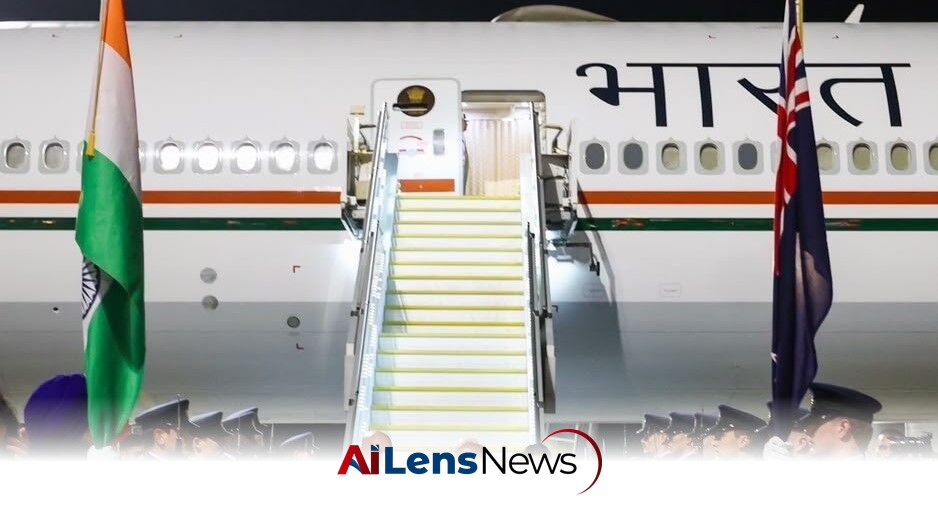


Prime Minister Narendra Modi's visit marks the first by an Indian premier to New Zealand in 40 years, focusing on strengthening bilateral ties.
Itanagar, India Jul 10, 2026 ALN: Prime Minister Narendra Modi on Friday arrived in New Zealand on the final leg of his three-nation tour, marking the first visit by an Indian Prime Minister to the country in 40 years. This historic visit comes at a time when India and New Zealand are looking to enhance their bilateral relations across various sectors, reflecting the evolving dynamics of international relations in the Indo-Pacific region.
In a special gesture, New Zealand Prime Minister Christopher Luxon personally received Modi at Auckland Airport, where the two leaders shared a warm embrace before the visiting leader proceeded with his engagements. This welcoming gesture underscores the significance both nations place on their relationship and the mutual respect shared between their leaders.
Shortly after his arrival, Modi described the visit as "historic" and expressed his eagerness to hold wide-ranging discussions with Luxon on strengthening bilateral ties. "Reached Auckland a short while ago. Thankful to Prime Minister Luxon for the welcome at the airport. This visit is historic, being the first Prime Ministerial visit to New Zealand in four decades. I look forward to holding talks with Prime Minister Luxon and discussing the complete range of the India-NZ friendship," Modi stated in a post on social media. This sentiment reflects a broader interest in not just maintaining, but actively enhancing the India-New Zealand partnership.
During the two-day visit, Modi and Luxon are expected to review the entire spectrum of bilateral relations, with particular focus on trade, commerce, defence, education, culture, sports, and people-to-people exchanges. These discussions are vital as they aim to solidify existing ties and explore new avenues for collaboration that can benefit both nations economically and socially.
The Prime Minister will also interact with leading business and sports personalities and address a large gathering of the Indian diaspora in Auckland. This interaction is particularly significant as the Indian community in New Zealand plays a crucial role in fostering cultural ties and economic links between the two countries. It is estimated that the Indian diaspora contributes significantly to New Zealand's economy and cultural diversity.
In his departure statement before leaving New Delhi, Modi had noted that the visit would "meaningfully build" on the momentum generated in India-New Zealand relations following Luxon’s visit to India in March 2025. This reciprocal visit is indicative of a growing recognition of the importance of bilateral ties in the context of global geopolitics.
The New Zealand visit follows Modi’s three-day trip to Australia, where he held summit talks with Prime Minister Anthony Albanese. The discussions between Modi and Albanese reaffirmed their commitment to a free, open, and peaceful Indo-Pacific and agreed to deepen cooperation in defence and maritime security. Such commitments are crucial given the increasing tensions in the region and the need for collaborative approaches to address shared challenges.
A key outcome of the visit to Australia was the signing of a civil nuclear energy agreement that will facilitate the commercial supply of Australian uranium for India’s nuclear power programme. This agreement not only signifies a deepening of energy cooperation but also reflects the trust and strategic partnership that has been cultivated between the two nations.
Before Australia, Modi visited Indonesia, where 14 agreements were signed covering critical minerals, maritime security, and several other strategic sectors. These agreements are part of a broader strategy to enhance India’s engagement in the Indo-Pacific region, ensuring that it plays a significant role in regional stability and economic growth.
The Prime Minister has articulated that his visits to Indonesia, Australia, and New Zealand would further strengthen India’s Act East Policy, MAHASAGAR Vision, and its commitment to a free and open Indo-Pacific region. The Act East Policy emphasizes India’s strategic and economic engagement with Southeast Asia and the Pacific, aiming to boost trade, investment, and cultural exchanges.
This historic visit by Modi could also have implications for regional geopolitics, particularly in the context of India's growing influence in the Indo-Pacific. As nations navigate complex relationships amid rising global tensions, India’s proactive diplomacy may serve as a stabilizing force in the region. The emphasis on defence and maritime security in discussions with both Australia and New Zealand points to a shared understanding of the challenges posed by geopolitical shifts and the importance of collaborative security frameworks.
Furthermore, the focus on trade and commerce during Modi's engagements highlights the potential for economic partnerships that can benefit both India and New Zealand. As both countries seek to recover from the economic impacts of the COVID-19 pandemic, fostering trade relations could provide a pathway to revitalization and growth.
In conclusion, Prime Minister Modi's visit to New Zealand is not only a significant diplomatic event but also a reflection of the changing landscape of international relations in the Indo-Pacific. As India continues to assert its presence on the global stage, engagements like these serve to reinforce its commitment to fostering partnerships that are built on mutual respect, shared values, and common interests. The outcomes of this visit will likely be closely watched by other nations in the region, as they may influence future diplomatic and economic strategies.
Historically, India and New Zealand have maintained a cordial relationship, characterized by shared democratic values and a commitment to international cooperation. The Indian community in New Zealand has been a vital link between the two nations, contributing to various sectors, including technology, healthcare, and education. As such, Modi's visit is not merely a ceremonial occasion; it represents an opportunity to deepen these ties and explore new horizons in bilateral cooperation.
In the broader context of the Indo-Pacific, this visit comes at a time when nations are increasingly recognizing the significance of regional partnerships. The Indo-Pacific region has emerged as a focal point for global trade and security, with countries like India, Australia, and New Zealand playing pivotal roles in shaping the future of the region. Modi's engagements during this visit are expected to align with the strategic interests of both nations, particularly in addressing challenges such as climate change, security threats, and economic resilience.
As India continues to expand its influence in the Indo-Pacific, Modi's visit to New Zealand will likely set the stage for enhanced collaboration in various sectors. This could include initiatives aimed at sustainable development, technology transfer, and joint ventures that leverage the strengths of both economies. By fostering a cooperative framework, both nations can work towards achieving common goals that benefit their citizens and contribute to regional stability.
Ultimately, the outcomes of Modi's visit to New Zealand will be instrumental in shaping the trajectory of India-New Zealand relations for years to come. As both countries navigate the complexities of a rapidly changing world, their partnership will be tested and strengthened through shared commitments and mutual respect. The visit symbolizes a new chapter in the bilateral relationship, one that holds promise for future cooperation and collaboration across a wide range of sectors.
To learn more about the latest developments in Leaders & Politicians, stay updated with our exclusive reports and analyses on AiLensNews.

