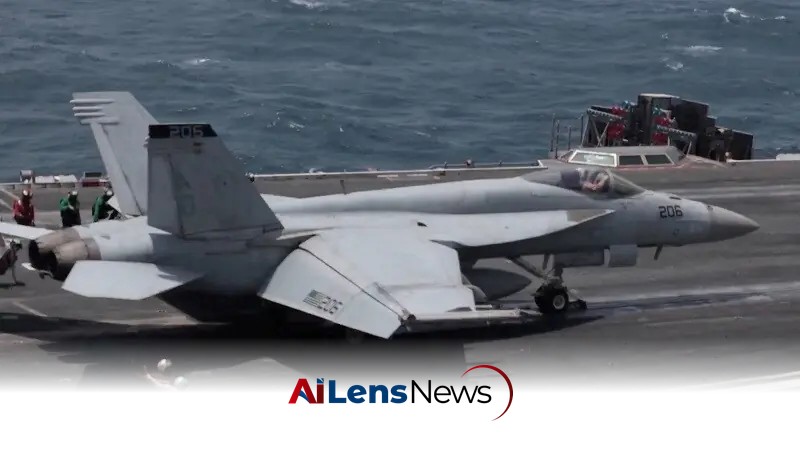


President Trump withdraws a controversial transit fee plan for the Strait of Hormuz, opting for investment deals with Gulf states as tensions escalate with Iran.
Islamabad, Pakistan Jul 14, 2026 ALN: US President Donald Trump has recently made headlines by stepping back from a contentious proposal to impose a 20 percent transit fee on vessels navigating the strategic Strait of Hormuz. This decision comes amid escalating tensions between the United States and Iran, a situation that has significant implications for global energy supplies and geopolitical stability in the region.
The Strait of Hormuz is a critical maritime chokepoint, through which approximately 20% of the world’s oil supply is transported. The waterway connects the Persian Gulf with the Gulf of Oman and is bordered by several countries, including Iran, Oman, and the United Arab Emirates. Given its importance, any disruptions to shipping traffic in this area can have far-reaching consequences on global oil markets and prices.
In the wake of Iran’s announcement that it had closed the strait, US forces undertook a series of military actions, leading Trump to propose the transit fee as a means to enhance security and potentially fund military operations in the region. However, just hours before the fee was set to take effect, Trump reversed course, declaring that the strait would remain open to all shipping traffic except vessels from Iran. This decision was made following what Trump described as "highly productive conversations with Middle East leadership." In a post on Truth Social, he stated, "I have decided to replace the 20% United States Reimbursement Fee with Trade and Investment Deals that the various Gulf States will be making into the United States."
This shift in strategy indicates a pivot from a more aggressive military posture to one focused on fostering economic relationships with Gulf nations. However, the specifics of these investment deals remain unclear, and Trump did not provide details on any commitments made by the Gulf states. He expressed optimism about the potential for massive investments, suggesting that such deals would be mutually beneficial for both the Gulf states and the United States.
As tensions escalated, Iranian state media reported that US projectiles had struck various locations, including Qeshm Island and Kish Island, both of which are situated in close proximity to the Strait of Hormuz. These attacks were part of a broader military escalation, with Iran retaliating against US positions, including an attack on a US Army base in Jordan using ballistic missiles. In response, Jordan reported intercepting four missiles, while Bahrain's military claimed to have thwarted an Iranian aerial attack.
In a concerning development, Kuwait's armed forces were reported to be engaging with "hostile" aerial targets, and sirens were activated across the country, indicating the heightened state of alert and the potential for further military confrontations in the region. The situation has raised alarms about a possible wider conflict, as both the US and Iran continue to engage in military posturing.
The recent escalation in hostilities has led many analysts to question the viability of a memorandum of understanding signed just last month, which had aimed to establish a framework for reducing tensions and achieving a ceasefire. The ongoing conflict has already disrupted global energy supplies and raised fears of inflation, as oil prices reacted to the news of renewed military actions, climbing approximately 2% to reach a one-month high.
The proposal to impose a transit fee drew significant backlash from various stakeholders, particularly within the shipping industry. The United Nations shipping agency expressed its opposition to any fees for navigation through international straits, arguing that there is no legal basis for such mandatory tolls. Major shipping companies, including Germany’s Hapag-Lloyd, characterized the fee as fundamentally wrong, indicating that it would create unnecessary burdens on global trade.
With the fee proposal now abandoned, Trump indicated his preference for fostering investment rather than imposing charges on shipping. He stated that countries had reached out to him expressing a desire to invest in the US instead of being subjected to a transit fee. This pivot reflects a strategic shift toward economic diplomacy, although the lack of concrete commitments from Gulf states raises questions about the feasibility and effectiveness of this approach.
Prior to the conflict, the Strait of Hormuz was a vital artery for global oil and liquefied natural gas traffic, with significant implications for energy security worldwide. If the US had implemented the 20% fee, it could have generated substantial revenue, estimated at around $240 million per day, but the potential backlash from the international community and the shipping industry likely played a role in the decision to abandon the proposal.
Despite the ongoing military exchanges between the US and Iran, regional analysts suggest that both sides are currently operating within controlled boundaries, with an understanding that neither party seeks to escalate the conflict into a full-scale war. The complexities of the situation are further compounded by the broader geopolitical landscape, including the historical tensions between Israel and Iran, as well as the ongoing conflict involving Hezbollah in Lebanon.
Yezid Sayigh, a senior fellow at the Carnegie Middle East Center, noted that while the likelihood of a full war is low, there remains a risk that either side could miscalculate and escalate tensions further. The conflict has proven to be unpopular in the US, particularly as gasoline prices have surged since the onset of hostilities, coinciding with the approach of congressional elections in November. Public sentiment appears to be shifting, with a significant portion of the population questioning the costs of the conflict.
In a related development, Lebanon and Israel resumed discussions in Rome, with Beirut seeking progress on securing an Israeli withdrawal from southern Lebanon under a US-brokered agreement. These talks highlight the intricate web of alliances and conflicts in the region, where diplomatic efforts continue to coexist with military tensions.
As the situation evolves, the international community will be closely monitoring the developments in the Strait of Hormuz and the broader Middle East, with implications for energy markets, geopolitical stability, and the potential for future diplomatic initiatives aimed at de-escalating tensions between the US and Iran.
To learn more about the latest developments in Political Controversies, stay updated with our exclusive reports and analyses on AiLensNews.

