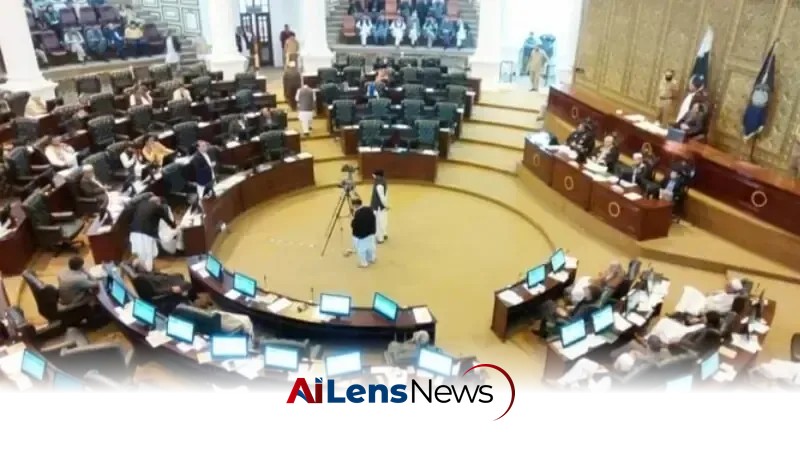


The Khyber Pakhtunkhwa Assembly Speaker has sent a controversial law expanding lawmakers' privileges to a committee for further examination amid public backlash.
Islamabad, Pakistan Jul 14, 2026 ALN: Khyber Pakhtunkhwa Assembly Speaker Babar Saleem Swati on Monday referred the controversial legislation seeking to expand lawmakers’ powers and privileges to the house’s standing committee for review. This move comes amid growing scrutiny and backlash from various segments of society, including the media and the general public, regarding the implications of the KP Provincial Assembly (Powers, Immunities and Privileges) Act, 2026.
The KP Provincial Assembly passed this legislation in April, which has been met with significant criticism due to its provisions that many consider excessive and unwarranted. Among the key features of the Act are the granting of blue passports to members of the assembly and their spouses, the issuance of arms licenses, and blanket immunity from preventive detention. Additionally, the law stipulates that the speaker's permission is required before any member can be arrested on criminal charges.
This legislation has raised alarms not only within the political sphere but also among civil society organizations and the general populace, who argue that such privileges could lead to abuse of power and a lack of accountability for elected officials. Concerns have been amplified by the perception that lawmakers are seeking to insulate themselves from legal repercussions, thereby undermining the rule of law and democratic principles.
In response to the backlash, KP Chief Minister Sohail Afridi initiated a review of the legislation last week, signaling a recognition of the growing discontent surrounding the Act. The Chief Minister's intervention reflects a broader concern within the provincial government about maintaining public trust and the integrity of the assembly.
KP Information Minister Shafi Jan has publicly addressed the criticisms, announcing that the government intends to withdraw the controversial clauses of the law and restore them in accordance with the provisions of the 1988 Act, which governed the privileges of lawmakers prior to the new legislation. This decision is significant, as it indicates a willingness on the part of the provincial government to reconsider and potentially amend legislation that has sparked widespread debate.
During a press conference in Peshawar, Minister Jan elaborated on the process that led to the decision to refer the legislation back to the Standing Committee on Privileges for further examination. He highlighted that the committee would re-evaluate the contentious clauses in light of the concerns raised by the media, the public, and members of the Pakistan Tehreek-e-Insaf party, which is currently in power in the province. This collaborative approach aims to ensure that all voices are heard and that the legislation aligns with the expectations of the constituents.
Jan indicated that the assembly speaker convened a meeting with parliamentary leaders from all political parties, including the opposition, to discuss the implications of the Act. The participation of various political factions in this dialogue underscores the importance of bipartisan cooperation in addressing legislative issues that affect public governance and accountability.
It was noted that the Standing Committee on Privileges, which originally presented the bill, is tasked with reviewing the disputed provisions within a week. The committee's role is crucial, as it will determine the future of the legislation and its alignment with the 1988 Act, which has been perceived as more balanced and less prone to misuse.
Importantly, Minister Jan mentioned that stakeholders from the journalist community and the public are encouraged to submit their recommendations regarding the legislation. This open call for input is indicative of a shift towards more inclusive governance practices, where the government seeks to engage with civil society in legislative processes.
The information minister also clarified that while most provisions of the new law mirrored those in the 1988 Act, the contentious clause regarding blue passports was a major point of contention. He emphasized that the draft approved by the provincial cabinet did not extend blue passport facilities to members’ children or spouses as a lifetime entitlement, which may alleviate some concerns about the potential for abuse of this privilege.
Despite the passage of the law and its subsequent notification by the governor of Khyber Pakhtunkhwa on May 6, no objections were raised at that time. This lack of initial dissent raises questions about the legislative process and the mechanisms for public engagement and oversight. Minister Jan suggested that the current uproar is politically motivated, aimed at diverting attention from other pressing issues, such as the ongoing investigation involving Deputy Prime Minister Ishaq Dar’s grandson.
Furthermore, the provincial minister pointed out that similar amendments to legislative privileges had been introduced in other provinces, such as Sindh and Punjab, without eliciting comparable public outcry. This observation highlights the unique political landscape and public sentiment in Khyber Pakhtunkhwa, where the relationship between the government and the public is currently under scrutiny.
In terms of the specifics regarding blue passports, Jan provided statistical context, noting that only 992 blue passports have been issued in Khyber Pakhtunkhwa, compared to approximately 56,000 issued nationwide. This disparity raises questions about the necessity and justification for the inclusion of such provisions in the new law, particularly given the relatively small number of beneficiaries in the province.
The ongoing developments surrounding the KP Provincial Assembly (Powers, Immunities and Privileges) Act, 2026, serve as a reminder of the delicate balance between legislative authority and public accountability. As the Standing Committee on Privileges embarks on its review, the implications of this legislation will likely continue to resonate within the political discourse of Khyber Pakhtunkhwa and beyond. The outcome of this review could set a precedent for how legislative privileges are defined and regulated in Pakistan, potentially influencing similar discussions in other provinces and at the national level.
To learn more about the latest developments in Political Controversies, stay updated with our exclusive reports and analyses on AiLensNews.

