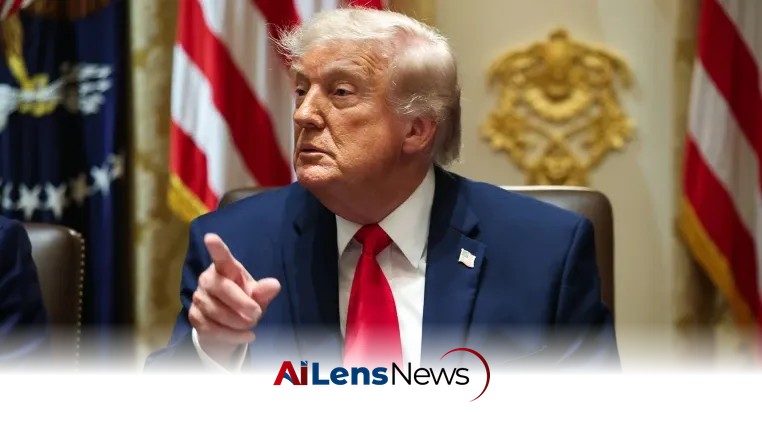


President Trump warns of military action against any Iranian sites involved in nuclear program reconstruction, emphasizing U.S. readiness for airstrikes.
Kuwait City, Kuwait Jul 22, 2026 ALN: US President Donald Trump on Tuesday threatened to bomb any facility Iran uses in attempts to rebuild its nuclear program, maintaining that Washington continues to track nuclear material and stands ready to execute heavy airstrikes against potential operational sites. This statement comes amidst rising tensions between the United States and Iran, particularly concerning Iran's nuclear ambitions and its compliance with international agreements.
Trump's remarks reflect a broader strategy of the US administration to counter perceived threats from Iran, particularly in light of the country's past nuclear activities and its withdrawal from the 2015 Joint Comprehensive Plan of Action (JCPOA). The JCPOA was a landmark agreement aimed at curbing Iran's nuclear program in exchange for the lifting of economic sanctions. However, the US withdrawal from the agreement in May 2018, followed by the reinstatement of sanctions, has led to increased tensions and a deterioration of trust between the involved nations.
Speaking to reporters, President Trump minimized reports regarding residual centrifuge capacity, stating that hardware remains ineffective without active fissile material. This statement underscores the administration's focus on the technical aspects of Iran's nuclear capabilities. The centrifuges, which are used to enrich uranium, have been a focal point of concern, as enriched uranium can be used for both civilian nuclear energy and military applications. The emphasis on the ineffectiveness of centrifuges without fissile material suggests that the US intelligence community is closely monitoring Iran’s stockpile of enriched uranium and its potential to restart its nuclear program.
Furthermore, Trump emphasized that US military intelligence remains focused on material tracking, adding that upcoming targeted strikes would aggressively disrupt any renewed enrichment efforts. This approach indicates a proactive stance by the US in preventing Iran from advancing its nuclear capabilities, which the US perceives as a direct threat to both regional and global security. The potential for preemptive strikes raises questions about the legal and ethical implications of military intervention, as well as the potential for escalation into broader conflict.
“Iran cannot have a nuclear weapon – it is a very simple dictum,” President Trump declared, maintaining that prior long-range B-2 bomber strikes on Iranian facilities set Tehran’s nuclear capabilities back by two decades. This assertion reflects a longstanding US policy aimed at preventing nuclear proliferation in the Middle East. The historical context of US military action in the region, including past strikes and interventions, plays a significant role in shaping current strategies and rhetoric surrounding Iran's nuclear program.
In addition to military threats, Trump added that the US withdrawal from the JCPOA was vital to maintaining regional security and preventing a nuclear armaments race. The withdrawal has been met with mixed reactions internationally, with some countries supporting the US stance while others, particularly European nations, have sought to maintain the agreement and encourage diplomatic solutions. The implications of the US's hardline approach extend beyond Iran, potentially affecting relations with allies and contributing to a broader geopolitical struggle in the region.
Addressing maritime security, US officials reaffirmed that naval blockade operations across strategic waterways, including the Strait of Hormuz, remain fully enforced. The Strait of Hormuz is a critical chokepoint for global oil shipments, and any disruption in this area could have significant repercussions for the global economy. The US has consistently emphasized the importance of ensuring freedom of navigation in these waters, particularly in response to Iranian actions perceived as threatening commercial shipping.
Washington warned that any aggressive action against commercial shipping would trigger escalated military retaliation aimed at further degrading Iranian capabilities. This statement highlights the US commitment to protecting its interests and those of its allies in the region, while also serving as a deterrent against Iranian provocations. The potential for military confrontation in the Strait of Hormuz raises concerns about the safety of commercial vessels and the broader implications for international trade.
The situation is further complicated by Iran's regional activities, including its support for proxy groups in countries like Iraq, Syria, and Yemen. These activities have drawn criticism from the US and its allies, who view them as destabilizing efforts that threaten regional security. The interplay between Iran's nuclear ambitions and its military activities in the region creates a complex security environment, where diplomatic solutions may be difficult to achieve amidst ongoing hostilities.
As tensions continue to escalate, the international community watches closely for potential developments. The US's military posture and diplomatic efforts will likely shape the future of US-Iran relations, as well as the broader dynamics of security in the Middle East. The implications of Trump’s threats extend beyond immediate military considerations, potentially influencing global perceptions of US foreign policy and its commitment to non-proliferation efforts.
In conclusion, President Trump's threats against Iran's nuclear facilities reflect a broader strategy of deterrence and military readiness in response to perceived threats from Tehran. The complexities of the situation necessitate careful consideration of the potential consequences of military action, the ongoing diplomatic efforts to address nuclear proliferation, and the regional security dynamics that continue to evolve in the wake of the US's withdrawal from the JCPOA. As the situation develops, it remains to be seen how both the US and Iran will navigate these challenges and what impact their actions will have on international stability and security.
To learn more about the latest developments in Elections, stay updated with our exclusive reports and analyses on AiLensNews.

