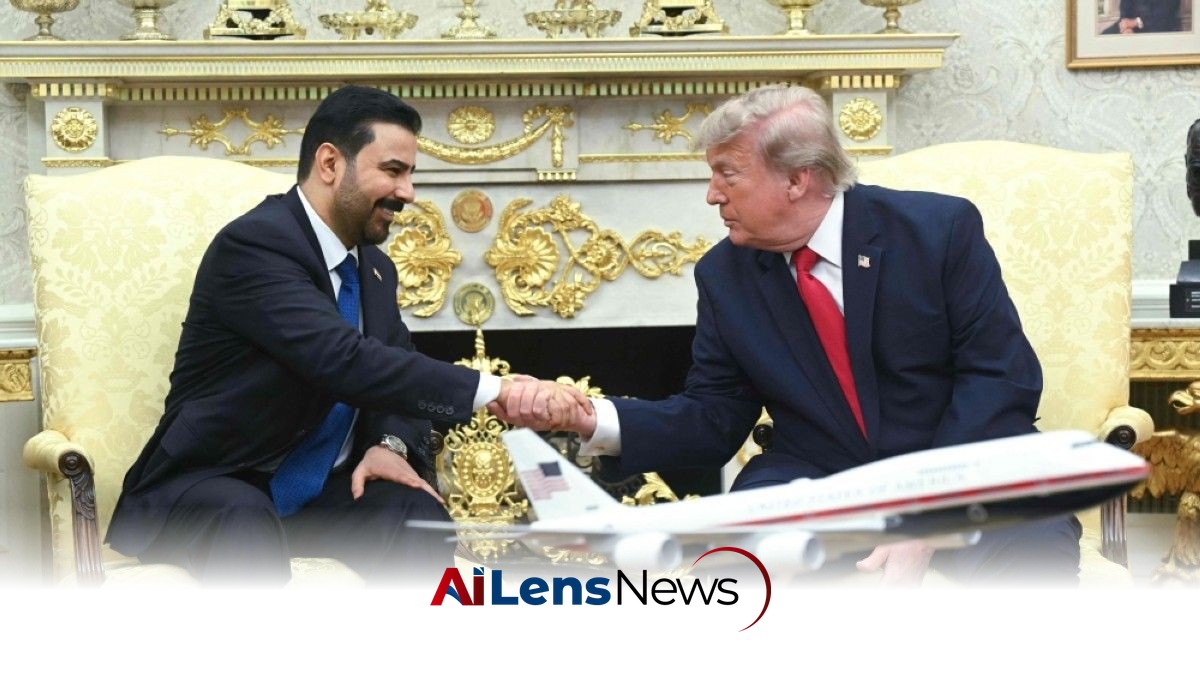


In a White House meeting, President Trump hailed Iraqi PM Ali Al-Zaidi as a 'champion' while discussing potential oil deals and Iran's influence.
Kuwait City, Kuwait Jul 15, 2026 ALN: US President Donald Trump praised new Iraqi Prime Minister Ali Al-Zaidi as a “champion” in a meeting at the White House Tuesday, even as Washington presses Baghdad to curb Iranian influence. Trump hinted at making major oil deals with Iraq as he hosted Zaidi, a businessman who came to power this year with US blessing after Trump vetoed another candidate.
“We have a fantastic champion, a new champion,” Trump said as he welcomed the Iraqi premier to the Oval Office. “He’s been a great fighter and a great fan of America.” Trump stated that he had even decided to hold an unscheduled lunch with Zaidi because of their “tremendous chemistry.” The Iraqi’s visit comes against the backdrop of renewed military escalation between the United States and Iran. Washington and Tehran are Iraq’s main allies but have long fought a proxy war over the country.
Zaidi has vowed to boost Iraq’s fragile economy and disarm pro-Iran armed groups that have targeted US facilities. He has made it clear that he would not accept any armed groups outside state control once US forces leave Iraq on September 30, when the US-led anti-jihadist coalition’s mission ends. “On September 30th, American forces will leave, and American companies will enter,” Zaidi said. “After 30 September, we will not allow any entity to bear arms outside the state.”
Zaidi arrived in Washington on Monday for his first international visit since assuming office — a week-long trip during which he will also meet US officials and representatives of oil companies. Trump hinted at likely oil deals with Iraq — a long-time obsession for a leader who earlier this year asserted control over Venezuela’s vast reserves after toppling its leader Nicolas Maduro. “We’re going to be doing a lot of deals,” Trump said. “We’re going to create a lot of jobs for both countries, and we’re going to be taking out a lot of oil.”
However, Zaidi will have to continue Iraq’s delicate balance between Washington and Tehran. A senior Iraqi politician told AFP on condition of anonymity that even if the current government adopts a more US-friendly path, prioritizing the economy, “it doesn’t mean that Iraq is turning against Iran.” This sentiment underscores the complex geopolitical landscape in which Iraq operates, as it navigates relationships with both its powerful neighbors.
Last week, Iraq’s holy cities hosted a massive funeral procession for Iran’s late supreme leader Ali Khamenei, who was killed in a US-Zionist strike on Tehran as the war began in late February. This event highlighted the strong emotional ties and ideological connections that many Iraqis have with Iran, particularly among the Shiite population. While some armed groups said they will cooperate with Zaidi, others remain firm in their refusal to disarm, indicating potential challenges for the new prime minister in enforcing his agenda.
Iraq’s pro-Iran armed groups have seen their political and financial clout increase over the years, and have long called for the withdrawal of American troops deployed as part of the anti-jihadist coalition. The presence of these armed groups complicates the security situation in Iraq, as they often operate independently of the Iraqi government and can act in ways that are contrary to its interests. During the Middle East war, these groups have intervened in support of Tehran, targeting US facilities in Iraq more than 600 times, which has raised tensions significantly.
Oil-rich Iraq has been trying to move past decades of war and unrest, but it still suffers from poor infrastructure, failing public services, mismanagement, and endemic corruption. The country’s economy is heavily reliant on oil exports, which account for about 90 percent of its budget revenues. This dependence creates vulnerabilities, especially in the context of fluctuating oil prices and geopolitical instability in the region. Trump, a long-term opponent of the 2003 US-led invasion of Iraq, stated that Washington had “attacked the wrong country,” implying that it should have invaded Iran instead, reflecting his administration's critical stance towards Tehran.
In recent months, Iraq has signed several deals with US companies in the oil and gas sector, signaling a potential shift towards greater economic collaboration with the United States. In the United States, Zaidi is expected to sign more agreements, including one to establish a fund into which Iraq will deposit half a million barrels of oil per day in exchange for help to boost the country’s electricity supply. This arrangement could provide Iraq with much-needed resources to improve its energy infrastructure, which has been a significant issue for the country.
Like other oil producers, Iraq, a founding member of OPEC, was greatly affected by the Middle East war. The ongoing conflict has caused disruptions in production and exports, further complicating the country’s economic recovery. The vast majority of its crude oil travels via the disputed Strait of Hormuz, a critical chokepoint for global oil shipments, making Iraq’s economy particularly sensitive to regional tensions. The implications of Zaidi’s leadership extend beyond domestic policy; they resonate within the broader context of US-Iran relations, regional stability, and the future of Iraq’s sovereignty.
As Zaidi embarks on this pivotal trip to the United States, his ability to secure beneficial agreements while maintaining a delicate balance between US interests and Iranian influence will be crucial. The outcome of his discussions with Trump and other officials could set the tone for Iraq’s future, impacting not only its economic landscape but also its geopolitical standing in a region marked by rivalry and conflict. The stakes are high, and the path forward is fraught with challenges that will test Zaidi's leadership and the resilience of Iraq as it seeks to forge a new identity in the post-war era.
The geopolitical dynamics in the Middle East are particularly intricate, with Iraq caught in the crossfire of US-Iranian tensions. The ongoing rivalry between these two powers complicates Iraq's ability to assert its sovereignty and pursue an independent foreign policy. The historical ties between Iraq and Iran, especially among the Shiite majority population, create a complex backdrop for Zaidi’s administration. Many Iraqi Shiites view Iran as a key ally in the face of Sunni extremism, while others are wary of Iranian influence, fearing that it undermines Iraq’s national interests.
This balancing act is further complicated by the presence of various armed factions within Iraq, some of which have close ties to Iran. These groups have significant influence over local politics and security, often acting independently of the central government. Zaidi’s commitment to disarm these groups and assert state control over security forces will be a litmus test for his government’s legitimacy and effectiveness in the eyes of both the Iraqi populace and international observers.
In addition to security challenges, Iraq faces dire economic conditions. The COVID-19 pandemic exacerbated existing issues, leading to increased unemployment and poverty rates. Zaidi’s administration will need to implement comprehensive economic reforms to address these challenges, attract foreign investment, and diversify the economy beyond oil dependency. The potential oil deals with the US could provide a much-needed boost, but they also raise questions about the long-term sustainability of Iraq’s economic recovery.
As Zaidi navigates these multifaceted challenges, the international community will be closely watching. The outcomes of his meetings in Washington could have far-reaching implications for Iraq's future, especially in terms of its relationships with both the US and Iran. The new prime minister’s ability to foster economic growth while maintaining stability and security will be critical for Iraq’s development in the coming years. The delicate balance he must strike between foreign interests and domestic pressures will ultimately define his legacy and the future trajectory of Iraq in an increasingly volatile region.
To learn more about the latest developments in Political Controversies, stay updated with our exclusive reports and analyses on AiLensNews.

