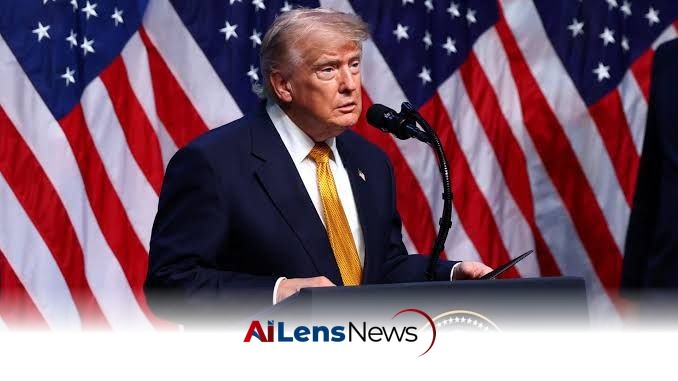


President Trump has announced the declassification of intelligence documents revealing a significant Chinese cyber operation targeting U.S. voter data, prompting an investigation.
Kuwait City, Kuwait Jul 17, 2026 ALN: US President Donald Trump announced on Thursday the declassification of intelligence documents that he said reveal the largest Chinese cyber operation targeting voter data in US history. This announcement comes amidst heightened tensions between the United States and China, particularly in the realms of cybersecurity and international relations.
Addressing the nation from the White House, Trump claimed the newly declassified files show that starting with the 2020 election cycle, the People’s Republic of China carried out a massive compromise of election data, resulting in the illicit acquisition of the records of 220 million American voters. The scale of this breach, if confirmed, would represent a significant threat to the integrity of the electoral process in the United States and raise serious concerns about foreign interference in domestic affairs.
According to newly declassified documents, the breach targeted highly sensitive voter registration directories, including names, physical addresses, telephone numbers, and political party affiliations. This kind of information is crucial not only for electoral processes but also for the broader democratic engagement of citizens. The implications of such a breach could extend beyond mere data theft, potentially allowing for manipulation of voter sentiment or targeted disinformation campaigns.
The intelligence reports indicate that a specialized foreign unit was established to exploit the stolen data to engage in malicious activities. This suggests a level of organization and intent that raises alarms about the lengths to which foreign adversaries might go to influence American politics. Cybersecurity experts have long warned that state-sponsored actors could leverage stolen information to create chaos or sway public opinion, and this incident seems to underscore those concerns.
The US president pointed out that CIA reports indicated that the Chinese Communist Party had adopted a policy since 2018 aimed at using all internal and external elements opposed to the then-President Trump to reduce the number of votes supporting him and prevent his re-election. This claim reflects a broader narrative that has emerged in recent years regarding foreign influence in American elections, particularly from adversaries like China and Russia. The assertion that a foreign power would actively seek to manipulate electoral outcomes is a serious accusation that could have profound implications for US-China relations as well as domestic political discourse.
Trump's accusations also extend to certain domestic intelligence officials, whom he claims have deliberately downplayed and concealed the scale of the Chinese interference from the President, Congress, and the American public. This allegation points to a growing divide within the U.S. intelligence community and raises questions about transparency and accountability in the face of foreign threats. The political ramifications of such a breach of trust could be significant, potentially leading to calls for reform within intelligence agencies and a reevaluation of how information is shared with elected officials.
In response, Trump directed the Office of the Director of National Intelligence (ODNI), the Department of Justice (DOJ), the FBI, and the CIA to launch an immediate investigation into the alleged cover-up, remove compromised officials, and pursue criminal charges where appropriate. This directive underscores the administration's commitment to addressing perceived threats to national security, but it also raises concerns about the politicization of intelligence and law enforcement agencies. Critics may argue that such actions could lead to a chilling effect on the willingness of intelligence officials to report findings that may not align with the administration's narrative.
The implications of this situation are manifold. Should the allegations be substantiated, it could lead to a reevaluation of U.S. cybersecurity policies and protocols, particularly regarding the protection of voter data and the integrity of electoral systems. Additionally, it could exacerbate already strained relations between the U.S. and China, potentially leading to diplomatic repercussions and further economic sanctions.
Furthermore, the announcement raises questions about the broader context of election security in the United States. In recent years, there has been increased scrutiny on election integrity, particularly following the 2016 presidential election, which was marred by allegations of Russian interference. The potential for foreign interference has become a focal point for lawmakers and cybersecurity experts alike, who are advocating for more robust measures to safeguard electoral processes.
As the investigation unfolds, it will be crucial for the American public to remain informed about the developments and to consider the broader implications of such a breach. The integrity of elections is a cornerstone of democracy, and any perceived threats to that integrity must be taken seriously. The outcome of this investigation could have lasting effects on how elections are conducted in the future, as well as on the relationship between the U.S. and foreign powers.
In conclusion, the declassification of these intelligence documents and the subsequent allegations made by President Trump highlight significant concerns regarding cybersecurity, foreign interference, and the integrity of American elections. As the investigation progresses, the implications for national security, domestic politics, and international relations will be closely monitored by both policymakers and the public. The situation serves as a reminder of the complexities of modern governance in an increasingly interconnected and digital world, where the lines between domestic and foreign threats are often blurred.
The potential ramifications of such a breach extend beyond immediate electoral concerns. For instance, if foreign entities were able to manipulate voter data, it could lead to a loss of public trust in electoral outcomes, which is essential for the functioning of democracy. Public confidence in the electoral process is vital; without it, voter turnout may decline, and the legitimacy of elected officials could be called into question.
This incident also raises broader questions about the cybersecurity posture of the United States. The increasing sophistication of cyber threats from state actors necessitates a comprehensive and multi-faceted approach to cybersecurity. This includes not only improving technological defenses but also enhancing public awareness and education about cybersecurity risks. Citizens must understand the importance of safeguarding their personal information and the potential consequences of data breaches.
Moreover, the political landscape in the U.S. has become increasingly polarized, and allegations of foreign interference can further exacerbate divisions. This situation may lead to a more contentious political environment, where accusations of betrayal or complicity are bandied about, complicating bipartisan efforts to address cybersecurity issues. There is a risk that legitimate concerns about foreign interference could be weaponized for political gain, leading to a cycle of blame and mistrust that ultimately undermines collective efforts to protect the electoral process.
As the investigation into this alleged breach continues, it will be essential for all parties involved to approach the situation with a commitment to transparency and accountability. The public deserves to know the truth about the integrity of their electoral systems and the extent of any foreign interference. Additionally, it will be vital for lawmakers to work together to establish a framework for addressing cybersecurity threats, ensuring that the U.S. is better prepared to defend against future attacks.
In a globalized world where information flows freely across borders, cybersecurity has become a critical component of national security. The U.S. must not only focus on protecting its own systems but also engage with international partners to establish norms and agreements that deter cyber aggression. Collaborative efforts are essential in addressing the challenges posed by state-sponsored cyber operations, as no single nation can effectively combat these threats in isolation.
In summary, the allegations of a Chinese cyber breach targeting U.S. voter data have far-reaching implications for national security, electoral integrity, and international relations. As the investigation unfolds, it is crucial for the American public and policymakers alike to remain vigilant and proactive in addressing the challenges posed by foreign interference in democratic processes. The outcome of this situation may serve as a pivotal moment in shaping the future of U.S. cybersecurity policy and the broader landscape of international relations.
To learn more about the latest developments in Political Controversies, stay updated with our exclusive reports and analyses on AiLensNews.

