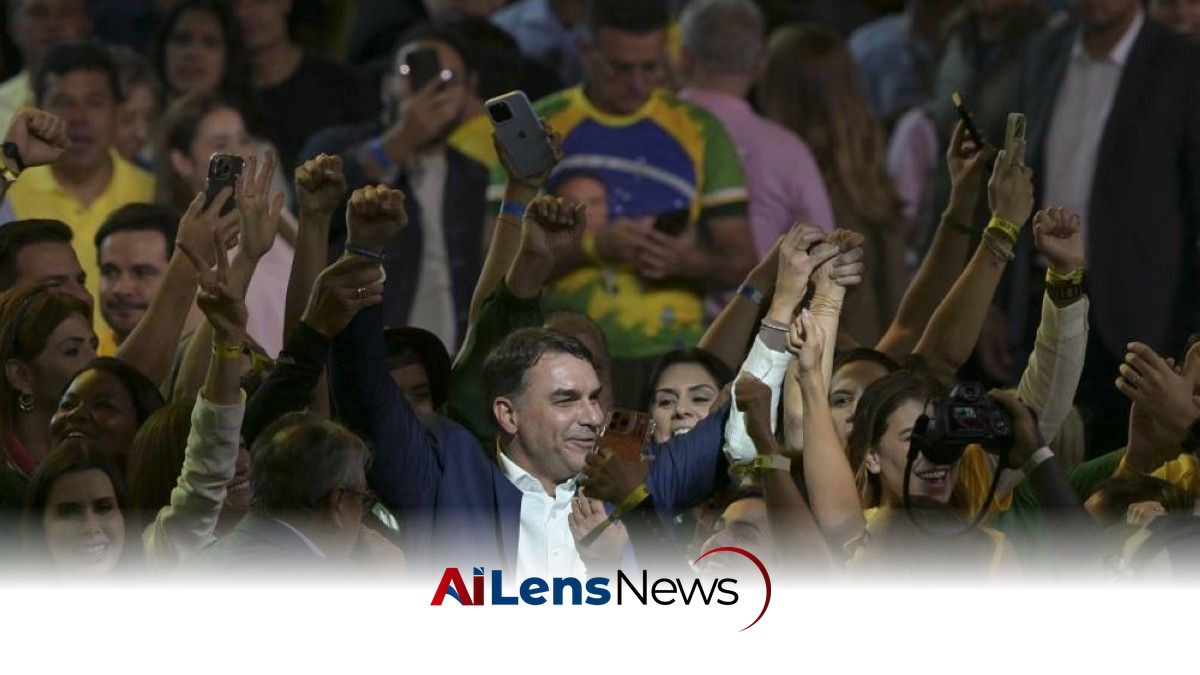


Flavio Bolsonaro, son of imprisoned ex-president Jair Bolsonaro, is nominated by Brazil's Liberal Party to challenge incumbent Lula in the upcoming presidential elections.
Kuwait City, Kuwait Jul 27, 2026 ALN: Brazil’s right-wing Liberal Party on Saturday formally nominated Flavio Bolsonaro, a 45-year-old senator and son of imprisoned ex-president Jair Bolsonaro, as its candidate in the October presidential election. He is set to face off against leftist incumbent Luiz Inacio Lula da Silva, 80, who is seeking a fourth nonconsecutive term and has gained momentum in recent weeks as the younger Bolsonaro faced a series of crises.
Flavio Bolsonaro's nomination comes at a pivotal time in Brazilian politics. The country has been grappling with a range of socio-economic issues, including rising crime rates, inflation, and political polarization. The political landscape has shifted dramatically since Lula's return to power in 2023, following his previous presidency from 2003 to 2010. Lula's administration was marked by significant economic growth and social programs that lifted millions out of poverty, but it was also marred by corruption scandals that led to his imprisonment in 2018. His subsequent exoneration and return to the political arena have reignited debates about governance and democracy in Brazil.
Far-right firebrand Jair Bolsonaro anointed his eldest son Flavio as his political heir after being sentenced to 27 years in prison for plotting a coup following his 2022 election loss to Lula. The elder Bolsonaro's presidency was characterized by controversial policies, including environmental deregulation and a combative stance against political opponents. Flavio, who has often echoed his father's rhetoric, declared to a cheering crowd in a Sao Paulo warehouse, "I may be calmer, more cheerful, more composed and more moderate, but Bolsonaro blood flows here!" He warned that Brazil — Latin America’s largest country in population, area, and economy — “could take giant strides toward a dictatorship” if Lula wins reelection. This alarmist rhetoric resonates with a segment of the Brazilian electorate that fears a return to leftist governance.
Flavio's campaign has garnered support from other right-wing leaders in the region, including Argentina’s libertarian President Javier Milei, who joined the convention to lend support. Milei's endorsement underscores the growing alliance among right-wing leaders in Latin America, who often share concerns about leftist policies and governance. “I firmly believe there is no one else capable of putting an end to the Lula risk hanging over Brazil,” Milei said in a typically fiery speech. Wearing Brazilian national team jerseys, which have become a symbol of the Bolsonaro movement, supporters beat drums and waved flags inside a warehouse next to Sao Paulo’s Pacaembu Stadium, showcasing the fervor and loyalty of Bolsonaro's base.
Despite the fervent support from his father’s loyalists, Flavio Bolsonaro faces significant challenges in the upcoming election. Polls indicate a competitive race, but recent surveys show Lula gaining an edge. Promising to crack down on crime and inflation, Flavio was neck-and-neck with Lula in the polls until he was hit by a series of scandals. These included ties to a disgraced banker, a family feud, and new tariffs imposed by ally US President Donald Trump, which have complicated Brazil's international trade dynamics. Pollster Datafolha published a survey Friday showing that in a runoff election, Lula would win 48 percent of votes to Flavio’s 43 percent, indicating a tightening race.
A wave of scandals
Flavio’s troubles began in May when an audio recording leaked of him asking banker Daniel Vorcaro — accused in a multi-million-dollar fraud case — to finance a film about his father. The implications of this scandal are significant, as they raise questions about Flavio's judgment and integrity, particularly in light of his father's controversial legacy. Flavio initially denied any contact with Vorcaro and told a reporter that the accusation was “a lie.” However, his subsequent admission that their relationship was limited to the movie has not quelled public scrutiny. On Thursday, a Supreme Court justice ordered an investigation into the financing of the film, further complicating Flavio's political prospects and raising concerns about transparency and accountability in his campaign.
In addition to the financial scandal, Flavio’s personal life has also come under scrutiny. His stepmother, Michelle Bolsonaro, posted an Instagram video stating that he had “disrespected me and mistreated me...he said I didn’t understand anything about politics.” This familial dispute is particularly damaging, as Michelle is a prominent figure in the right-wing movement and plays a crucial role in appealing to Brazil’s large female and evangelical electorate. The rift within the Bolsonaro family could alienate potential supporters and undermine Flavio's campaign.
In an attempt to mend fences, Flavio read out a letter on social media from Jair Bolsonaro urging unity—an action that contravened the terms of his father’s house arrest, prompting a Supreme Court justice to deny him visits with Jair until after the first round of voting. This development highlights the complexities of the Bolsonaro family's political dynamics and the challenges Flavio faces in navigating both his campaign and his familial relationships. This week, Flavio posted a video apologizing to Michelle, who quickly accepted the olive branch, indicating a possible reconciliation that could help repair his public image.
The upcoming presidential race will not only determine the future of the Bolsonaro family’s political legacy but also shape Brazil's direction in the coming years. With Lula's administration focusing on social justice and economic recovery, Flavio Bolsonaro's campaign is likely to emphasize law and order, economic liberalism, and a return to the policies that characterized his father's presidency. As the election date approaches, both candidates will need to address the pressing concerns of Brazilian voters, including economic stability, public safety, and the integrity of democratic institutions.
In conclusion, Flavio Bolsonaro's nomination by the Liberal Party marks a significant moment in Brazil's political landscape, as it sets the stage for a contentious electoral battle against incumbent Luiz Inacio Lula da Silva. With the Bolsonaro family at the center of this political drama, the implications of this election extend beyond party lines, reflecting deeper societal divisions and the ongoing struggle for Brazil's democratic future. As both candidates prepare for the challenges ahead, the Brazilian electorate will be watching closely, weighing the promises and pitfalls of each candidate's vision for the country's future.
To learn more about the latest developments in Elections, stay updated with our exclusive reports and analyses on AiLensNews.

