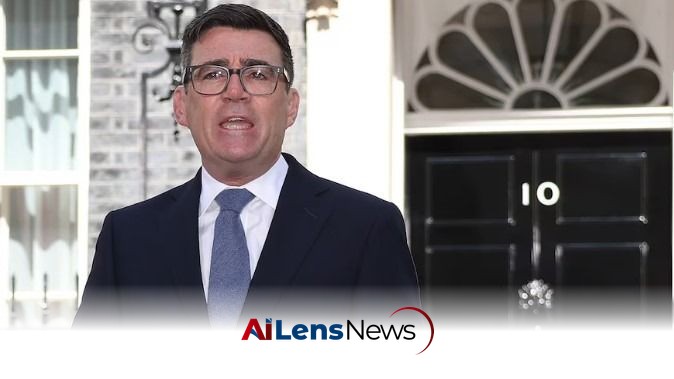


Andy Burnham has been sworn in as the new Prime Minister of the UK, succeeding Keir Starmer. He pledges to address the cost of living crisis and restore public trust.
Kuwait City, Kuwait Jul 20, 2026 ALN: Andy Burnham was officially sworn in as the United Kingdom’s new Prime Minister on Monday after being appointed by King Charles III at Buckingham Palace, becoming Britain’s seventh prime minister in just 10 years. This rapid turnover in leadership reflects a period of significant political volatility within the UK, characterized by changing public sentiments, economic challenges, and shifting party dynamics.
Burnham succeeds Keir Starmer, who stepped down as Labour Party leader and prime minister last month. Starmer’s resignation followed a series of electoral setbacks for the Labour Party, culminating in a disappointing performance in local elections. The party faced criticism for its inability to connect with voters on key issues, and Starmer's leadership was scrutinized for a perceived lack of clarity in policy direction. In this context, Burnham’s ascension is seen as an attempt to reinvigorate the party and restore its connection with the electorate.
The 56-year-old secured overwhelming support from more than 90 percent of Labour Members of Parliament and was elected party leader without opposition before being invited by the King to form a new government. This level of support indicates a strong desire within the party for unity and a clear direction moving forward. It also suggests that Burnham’s leadership style and past experiences resonate well with the party’s current membership, which is keen on presenting a cohesive front to the public.
A veteran politician with more than two decades of public service, Burnham faces the immediate challenge of addressing mounting public concern over the rising cost of living, restoring confidence in government, and maintaining political stability at a time of economic uncertainty. The UK has been grappling with a cost-of-living crisis exacerbated by factors such as inflation, supply chain disruptions, and the effects of the COVID-19 pandemic. Many households are feeling the pinch, and Burnham’s government will need to act swiftly to alleviate these pressures.
Speaking after his recent by-election victory in the Makerfield constituency, Burnham pledged to rebuild public optimism, saying the country needed renewed hope and meaningful change. His commitment to fostering optimism is particularly significant given the prevailing mood of skepticism among voters, who have expressed disillusionment with political institutions and leaders. Burnham's rhetoric suggests a focus on transparency and accountability, aiming to re-establish a sense of faith in government.
His return to Westminster followed seven years as Mayor of Greater Manchester, where he earned a reputation as one of Britain’s most popular and influential regional leaders. During his tenure as mayor, Burnham became known for his proactive approach to local issues, including public health, housing, and transportation. His leadership during the COVID-19 pandemic, particularly in advocating for support for local businesses and communities, further solidified his standing as a compassionate and effective leader.
Burnham first entered Parliament in 2001 and served in several senior government positions under former Labour prime ministers Tony Blair and Gordon Brown, including roles in the Home Office, Treasury, Department for Culture, and as Health Secretary. His extensive experience in government provides him with a deep understanding of the complexities of national politics and public administration, which will be crucial as he navigates the challenges of his new role.
He also contested the Labour leadership in 2010 and 2015 before leaving Parliament in 2017 to become Mayor of Greater Manchester. His previous attempts at leadership demonstrate his long-standing ambition to guide the Labour Party and the country, and his eventual success in this endeavor reflects both his perseverance and the evolving landscape of British politics.
During his tenure as mayor, Burnham gained national recognition for championing regional development, public transport reforms, healthcare integration, and greater devolution of powers to local authorities. His advocacy for the Northern Powerhouse initiative, aimed at boosting economic growth in northern regions of England, has been particularly noteworthy. This focus on regional equity aligns with broader calls for addressing disparities between London and other parts of the UK, making Burnham a key figure in the ongoing dialogue about national development.
His strong electoral performances in Greater Manchester helped cement his standing within the Labour Party and paved the way for his return to national politics. Burnham’s ability to connect with constituents and address their concerns has been a hallmark of his political career, suggesting that he will prioritize grassroots engagement as Prime Minister.
As prime minister, Burnham is expected to prioritise tackling inflation and the cost-of-living crisis, strengthening public services, boosting economic growth, and rebuilding public trust in government. His agenda will likely include measures to support low-income families, improve access to healthcare, and invest in infrastructure projects that stimulate job creation. The success of these initiatives will be critical in determining the Labour Party's electoral prospects in the coming years.
His appointment marks a new chapter for the Labour government as it seeks to address domestic challenges while navigating an increasingly uncertain international environment. The global geopolitical landscape has been shifting, with rising tensions in various regions and economic challenges stemming from conflicts and trade disputes. Burnham will need to balance domestic priorities with the need for a coherent foreign policy that protects the UK’s interests.
With broad backing from his party and considerable public recognition, Burnham now assumes leadership at a pivotal moment for the United Kingdom. The coming months will be crucial as he outlines his vision for the country and implements policies that address the pressing issues facing citizens. The public will be watching closely to see if Burnham can translate his promises into tangible outcomes, and whether he can restore faith in a political system that many believe has let them down. The implications of his leadership will extend beyond party lines, influencing the broader political landscape and potentially reshaping the future of the Labour Party and its role in British politics.
To learn more about the latest developments in Elections, stay updated with our exclusive reports and analyses on AiLensNews.

