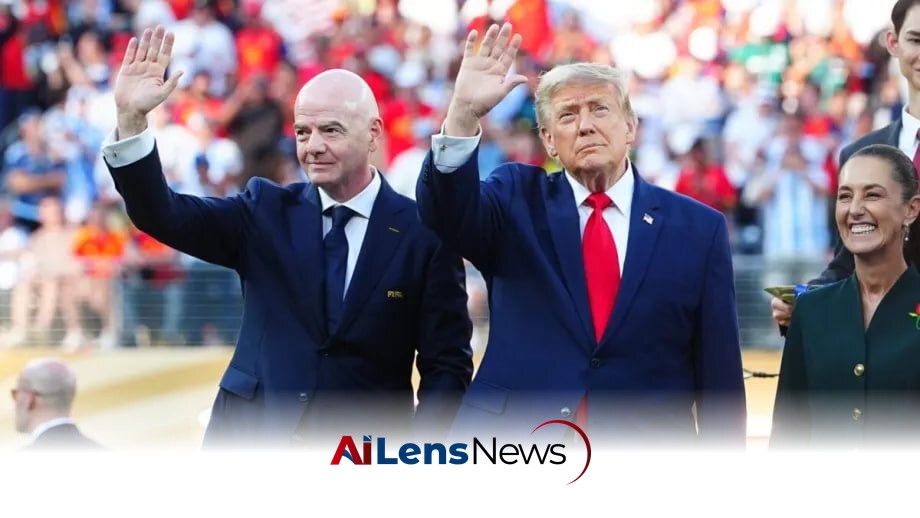


US President Donald Trump has expressed his desire to nominate FIFA President Gianni Infantino as the next UN Secretary-General, citing his global respect and ability to unite people.
Tehran, Iran Jul 22, 2026 ALN: The recent proposal by US President Donald Trump to nominate FIFA President Gianni Infantino for the position of United Nations Secretary-General has sparked considerable discussion regarding the intersection of sports, diplomacy, and international governance. This suggestion, reported by the New York Post, highlights Trump's ongoing interest in reshaping global institutions and his belief in Infantino's capabilities as a unifying figure on the world stage.
Gianni Infantino, who has been at the helm of FIFA since 2016, has cultivated a reputation for his diplomatic engagement and efforts to reform the organization following years of scandal and controversy within the world of football. His tenure has been marked by significant initiatives aimed at increasing transparency and accountability within FIFA, as well as expanding the reach of football globally. Infantino's leadership during the 2022 FIFA World Cup in Qatar was particularly notable, as he navigated complex geopolitical landscapes and worked to foster relationships with various leaders, including Trump.
Trump's assertion that Infantino is "respected by everyone around the world" underscores a broader narrative about the role of sports leaders in global diplomacy. In recent years, sports figures have increasingly been seen as potential mediators in international conflicts and as ambassadors for peace. Infantino's receipt of FIFA's inaugural Peace Prize in December, which was presented to Trump, exemplifies this trend and indicates a growing recognition of the potential for sports to bridge divides between nations.
The position of UN Secretary-General is one of immense responsibility and influence. The Secretary-General serves as the chief administrative officer of the UN and is tasked with addressing a wide range of global issues, from peace and security to human rights and sustainable development. The next Secretary-General will be appointed for a five-year term beginning January 1, 2027, following the tenure of the current Secretary-General, Antonio Guterres, who has held the position since January 2017.
Under Article 97 of the UN Charter, the appointment process for the Secretary-General involves recommendations from the Security Council, followed by approval from the General Assembly. This means that any candidate, including Infantino, would need the backing of the 15-member Security Council, which includes five permanent members—China, France, Russia, the United Kingdom, and the United States—each of whom holds veto power. This requirement poses a significant challenge for any potential nominee, as geopolitical dynamics can heavily influence the support a candidate receives.
Trump's proposal also sheds light on his broader criticisms of the United Nations and its perceived limitations in addressing global challenges. The President has been vocal about his discontent with the UN's effectiveness, particularly regarding its role in conflict resolution. He has suggested that the UN should take a more active role in mediating international disputes, a stance that has led to the establishment of initiatives such as the US-led Board of Peace. This Board aims to facilitate peace agreements and foster dialogue between conflicting parties, including notable efforts related to Middle Eastern diplomacy.
Despite Trump's claims of creating an alternative to the UN, he has consistently denied any intentions to undermine the organization. His administration's approach has included significant reductions in US funding for the UN and withdrawals from various UN-affiliated organizations, such as the World Health Organization (WHO). These actions have prompted discussions about the future of US engagement with international institutions and the potential implications for global governance.
The nomination of Infantino could signal a shift in how the United States perceives the role of international organizations and their leaders. It raises questions about the qualifications and backgrounds that are deemed suitable for such a high-profile diplomatic position. Infantino's experience in sports administration, while extensive, differs markedly from the traditional qualifications of previous UN Secretaries-General, many of whom have had backgrounds in international law, diplomacy, or politics.
Moreover, the proposal may reflect a growing trend of leaders from non-traditional backgrounds entering the realm of international politics. As global challenges become increasingly complex, there is a recognition that diverse perspectives and experiences may be valuable in addressing these issues. Infantino's ability to connect with a wide range of stakeholders, from athletes to world leaders, could be viewed as an asset in fostering collaboration and dialogue.
As the world approaches the next election for Secretary-General, the implications of Trump's proposal for Infantino will continue to unfold. Key questions will arise regarding the support Infantino might garner from member states, particularly within the Security Council, and whether his candidacy could reshape the perception of the UN as an institution. Additionally, the broader discourse surrounding the role of sports in diplomacy and international relations will likely gain traction, as leaders and organizations explore innovative ways to address global challenges.
In conclusion, Trump's suggestion to nominate Gianni Infantino for the position of UN Secretary-General is emblematic of a shifting landscape in international governance. It underscores the potential for sports figures to play a role in diplomacy and raises important considerations about the qualifications and backgrounds of future leaders in global institutions. As the international community navigates an increasingly interconnected world, the dialogue surrounding this proposal will likely influence perceptions of the UN and its role in fostering peace and cooperation among nations.
To further understand the implications of this nomination, it is essential to consider the historical context of the UN Secretary-General's role. The position has traditionally been held by individuals with extensive backgrounds in diplomacy, international relations, or politics, such as former Prime Ministers or Foreign Ministers. This trend reflects the complexity of the issues faced by the UN, which range from global security threats to humanitarian crises and climate change. The expectation has been that the Secretary-General possesses not only the political acumen necessary to navigate these challenges but also the experience and credibility to engage with world leaders effectively.
Infantino's nomination could represent a departure from this norm. While his achievements in sports governance are notable, they do not necessarily translate into the political expertise typically associated with the role of Secretary-General. However, it is worth noting that the landscape of international diplomacy is evolving, and there is an increasing recognition that leaders from various sectors, including sports, can contribute valuable perspectives and foster dialogue. This shift may reflect a broader trend of seeking innovative solutions to global challenges, where collaboration across different fields becomes essential.
Furthermore, Infantino's tenure at FIFA has not been without its challenges. He has faced criticism regarding FIFA's handling of issues such as corruption, human rights violations, and the treatment of migrant workers in host countries for major tournaments. These controversies raise questions about his ability to address complex ethical issues on a global scale, should he be nominated for the UN role. Critics may argue that his experience in sports governance does not adequately prepare him for the multifaceted responsibilities of the Secretary-General, particularly in addressing human rights and governance issues.
The discussion surrounding Infantino's potential nomination also brings to light the role of the United States in shaping the future of the UN. Historically, the US has been a significant player in international organizations, often wielding considerable influence over appointments and policies. Trump's proposal may reflect a strategic move to align the UN's leadership with a vision that prioritizes American interests and perspectives. This approach could have profound implications for the UN's operations and its ability to function as an impartial mediator in global disputes.
As the international community contemplates the future of the UN and its leadership, the nomination of figures like Infantino could prompt a reevaluation of what constitutes effective leadership in a globalized world. The discussion may lead to broader questions about the role of sports in international relations and the potential for non-traditional leaders to contribute to peace and diplomacy. In an era where traditional political structures are often challenged by emerging global issues, the integration of diverse experiences and backgrounds into leadership roles may become increasingly relevant.
In summary, Trump's proposal to nominate Gianni Infantino for the UN Secretary-General position raises significant questions about the evolving nature of global leadership and the intersection of sports and diplomacy. As the world grapples with complex challenges, the dialogue surrounding this nomination will not only influence perceptions of the UN but may also inspire a broader reconsideration of how we approach international governance in the 21st century.
To learn more about the latest developments in Elections, stay updated with our exclusive reports and analyses on AiLensNews.

